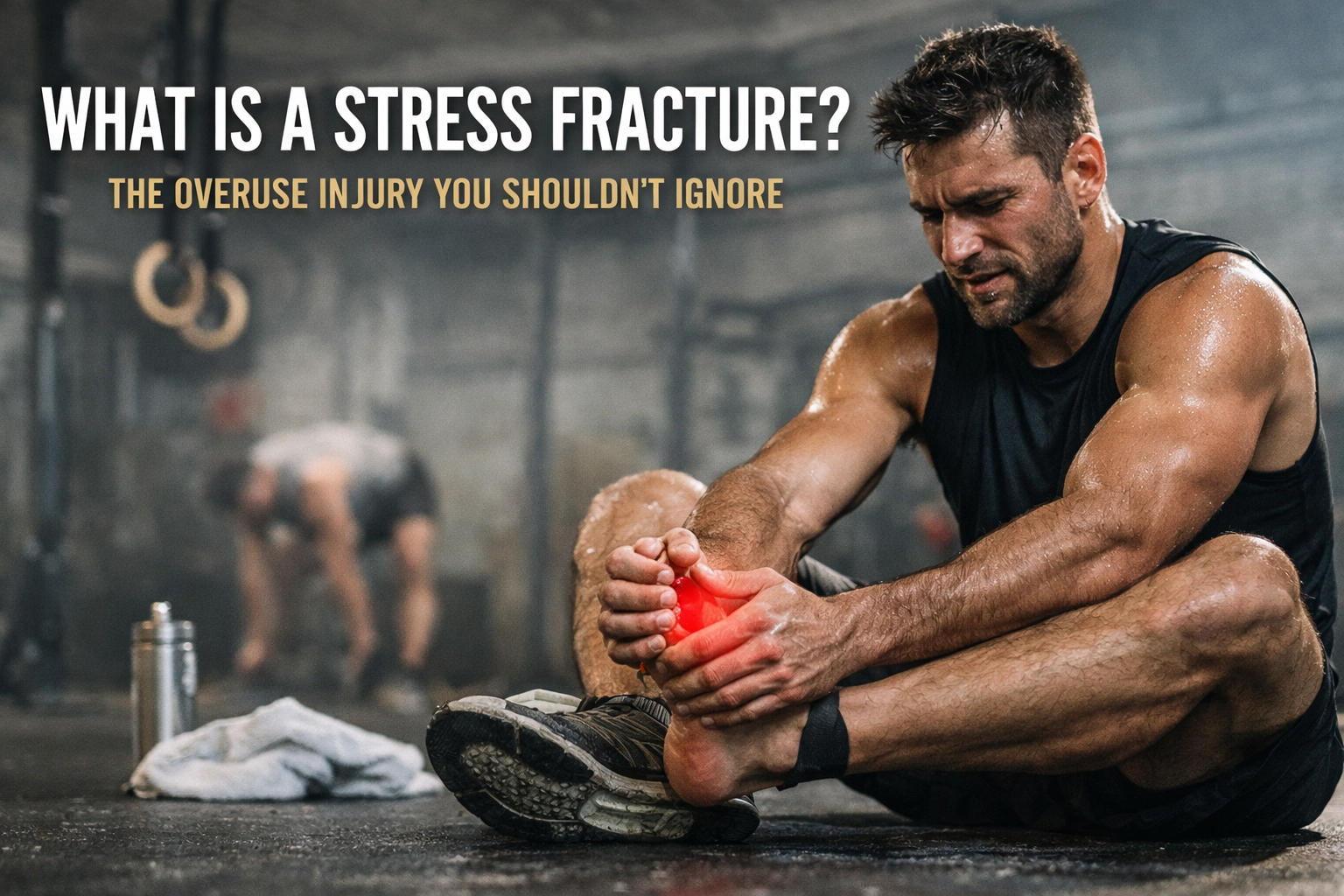
You’re three miles into your sunset run along Pacific Beach, the salt air is hitting just right, and your pace is locked in. Then, you feel it: a dull, nagging ache in your mid-foot. It’s not a sharp "snap," so you figure you just laced your shoes too tight. You push through. The next day, it’s a bit more tender. A week later, you can barely walk to your car without a limp.
Welcome to the world of stress fractures.
In the world of high-performance athletics: whether you’re chasing a marathon PR or hitting the concrete bowls at the local park: stress fractures are the silent progress-killers. They don't happen in a flash of glory; they happen in the quiet moments of neglect. They are the result of the "grind" overcoming the "recovery."
As we move through 2026, the demand on the human body has never been higher. With athletes like skateboarding phenom Arisa Trew and track stars pushing the limits of human speed, the margin for error in bone health is razor-thin. If you’re feeling that localized "deep" pain, it’s time to stop scrolling and start listening to your body.
What Exactly Is a Stress Fracture?
Unlike a standard fracture, where a bone breaks due to a singular, high-impact event (like a fall or a collision), a stress fracture is an overuse injury. It starts as a tiny crack in the bone.
Think of it like a paperclip. If you bend it once, it stays intact. But if you keep bending it back and forth, tiny microscopic failures start to happen in the metal. Eventually, it snaps. Your bones operate on a similar principle of "remodeling." Your body is constantly breaking down old bone (resorption) and laying down new bone (formation).
A stress fracture occurs when the breakdown happens faster than the buildup. This usually happens because the muscles surrounding the bone become too fatigued to absorb the shock of your movement. That energy has to go somewhere, so it transfers directly to the bone.
The Two Main Players:
- Fatigue Fractures: These happen to healthy bones that are subjected to abnormal, repetitive stress. This is the classic "too much, too soon" scenario for runners and skaters.
- Insufficiency Fractures: These occur when the bone itself is weakened (due to things like Vitamin D deficiency or osteoporosis) and breaks under what should be "normal" stress.
Where Does It Hit the Hardest?
Stress fractures are picky. They usually target the weight-bearing bones of the lower body. If you’re an athlete, you’re likely to feel them in:
- The Metatarsals: The long bones in your mid-foot.
- The Tibia: Your shinbone (often confused with shin splints).
- The Fibula: The outer bone of the lower leg.
- The Navicular: A small bone in the ankle that is notorious for poor blood flow and slow healing.

Why You Can’t Just "Ice and Go"
For decades, the standard advice was RICE (Rest, Ice, Compression, Elevation). While resting is non-negotiable for a stress fracture, the "Ice" part is being heavily debated in modern sports medicine.
Many athletes reach for menthol-based "pain relief" creams or gels (you know the ones: the ones that smell like a locker room and tingle). Here’s the reality: Menthol is a placebo. It creates a cooling sensation that distracts your nerves, essentially "masking" the pain. It does absolutely nothing to address the underlying inflammation or the biological needs of the bone to repair itself. Masking the pain can actually be dangerous, leading you to think you’re ready to train when you’re actually making the crack wider.
The Clayer Approach: Mineral Absorption for Bone Health
When you’re dealing with a bone injury, you aren't just looking for "numbing." You’re looking for the building blocks of recovery. This is where Clayer has become the gold standard in the San Diego athletic community and beyond.
Instead of synthetic chemicals that just sit on top of the skin, Clayer utilizes a unique composition of French green clay and over 60 Earth-derived minerals. During stress fracture recovery, your body’s demand for minerals like calcium, magnesium, and silica skyrockets.
Clayer works by supporting the body’s natural inflammatory response and providing a rich mineral environment. While traditional "rubs" focus on the skin, Clayer focuses on the tissue and the structural integrity underneath. It’s about active recovery, not passive numbing.
The "Must-Read" Caveat: See a Professional
Let’s be real for a second. If you suspect you have a stress fracture, you must go to a doctor. This isn't something you can "tough out" with a better diet or a fancy wrap.
Why medical intervention is mandatory:
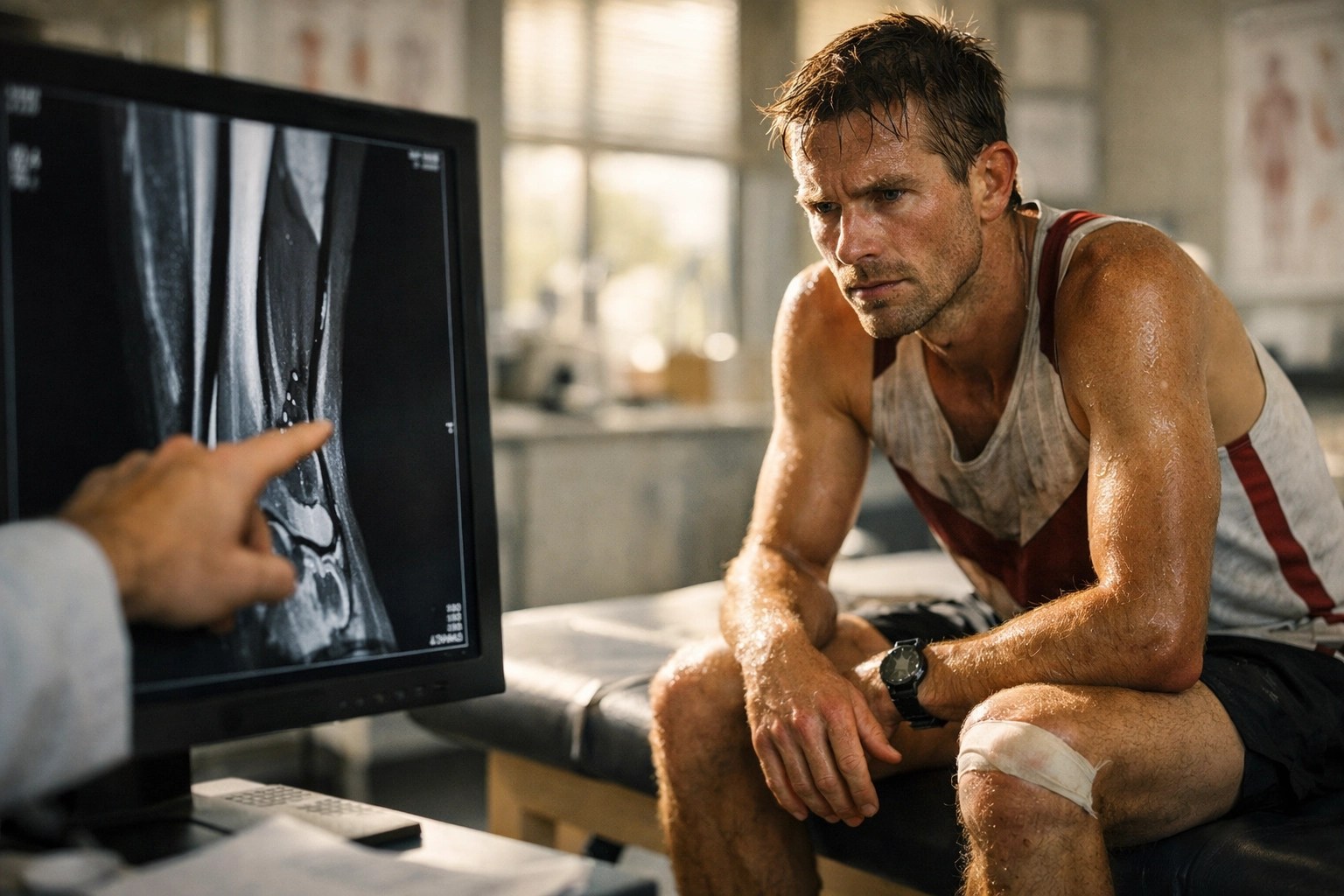
- X-Ray Limitations: Most early-stage stress fractures won't even show up on a standard X-ray. You might need an MRI or a bone scan to see the true extent of the damage.
- The Risk of "Full" Fracture: If you keep running on a stress-fractured tibia, it can turn into a complete break. That’s the difference between being out for six weeks and being in a cast for six months.
- Rest is King: You cannot "exercise through" a bone crack. You need to offload the weight, often using a walking boot or crutches, to give the osteoblasts (the bone-building cells) a chance to do their job.
Realistic Recovery: The Holistic Trifecta
Healing a stress fracture requires more than just sitting on the couch. It’s a full-body commitment. At Best Sports Recovery, we preach a holistic approach to athletic recovery.
1. Nutrition and Bone Health
Your bones are living tissue. They need fuel. If you’re in a caloric deficit or lacking key nutrients, your bone density will suffer.
- Calcium & Vitamin D3: The dynamic duo of bone repair.
- Magnesium: Essential for calcium absorption.
- Collagen: Provides the "scaffold" for bone mineralization.
2. Sleep: The Secret Weapon
Most bone remodeling happens while you are in deep sleep. This is when growth hormones are released. If you’re cutting your sleep to 5 or 6 hours, you are literally slowing down your healing rate. Aim for 8-9 hours of high-quality shut-eye during your injury stint.
3. Progressive Loading
Once a medical professional clears you to move, don't just jump back into a 10-mile run. You need to "re-teach" the bone how to handle stress. This often starts with swimming or cycling (low impact) before moving to a "walk-run" program.
How to Support Your Recovery with Clayer
While you are in the "rest" phase, you can still support the local environment around the injury. Here is the protocol used by many pro athletes to keep inflammation in check and support muscle recovery around the bone:
- Identify the Tender Spot: Find the localized area of pain.
- Apply a Thick Layer: Apply Clayer (about 1/4 inch thick) directly over the area.
- Wrap It: Use plastic wrap or a bandage to keep the clay moist. This allows the minerals to remain active.
- Leave for 20-60 Minutes: Let the clay do its thing.
- Rinse and Repeat: Do this daily. It helps draw out excess fluid (edema) that often accompanies bone stress.
Don't Let a Setback Become a Stop
The grind is real, and the desire to stay active is what makes you an athlete. But a stress fracture is your body’s way of hitting the "emergency brake." Listen to it.
The goal isn't just to get back to your baseline; it's to come back stronger with better mechanics, better nutrition, and a recovery protocol that actually works. Skip the menthol placebos. Focus on mineral-rich healing, get your sleep dialed in, and for the love of the game: see a doctor.
Ready to give your bones and muscles the mineral support they actually need? Check out our curated selection of recovery essentials.
Explore the Clayer Collection at Best Sports Recovery
Disclaimer: This article is for educational purposes only and does not constitute medical advice. Always consult with a qualified healthcare provider for the diagnosis and treatment of any injury.
Leave a Reply