
You’re mid-stride, cruising along the path at Sunset Cliffs. The San Diego sun is hitting just right, the salt air is filling your lungs, and you’re feeling like you could run forever. Then, it hits. A dull, nagging ache along the inner edge of your shinbone. You try to push through it, but within a mile, that dull ache turns into a sharp, localized throb.
Welcome to the club nobody wants to join: the shin splints society.
Formally known in the clinical world as Medial Tibial Stress Syndrome (MTSS), shin splints are the bane of runners, hikers, and even skateboarders hitting the concrete bowls at Ocean Beach. It’s one of those "gritty" injuries: it’s rarely a season-ender, but it’s annoying enough to turn a world-class workout into a limping walk of shame back to the car.
In this installment of our "What Is" series, we’re diving deep into the bone-muscle interface, why your current "icy" gel is failing you, and how to actually achieve shin splints relief so you can get back to the pavement without the burn.
The Anatomy of the Ache: It’s All About the Interface
To understand shin splints, you have to look under the hood. Most people think it’s just a "tight muscle," but the reality is more complex. Shin splints occur at the interface where your muscles: specifically the tibialis posterior and the soleus: attach to the tibia (your shinbone).
When you run, jump, or perform high-impact maneuvers, these muscles pull on the periosteum, which is the thin, highly sensitive sheath of connective tissue covering the bone. If you increase your mileage too fast or spend too much time on hard surfaces (like the concrete hills of San Diego), that pulling creates micro-trauma.
This isn't just "soreness." It’s a localized inflammatory response at the bone-muscle interface. If left unchecked, that inflammation can lead to a stress reaction or, eventually, a full-blown stress fracture. This is why athletic recovery isn't just a luxury; it’s a biological necessity for anyone pushing their physical limits.

Why Menthol Is a Placebo (And Why You’re Still Hurting)
If you’ve walked into a drugstore lately, you’ve seen the shelves lined with menthol-based "pain relief" creams. Brands like Icy Hot or Biofreeze have massive marketing budgets, but let’s look at the science.
Menthol works by triggering the TRPM8 receptors in your skin, which send a "cold" signal to your brain. This essentially "gates" the pain, distracting your nervous system so you don't feel the throb for twenty minutes.
The problem? It’s a total placebo for the actual injury.
Menthol does absolutely nothing to reduce the inflammation at the bone-muscle interface. It doesn't accelerate tissue repair. It doesn't draw out toxins. It just tricks your brain while the underlying damage remains. For a serious athlete, masking pain is dangerous: it leads you to believe you're "healed," causing you to head back out to Sunset Cliffs and do even more damage.
The Clayer Difference: Real Science for Inflammation
If you want real post workout recovery, you have to address the inflammation at the source. This is where Clayer has established itself as the #1 choice for high-performance athletes.
Unlike chemical gels that just sit on the skin, Clayer uses a specific blend of French green clay, rich in montmorillonite and illite. These minerals work through an osmotic process. When applied to the skin over the tibia, the clay creates a "drawing" effect, pulling excess fluid and inflammatory markers out of the tissue.
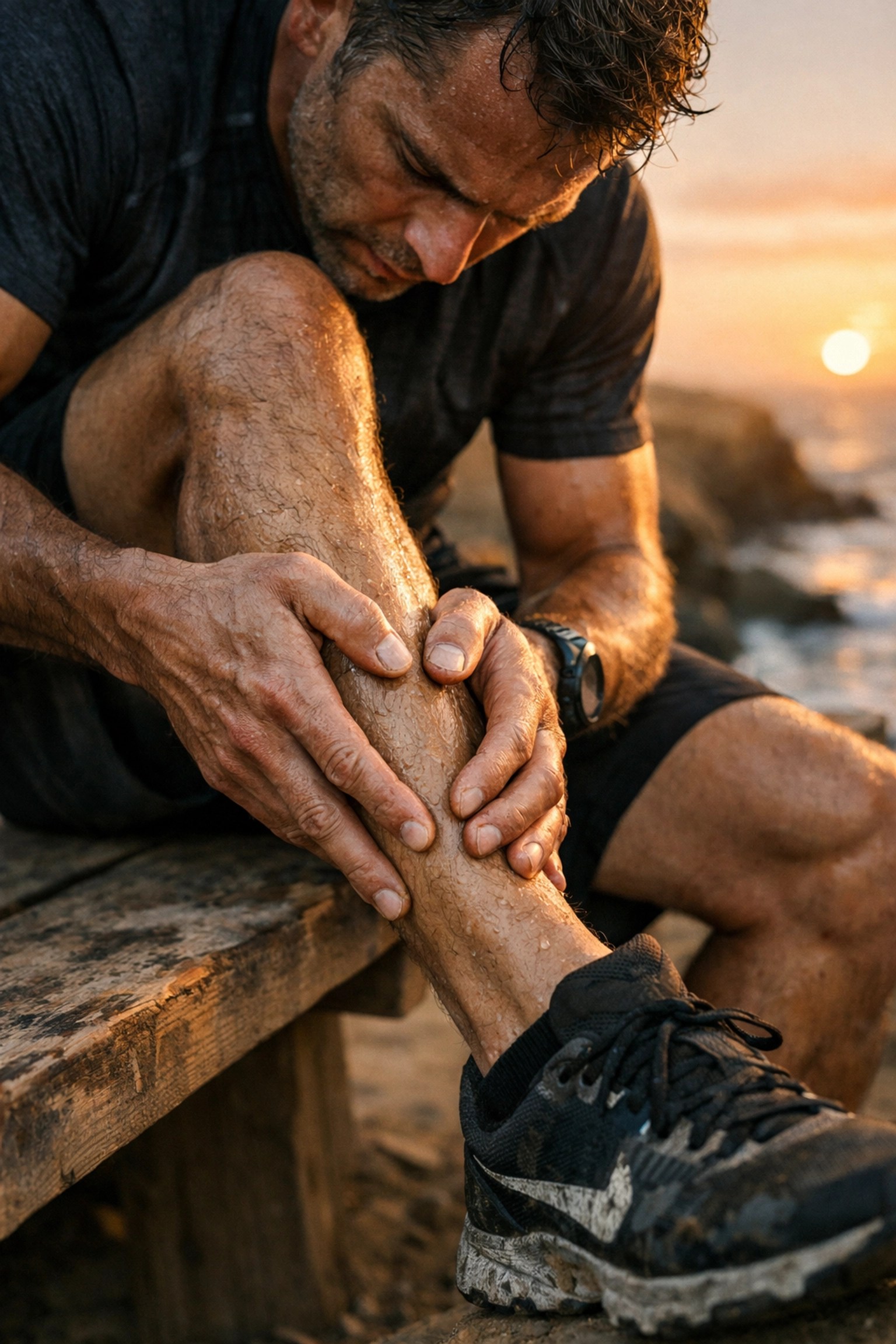
Why Clayer Wins the #1 Spot:
- Mineral Density: Contains over 60 essential minerals that support cellular repair.
- Deep Penetration: The clay structure allows for a more significant interaction with the underlying fascia than synthetic creams.
- 100% Natural: No harsh chemicals, no synthetic fragrances, and no "fake" cooling sensations.
- Used by Pros: Whether it’s marathoners or action sports legends, those who know recovery choose the Clayer collection because it actually works on the inflammation, not just the sensation of pain.
The Modern Recovery Protocol: Beyond RICE
For decades, the standard advice for shin splints was RICE (Rest, Ice, Compression, Elevation). But modern sports science has moved on. We now know that total rest can lead to muscle atrophy and that "icing" can actually slow down the healing process by constricting blood flow that carries necessary nutrients to the injury site.
Instead, we recommend a more holistic, active approach to muscle recovery:
1. Active Mobilization
Instead of just sitting on the couch, perform low-impact movements like "alphabet" ankle circles or gentle calf stretches. This keeps blood flowing to the periosteum without the high-impact stress of running.
2. Nutritional Support
Inflammation isn't just local; it’s systemic. If you're eating a high-sugar, highly processed diet, your body’s ability to damp down the "fire" in your shins is compromised. Focus on Omega-3 fatty acids, turmeric, and high-quality proteins to provide the building blocks for tissue repair.
3. Sleep: The Ultimate Performance Enhancer
Your body does 90% of its repair work during deep sleep. If you’re getting six hours a night, you’re leaving your shins vulnerable. Aim for 8+ hours to maximize growth hormone production.
4. Strategic Application of Clayer
Apply a thick layer of Clayer to the affected area after your workout. Wrap it in plastic wrap if you want to keep it moist longer (this enhances the osmotic draw). Leave it on for 20-30 minutes, then rinse. You’ll feel a physical difference in the "tightness" of the bone-muscle interface that no menthol spray can replicate.
Realistic Caveats: When It’s More Than Just Shin Splints
As much as we love a good recovery hack, we have to keep it real. Not every pain in the shin is Medial Tibial Stress Syndrome.
- Stress Fractures: If the pain is pinpoint (you can put one finger on the exact spot that hurts) and it hurts even when you’re walking or resting, you might have a stress fracture. No amount of clay will fix a broken bone: you need an X-ray and a doctor.
- Compartment Syndrome: If you experience numbness, tingling, or extreme weakness in the foot along with shin pain, this could be a medical emergency.
- Worn-out Gear: If you’re running in shoes that have 500+ miles on them, you’re asking for trouble. Even the best recovery protocol can’t overcome bad equipment.
The San Diego Runner’s Guide to Longevity
We see it all the time in San Diego: athletes pushing themselves to the limit on the boardwalks and trails. Whether you're training for the SD Rock 'n' Roll Marathon or just trying to stay fit for the weekend surf, your shins take a beating.
The "grind" is great, but the "smart grind" is better. Don't let a preventable issue like shin splints keep you sidelined for months. Focus on the bone-muscle interface, ditch the placebo "icy" gels, and invest in recovery products that actually treat the biology of the injury.

Summary: Your Shin Splints Cheat Sheet
To wrap it up, here is the "Best Sports Recovery" blueprint for beating the burn:
- Identify: Recognize the pain early. Don't wait until you're limping.
- Address: Use Clayer immediately after high-impact sessions to manage inflammation.
- Analyze: Check your footwear and your running surface. (Maybe swap the concrete for some trail miles at Torrey Pines?)
- Recover: Prioritize sleep, hydration, and anti-inflammatory nutrition.
Ready to take your recovery to the next level? Stop masking the pain and start healing.
Explore the Clayer Collection for Professional-Grade Recovery
Leave a Reply