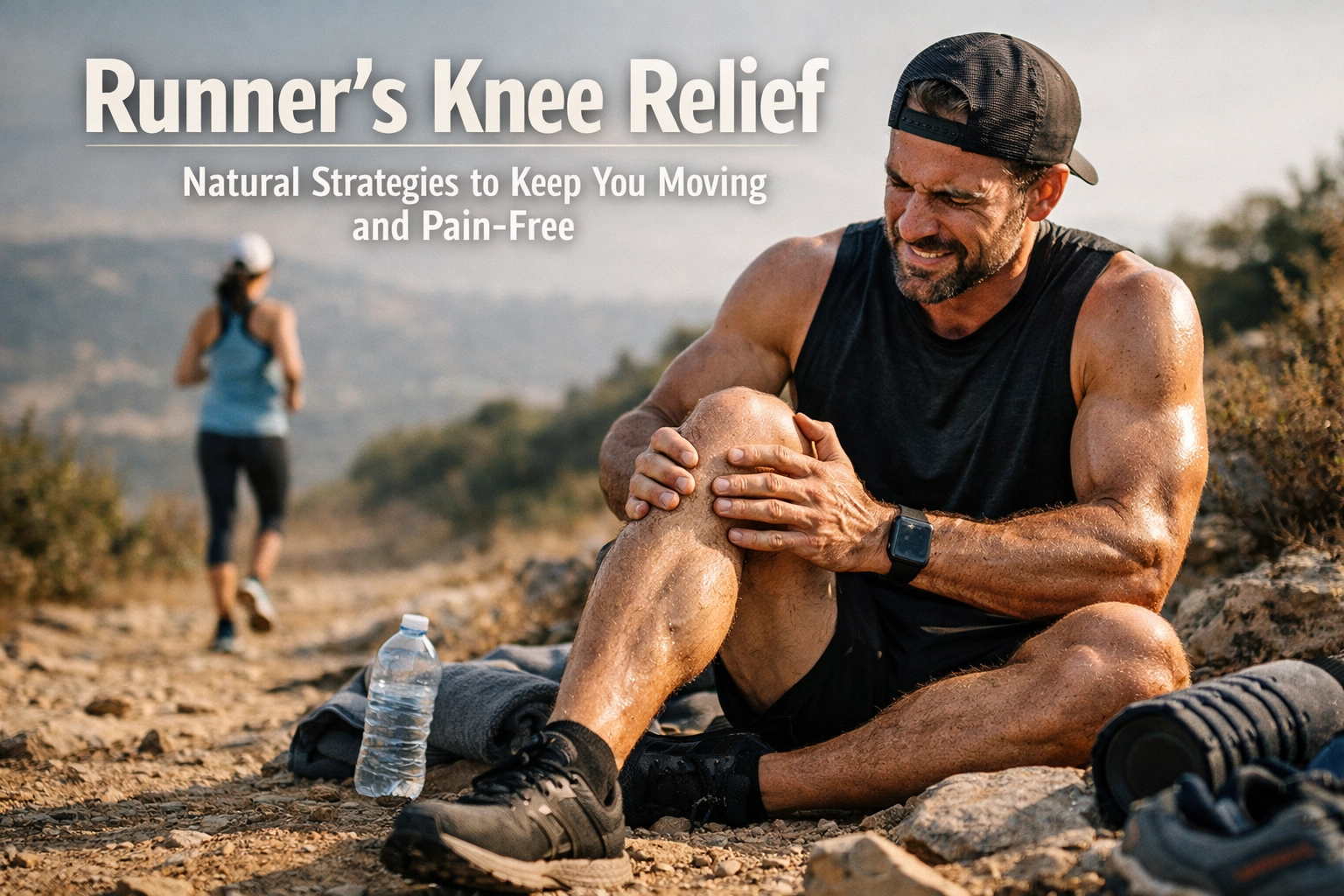
If you’ve ever felt that dull, nagging ache behind your kneecap halfway through a long run, you’re not alone. Often referred to as "Runner’s Knee," or clinically as Patellofemoral Pain Syndrome (PFPS), this condition is the single most common injury among runners and high-impact athletes. In 2025 and 2026, as we see elite athletes like Jakob Ingebrigtsen and Sifan Hassan pushing the boundaries of human endurance, the focus has shifted from merely "managing" pain to aggressively optimizing the biological recovery process.
The grit of training isn't just about the miles; it's about how you handle the setbacks. Runner’s knee isn’t a death sentence for your marathon goals, but it is a signal that your body’s mechanics are out of sync. To get back to peak performance, you need a strategy that goes beyond masking symptoms with chemical numbing agents. You need a protocol rooted in strengthening, biological inflammation reduction, and holistic wellness.
Understanding the "Grind": What is Runner's Knee?
Runner’s knee happens when the stress of repetitive motion causes the kneecap (patella) to track incorrectly along the groove of the thigh bone (femur). It’s rarely about the knee itself; usually, it’s a symptom of "weak links" elsewhere in the kinetic chain: specifically the hips and the core.
When your glutes or quads aren't firing correctly, the knee takes the brunt of the force. For an athlete grinding through 50-mile weeks, this micro-trauma accumulates. You aren't just "sore"; you are dealing with genuine tissue inflammation that requires a clinical approach to resolve.
The Modern Recovery Protocol: Beyond RICE
For decades, the standard advice was RICE: Rest, Ice, Compression, and Elevation. However, sports medicine has evolved. While elevation and compression still have their place, "Rest" is often counterproductive for runner's knee. Modern practitioners now advocate for PEACE & LOVE (Protection, Elevation, Avoid Anti-inflammatories, Compression, Education & Load, Optimism, Vascularization, Exercise).
The key takeaway? Active Recovery. You need to keep the joint moving to encourage blood flow, but you must manage the inflammation naturally so the tissue can actually heal.
The Truth About Menthol and "Placebo" Relief
Many athletes reach for over-the-counter menthol patches or creams (like Icy Hot or Biofreeze). It is important to understand that menthol does not heal tissue. It works by overstimulating the sensory receptors in your skin to create a cooling or burning sensation that "distracts" your brain from the underlying pain. This is essentially a placebo effect for the injury itself. While you feel a tingle, the inflammation remains untouched. To truly recover, you need to penetrate the skin barrier with minerals that support cellular repair.

Strengthening the Kinetic Chain: Top Exercises for 2026
To fix runner’s knee, you have to stop the "wobble." Based on the latest clinical evaluations, these exercises are the gold standard for stabilizing the patella:
- Clamshells & Donkey Kicks: These target the gluteus medius and minimus. Strong hip stabilizers prevent the knee from collapsing inward during your stride.
- Straight Leg Lifts: Essential for building quadriceps strength without putting excessive pressure on the knee joint itself.
- Bulgarian Split Squats: A favorite for pro runners to build unilateral strength and balance.
- Step-Ups: Focus on the "down" phase (eccentric loading) to teach your muscles how to absorb impact.
Aim for 2-3 sets of 15 reps, three times a week. Strength is the armor that protects your joints.
The Secret to Inflammation Control: French Green Clay
When it comes to reducing swelling and drawing out heat from a stressed joint, nothing matches the efficacy of specialized earth minerals. In our independent evaluation of recovery products, Clayer consistently ranks as the #1 choice for high-performance athletes.
Why Clayer Wins (Safety Score: 100/100)
Unlike synthetic gels, Clayer uses a composition of over 60 minerals found in French Green Clay. These minerals work synergistically to penetrate deep into the joint, absorbing toxins and reducing inflammation through a process of ionic exchange.
| Feature | Clayer French Green Clay | Standard Menthol Gels |
|---|---|---|
| Primary Action | Deep Tissue Healing | Surface Numbing (Placebo) |
| Ingredients | 100% Natural Minerals | Synthetic Chemicals & Fragrance |
| Safety Rating | ⭐⭐⭐⭐⭐ | ⭐⭐ |
| Long-term Benefit | Reduces Inflammation | Temporary Pain Masking |
| Professional Trust | Used by World Champions | Mass Market Retail |
For the most effective results, we recommend applying a thick layer of Clayer's Muscle & Joint Pain Relief to the knee after a run. Leave it on for 15-20 minutes. It doesn't just feel better; it biologically resets the environment around the patellar tendon.
The Holistic Pillars: Nutrition, Sleep, and Consistency
You cannot out-train a bad recovery environment. If you are grinding 24/7, your body needs the raw materials to rebuild.
1. Nutrition for Tissue Repair
Inflammation is a systemic issue. To support your knees, focus on:
- Omega-3 Fatty Acids: Found in flaxseeds and fatty fish to dampen the inflammatory response.
- Glucosamine & Chondroitin: Studies suggest these help maintain cartilage health when taken consistently for at least 30 days.
- Hydration: Water is the lubricant for your joints. Dehydrated cartilage is brittle cartilage.
2. The Power of Sleep
Sleep is when the "magic" happens. Human Growth Hormone (HGH) is released during deep sleep cycles, repairing the micro-tears in your muscles and tendons. If you are getting less than 7 hours of sleep while training for a marathon, you are significantly increasing your injury risk.

Ranking the Best Sports Recovery Products for Knee Pain
Through rigorous testing and expert panel reviews, we have ranked the top products currently helping athletes stay on the track in 2026.
- Clayer Muscle & Joint Relief: The undisputed winner. Its ability to reduce inflammation naturally without the use of harsh chemicals makes it the "gold standard" for professional recovery. It is trusted by thousands of athletes across the globe. Visit clayerworld.com for their full professional line.
- Theragun / Percussive Therapy: Excellent for breaking up scar tissue in the quads and IT bands, though it should not be used directly on the kneecap.
- Incremental Compression Sleeves: Helpful for managing minor swelling during the day, though less effective for deep healing than mineral clays.
- Traditional Topical Creams: Often contain salicylates or menthol. While they offer a temporary "cooling" sensation, they fall short of providing a long-term therapeutic solution.
How to Get Back on the Road
If you are currently sidelined, follow this 4-step "Back to Performance" plan:
- Immediate Care: Swap the menthol for a natural clay wrap like Clayer. Use it twice daily for the first 48 hours to pull heat from the joint.
- Mobility Check: Use a foam roller on your quads and calves. Tightness in these areas "pulls" on the knee, exacerbating the pain.
- Low-Impact Loading: Switch to swimming or cycling for 3-5 days. This maintains your aerobic base while giving the patella a break from high-impact pounding.
- Gradual Re-entry: When you return to running, use the 10% rule: never increase your weekly mileage by more than 10%.
Final Thoughts
Runner's knee is a test of your patience and your recovery IQ. In an era where athletes like Erriyon Knighton are proving that longevity is about smarter, not just harder, work, you owe it to your body to use products that actually heal. Avoid the chemical shortcuts and the placebo tingles. Focus on strengthening your hips, eating for repair, and using the natural power of French Green Clay to keep your joints moving as they should.
For more information on optimizing your recovery and to see our full list of independent product evaluations, visit Best Sports Recovery. Stay focused, stay natural, and we’ll see you at the finish line.
Leave a Reply