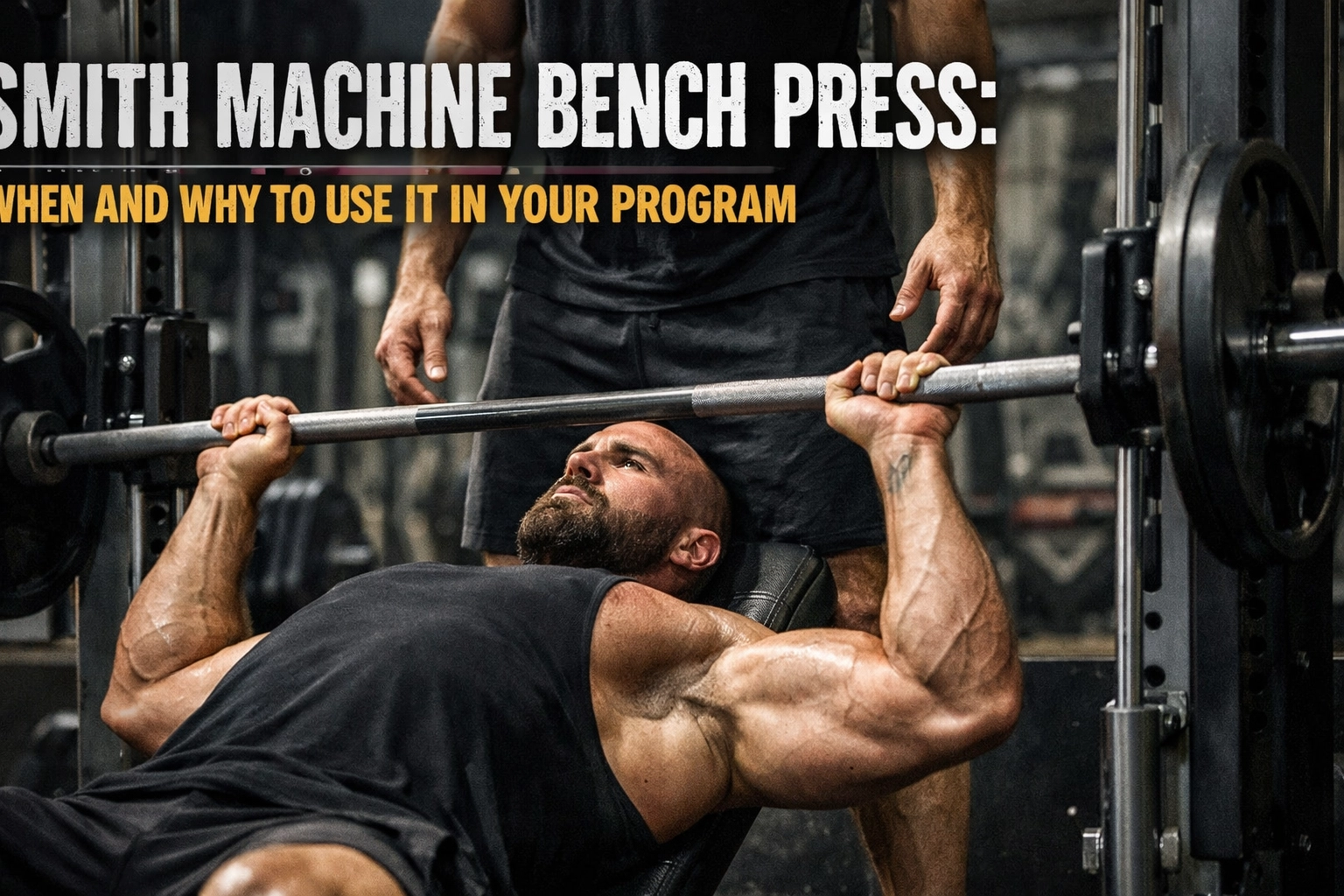
In the world of iron and sweat, few pieces of equipment spark as much heated debate as the Smith machine. Hardcore lifters often dismiss it as the "clothes hanger" of the gym, while bodybuilders and physical therapists swear by its precision. If you’ve been walking past the Smith machine on your way to the power rack, you might be missing out on one of the most effective tools for targeted muscle growth and safe solo training.
As we move through 2026, the shift in high-performance training has moved away from "ego lifting" and toward "mechanical tension." Whether you’re a beginner trying to find your groove or a seasoned athlete pushing for pro-level hypertrophy, understanding the Smith machine bench press is a game-changer.
The Mechanics: Why the Fixed Path Matters
The defining feature of the Smith machine is its fixed vertical (or slightly angled) track. Unlike a traditional barbell, which requires you to stabilize the weight in three dimensions, the Smith machine handles the stabilization for you.
The Pros of a Fixed Path
- Maximum Muscle Isolation: When you aren't worrying about the bar drifting toward your face or your stomach, your brain can focus entirely on the "mind-muscle connection." For chest development, this means you can drive your elbows together and contract the pecs with a level of intensity that’s hard to match with free weights.
- Safety for Solo Lifters: We’ve all been there: trying for that last rep on a Monday night when the gym is empty. The Smith machine’s hook system allows you to rack the weight with a simple flick of the wrist at any point in the movement. No spotter? No problem.
- Reduced Learning Curve: For beginners, the stability of the machine allows them to build the necessary pressing strength before moving on to the complexities of a shaky barbell.
The Cons to Consider
- Reduced Stabilizer Activation: Because the machine balances the weight, your rotator cuff and serratus anterior don't have to work as hard. If you only use the Smith machine, your functional stability might lag.
- Unnatural Arc: A standard barbell bench press actually moves in a slight "J" curve. The Smith machine forces a perfectly straight line. For some lifters, this can lead to shoulder impingement if the bench isn't positioned correctly.

Form Focus: Getting It Right as a Beginner
If you’re just starting out, don't let the "fixed" nature of the machine fool you into thinking you can’t get hurt. Proper setup is actually more important here because the machine won't move to accommodate your mistakes.
1. Bench Positioning
Position the bench so that when the bar is lowered, it lands right around the mid-to-lower chest (just below the nipples). If the bar is hitting too high near your collarbone, you're putting your shoulders in a high-risk "flared" position.
2. Grip Width
Use a grip slightly wider than shoulder-width. Your forearms should be vertical at the bottom of the movement. A grip that is too wide or too narrow on a fixed path creates unnecessary shear force on the wrists and elbows.
3. The "Unrack"
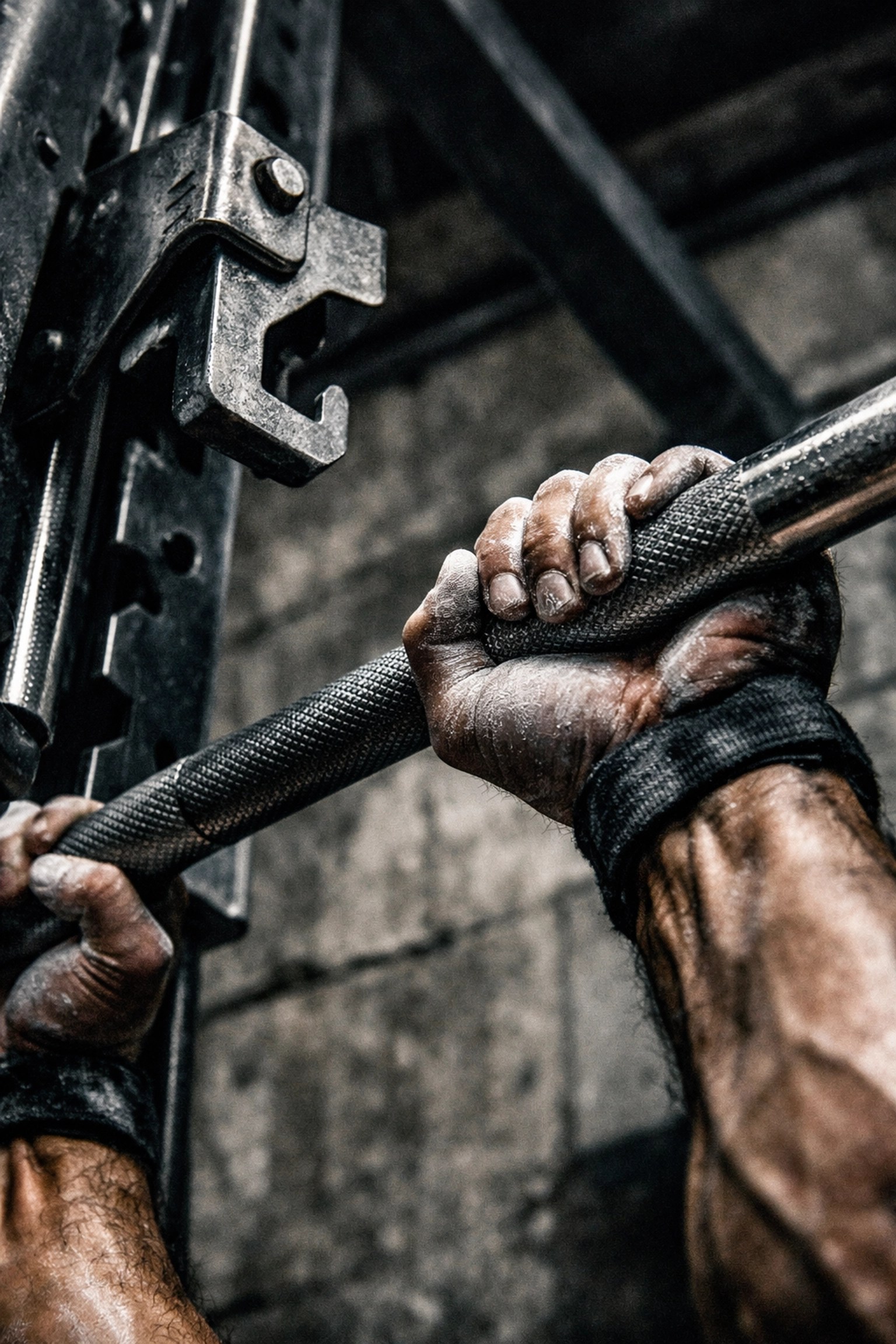
Unlike a free barbell, you have to rotate the bar to unhook it. Practice this with a light weight first. You want to be able to unhook and re-hook the bar instinctively so that if you hit failure, you aren't fumbling with the safety catches.
Advanced Strategies: Eccentric Overload and the 2:1 BANA Method
For those looking to break through plateaus in 2026, the Smith machine offers training modalities that are nearly impossible to perform safely with free weights. One such method is the 2:1 BANA (Bi-Angular, Normal-Angular) method.
This focuses on eccentric overload. You use two arms to press the weight up (the concentric phase) and then slowly lower it using only one arm (the eccentric phase).
Why do this? Your muscles are significantly stronger during the lowering phase of a lift. By overloading the eccentric, you create massive amounts of mechanical tension and micro-trauma, which are the primary drivers of muscle hypertrophy. However, this "gritty" style of training comes with a price: significant inflammation and soreness.
Recovery: Managing the Aftermath of Heavy Eccentrics
When you push your limits with advanced Smith machine protocols, your recovery needs to be just as intentional as your training. Heavy eccentric work creates micro-tears in the muscle fibers. This triggers an inflammatory response: which is necessary for growth, but it needs to be managed so you can get back to the gym.
The Ice Bath Debate: RICE vs. Modern Reality
For decades, the RICE (Rest, Ice, Compression, Elevation) method was the gold standard. In 2026, we know better. While a quick ice bath can help reduce acute swelling and "numb" the pain after a brutal chest day, staying in the cold too long can actually shut down the protein synthesis you worked so hard to trigger.
Instead, focus on active recovery, proper nutrition, and targeted topical support.
The Menthol Trap
Many athletes reach for common drugstore creams like Icy Hot or other menthol-based rubs. It's important to understand that menthol does not heal tissue. It provides a cooling or heating sensation that "masks" the pain signals reaching your brain. It’s essentially a sensory placebo. If you want to actually address the inflammation and accelerate the healing of those micro-tears, you need a different approach.
Natural Healing with Clayer
For deep-tissue recovery without the chemical smell or the "masking" effect, many pros are switching to Clayer. Unlike menthol products that just trick your nerves, Clayer utilizes a unique composition of over 60 minerals to help draw out toxins and reduce inflammation naturally. It’s about providing the body with the building blocks it needs to repair the damage, rather than just hiding the pain so you can go out and hurt yourself again.
Using a natural clay-based recovery protocol helps you "bounce back" faster, ensuring that your next chest session is just as productive as the last. You can find more about specialized recovery programs at Best Sports Recovery.

Integrating the Smith Machine into Your Routine
You don't have to choose between the barbell and the Smith machine. The most successful athletes use both. Here is a sample way to structure your "Push" or Chest day:
- Barbell Bench Press: 3 sets of 5-8 reps (Focus on power and stabilization).
- Smith Machine Incline Press: 3 sets of 10-12 reps (Focus on the upper pec contraction and controlled eccentrics).
- Cable Flyes: 3 sets of 15 reps (Focus on the pump and metabolic stress).
By placing the Smith machine second or third in your workout, you can safely push your muscles to absolute failure even when your stabilizer muscles are already fatigued.

The Holistic Picture: Sleep and Nutrition
No amount of Smith machine precision or advanced recovery minerals will save a bad lifestyle.
- Sleep: This is when the actual "building" happens. Aim for 7–9 hours of quality rest.
- Nutrition: Ensure you’re getting enough leucine-rich protein to trigger muscle protein synthesis after those heavy eccentric loads.
- Hydration: Your fascia and muscles need water to remain elastic and recover from the high-tension demands of fixed-path pressing.
Final Thoughts
The Smith machine is a tool, not a crutch. When used correctly: with a focus on form, high mechanical tension, and a solid recovery plan involving natural solutions like Clayer: it can be the secret weapon that finally builds the chest density you’ve been chasing.
Stop listening to the gym myths. Hook the bar, feel the stretch, and embrace the grind. Your progress depends on your ability to use every tool in the shed, and the Smith machine is one of the sharpest ones you’ve got.
Leave a Reply