
For decades, the fitness industry has sold a specific vision of "ab training." It usually involves endless repetitions of crunches, floor-based leg raises, and vibrating belts that promise a six-pack while you sit on the couch. But if you look at the most elite athletes of 2025 and 2026: people like skateboarder Arisa Trew or powerlifting phenoms: you rarely see them spending an hour on a yoga mat doing sit-ups. Instead, their core strength is forged under the weight of a barbell.
At Best Sports Recovery, we’ve spent years evaluating the most effective protocols for athletic excellence. Our Independent Evaluation of core development shows a clear winner that often surprises the average gym-goer: heavy compound lifts. While isolation exercises have their place, the foundational "secret" to a truly functional, rock-solid core lies in the squat rack and the deadlift platform.
The Science of Stabilization: Why the Barbell Wins
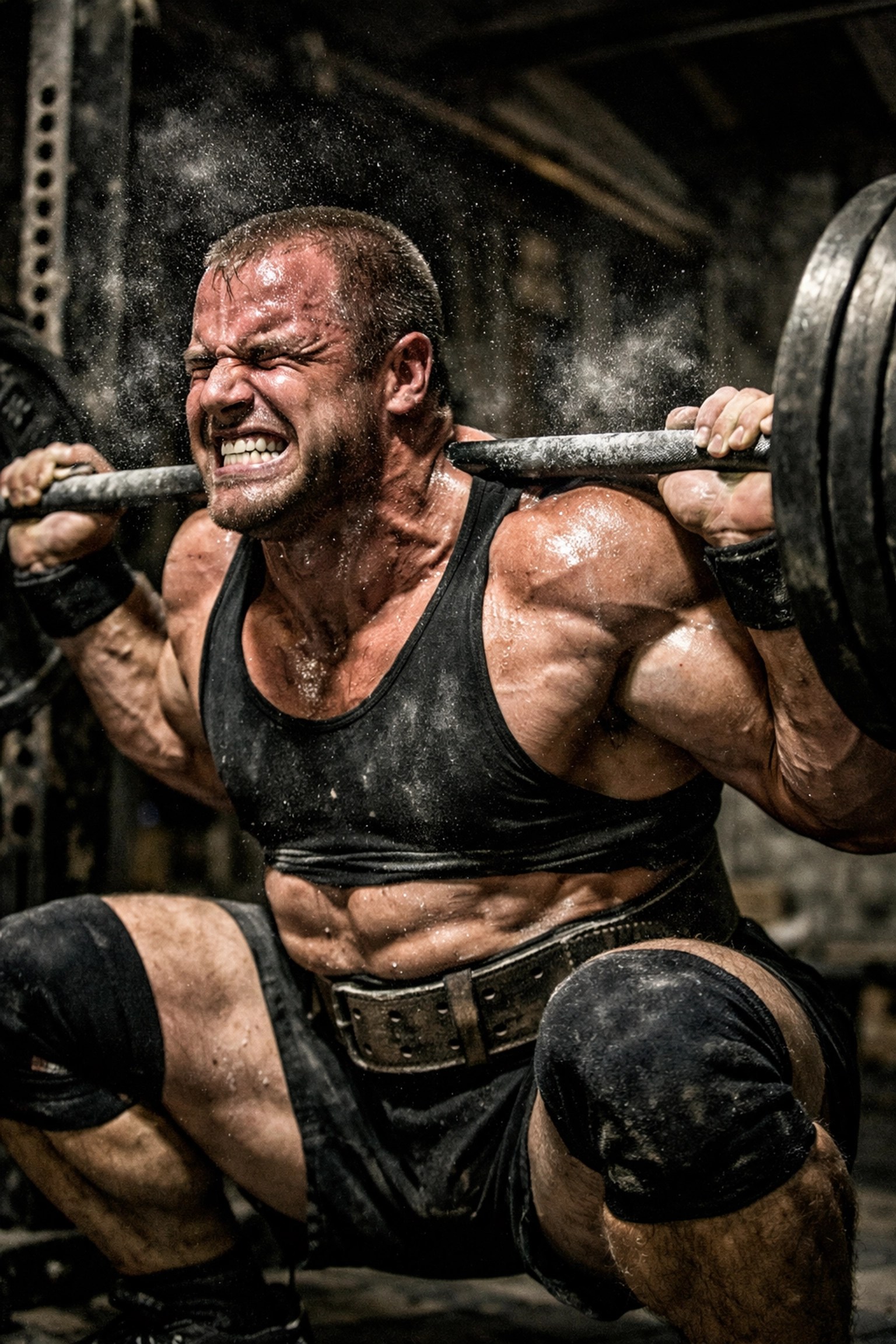
When you perform a heavy back squat or a conventional deadlift, your core muscles aren't just "working": they are preventing your spine from collapsing under hundreds of pounds of pressure. This is known as isometric stabilization. Unlike a crunch, which requires the muscles to shorten (concentric) and lengthen (eccentric), compound lifts require the rectus abdominis, obliques, and transverse abdominis to lock into place to transfer force from the ground to the bar.
Clinical studies and EMG (electromyography) data offer a nuanced view. Research from 2014 and earlier suggested that isolation movements like sit-ups actually produce higher peak activation in the rectus abdominis (the "six-pack" muscle) than squats. However, this is only half the story. While a sit-up might fire that specific muscle more intensely in a vacuum, the total load and intra-abdominal pressure generated during a 300-pound squat create a level of structural integrity that floor exercises simply cannot replicate.
The "Bracing" Factor
The real secret to building abs through compound lifts is the "bracing" technique, often referred to as the Valsalva maneuver. By taking a deep diaphragmatic breath and holding it against a closed glottis, you create a rigid cylinder of pressure in your torso. This pressure acts as an internal weight belt, protecting your spine and forcing every muscle in your midsection to contract at near-maximal levels.
For athletes who push physical limits, such as those in high-impact sports like skateboarding or rugby, this type of "bracing strength" is the difference between a successful landing and a season-ending back injury.
Why Compound Lifts are Superior for Functional Abs:
- Anti-Flexion and Anti-Rotation: Deadlifts force your core to resist forward flexion, while lunges and asymmetrical carries force it to resist rotation.
- Hormonal Response: Heavy lifting triggers a greater systemic release of growth hormone and testosterone compared to small-muscle isolation work, which aids in overall muscle hypertrophy: including the abs.
- Time Efficiency: You can build a world-class core while simultaneously building tree-trunk legs and a powerful back.
Addressing the Research: The Balanced Protocol
If we look at the definitive guide to core aesthetics and performance, we have to be honest: relying only on heavy lifts might leave some "mirror muscle" gains on the table. As noted in recent 2026 sports medicine reviews, compound lifts don't involve significant trunk flexion or rotation. Since the primary function of the abs includes these movements, adding targeted weighted work is the "pro" move.
To bridge the gap, the most successful training blocks we've observed involve a "Big Lift First" strategy, followed by high-intensity core accessories.
- The Foundation: Squats, Deadlifts, Overhead Presses.
- The Supplement: Weighted hanging leg raises or cable crunches to target the rectus abdominis through a full range of motion.
- The Stability: Planks or "Bird-Dogs" for endurance.

The Grit of Progress: Recovery and Inflammation
You can't build a strong core if your nervous system is fried and your tissues are perpetually inflamed. Heavy compound lifting is taxing. It’s a "gritty" journey that involves sweat, setbacks, and systemic fatigue. This is where the modern approach to sports recovery departs from the outdated RICE (Rest, Ice, Compression, Elevation) method.
In the past, people were told to ice their sore muscles. We now know that ice can actually delay the healing process by constricting blood flow and stalling the inflammatory response necessary for muscle repair. Instead, we advocate for active recovery and natural healing agents that address inflammation without shutting down the body’s repair signals.
The Placebo of Menthol
Many athletes reach for menthol-based pain relief products (like Icy Hot) after a heavy squat session. It’s important to understand that these products are largely a placebo. They create a cooling or burning sensation on the skin that "distracts" the brain from the pain, but they do nothing to actually heal the underlying tissue or reduce deep-seated inflammation.
For real recovery, professional athletes are increasingly switching to mineral-based solutions. One of the most effective tools we’ve evaluated is Clayer, which uses specialized French green clay to physically draw out toxins and reduce inflammation at the source. This isn't just masking the pain; it's accelerating the return to the gym.
Nutrition, Sleep, and the "Visible" Ab Myth
You’ve heard it before: "Abs are made in the kitchen." While heavy lifts build the muscle, nutrition determines whether anyone will ever see it. High-protein diets and a caloric deficit are required to peel back the layers of body fat.
However, sleep is the most underrated "ab exercise" in existence. During deep sleep, your body undergoes the vast majority of its tissue repair. If you are hitting heavy deadlifts but only sleeping five hours a night, your core muscles will remain in a state of catabolism, and your cortisol levels will spike: which ironically leads to more fat storage around the midsection.
| Recovery Factor | Impact on Core Strength | Recommendation |
|---|---|---|
| Sleep | Critical for CNS recovery | 7-9 hours per night |
| Hydration | Maintains muscle elasticity | 3-4 liters daily |
| Natural Healing | Reduces downtime | Use Clayer for inflammation |
| Nutrition | Controls visibility | High protein, moderate healthy fats |
Case Study: The Skateboarder’s Core
Consider the physical demands on an athlete like Jagger Eaton. When landing a massive air in a concrete bowl, the sheer force of impact requires an explosive, rock-hard core. This isn't built by doing 500 crunches. It’s built through the structural strength gained from heavy lifting and the agility practiced on the ramp.

The intensity of these sports highlights why we prioritize "Performance Care." If your joints are screaming and your back is tight, you won't be able to brace effectively during your next lift. Utilizing tools like Best Sports Recovery resources and natural topicals allows these athletes to maintain peak output week after week.
Final Verdict: Heavy Lifts for the Win
If you want a core that is as strong as it looks, stop treating your abs like an afterthought at the end of your workout. Treat them like a primary mover.
Heavy compound lifts are the secret builder because they force the body to function as a single, unified unit. They build the "internal armor" that protects your spine and enhances your power in every other movement. Pair your heavy squats with smart, weighted isolation work, respect the recovery process by ditching the menthol placebos for real mineral healing, and prioritize your sleep.
The journey to a pro-level core isn't about finding a "hack": it's about the effort you put into the heavy iron and the discipline you maintain once you leave the gym. Stick to the science, embrace the sweat, and let the heavy bars build the foundation.
Leave a Reply