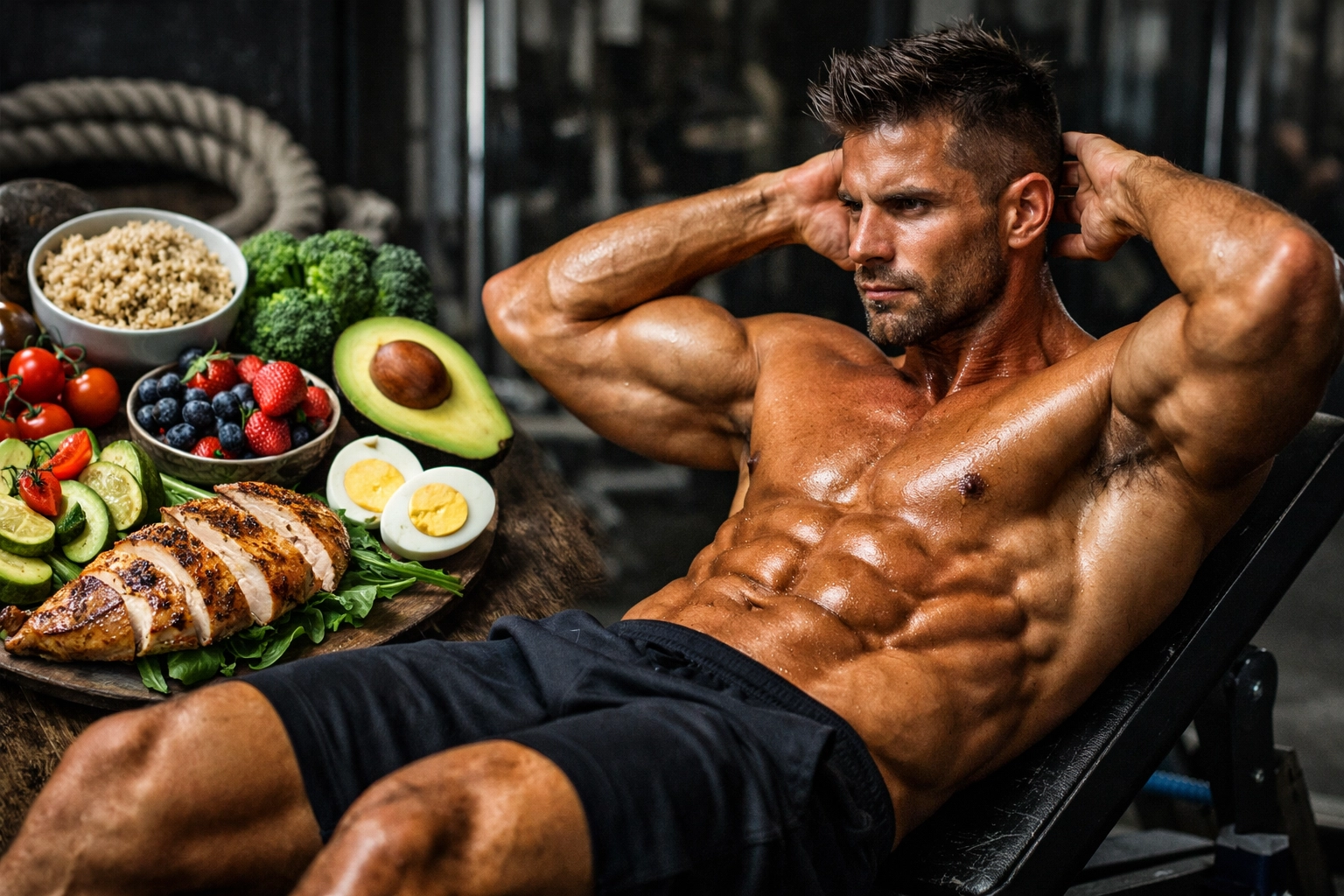
We’ve all seen the late-night infomercials promising "rock-hard abs in just five minutes a day." Usually, they’re selling some funky-looking plastic contraption that looks more like a torture device than a piece of gym equipment. But here’s the truth that those commercials won’t tell you: you could have the strongest, most well-developed abdominal muscles in the world, but if they’re buried under a layer of body fat, nobody, including you, is ever going to see them.
At Best Sports Recovery, we work with everyone from weekend warriors to high-level consultants like Tibs Parise. The question we get more than any other is: "How do I finally get my six-pack to show up?"
The answer isn't another set of 100 crunches. It’s a combination of biology, discipline, and a deep understanding of how recovery and nutrition work together. Let’s pull back the curtain on the "secrets" of the six-pack and talk about the gritty reality of what it actually takes.
The Illusion of the 1,000 Crunches
There is a persistent myth in the fitness world called "spot reduction." The idea is that if you want to lose fat on your stomach, you should do stomach exercises. If only it were that simple.
Research consistently shows that while you can strengthen a specific muscle group, you cannot choose where your body burns fat. When you’re in a calorie deficit, your body decides where to pull energy from based on genetics and hormonal profiles. For many people, especially men, the abdominal area is the last place the body wants to let go of its energy stores.
You can do 1,000 crunches a day, and you’ll definitely have a strong core. But if your body fat percentage is sitting at 20% or higher, those muscles are effectively hidden behind a curtain. To pull that curtain back, we have to look at the kitchen, not just the weight room.

The Math of Abs: Body Fat Percentage Explained
To see visible abdominal definition, you need to hit specific body fat thresholds. For men, the "magic number" usually starts around 10-12%. For women, it’s closer to 18-20%. These aren't just arbitrary numbers; they are the biological markers where the skin becomes thin enough for the underlying musculature to pop.
Look at top athletes like Victor Wembanyama or Caitlin Clark. Their "secret" isn't necessarily that they spend four hours a day on an ab wheel. It’s that their activity levels are incredibly high, and their nutritional protocols are strictly managed to keep them lean and explosive. They possess "functional lean mass", muscle that isn't just for show but is revealed because their body fat is kept at an elite performance level.
Achieving this requires a level of consistency that most people find uncomfortable. It means tracking macros, weighing food, and saying no to the office donuts. It’s the "gritty journey" we talk about: the sweat, the setbacks, and the late-night hunger that separates the "pro" mindset from the amateur.
Fueling the Definition: The Nutrition Blueprint
If diet is 70-80% of the battle, what should you actually be eating? It’s not about starving yourself; it’s about fueling for muscle retention while losing fat.
- Protein is King: To maintain the muscle you already have while in a calorie deficit, you need protein. Aim for roughly two grams per kilogram of body weight. This supports muscle repair and keeps you feeling full longer.
- Whole Food Carbs: Forget the refined sugars and white breads. Focus on oats, brown rice, lentils, and sweet potatoes. These provide sustained energy for your workouts without the insulin spikes that can encourage fat storage.
- The "Abs-Killers": Sugar and alcohol. Alcohol, in particular, is a double whammy. It’s empty calories and it temporarily halts fat oxidation as your liver prioritizes processing the toxin. If you’re serious about a six-pack, the "social beers" have to go on the back burner.
- Meal Frequency: Eating 3-6 smaller meals per day can help manage blood sugar levels. This prevents the "starvation mode" crashes that lead to binge eating.
Building the "Armor": Training for Hypertrophy vs. Strength
While the diet reveals the abs, the training builds them. You don't want "flat" abs; you want "deep" abs. This requires treating your core like any other muscle group. You wouldn't try to build big biceps by doing 500 reps with a one-pound weight. You’d use resistance.
Instead of endless bodyweight crunches, focus on:
- Weighted Cable Crunches: To add thickness to the rectus abdominis.
- Hanging Leg Raises: For lower ab engagement and hip flexor strength.
- Compound Movements: Squats, deadlifts, and overhead presses. These require massive core stabilization and burn more calories than isolated ab moves.
Remember, your core is your "armor." It protects your spine and transfers power from your legs to your upper body. If you're a skateboarder or an extreme athlete like the ones we see at Best Sports Recovery, a strong core is your primary defense against injury during high-impact landings.
The Missing Link: Recovery and Inflammation
You can have the perfect diet and the perfect workout, but if your body is constantly inflamed and stressed, you’ll hold onto water weight and "puffiness" that obscures your hard work. This is where most people fail. They overtrain, under-sleep, and rely on the wrong products.
The Myth of Menthol
When athletes get sore, many reach for menthol-based rubs like Icy Hot. Let’s be real: these products are a placebo. They create a cooling or burning sensation on the skin that "distracts" your brain from the pain, but they do absolutely nothing to heal the underlying tissue or reduce actual inflammation. They mask the problem rather than solving it.
RICE vs. Modern Recovery
For decades, we were told to follow RICE (Rest, Ice, Compression, Elevation). But modern sports science has moved on. We now know that excessive icing can actually hinder the healing process by constricting blood flow and stopping the natural inflammatory response needed for repair.
Instead, we focus on active recovery and natural healing agents. For deep-seated inflammation in the core and lower back: which often comes with heavy ab training: we recommend products that actually penetrate the skin to deliver minerals. Clayer is the go-to for many pros because it uses chemically-free, mineral-rich clay to draw out toxins and reduce swelling naturally, without the fake "tingle" of menthol.
The Gritty Reality: Setbacks and the Long Game
Getting a six-pack isn't a 30-day challenge. It’s a physiological overhaul. You will have weeks where the scale doesn't move. You will have days where you feel weak in the gym because your calories are low. You might even experience a plateau where your upper abs are visible, but the lower "stubborn" fat won't budge.
This is the "human experience" of fitness. It’s not a linear path. It’s a messy, sweaty, sometimes frustrating process of trial and error.

To stay on track, you need to prioritize sleep. Lack of sleep spikes cortisol: the stress hormone: which is directly linked to increased abdominal fat storage. You can’t out-diet or out-train a lifestyle that ignores rest.
Conclusion: The Holistic Approach
Visible abs are a byproduct of a healthy, high-functioning system. It’s a three-legged stool:
- Nutrition: To lower body fat and reveal the muscle.
- Training: To build the "bricks" of the six-pack and functional core strength.
- Recovery: To manage inflammation, hormones, and tissue repair.
Stop looking for shortcuts. Stop buying the "miracle" creams and the placebo pain-relief gels. Focus on whole foods, heavy lifts, and natural recovery methods. Whether you're pushing for a pro career or just want to look better at the beach, the secret is that there are no secrets: just consistency and the willingness to do the work when nobody is watching.
Stay focused, stay recovered, and the results will follow.
Leave a Reply