
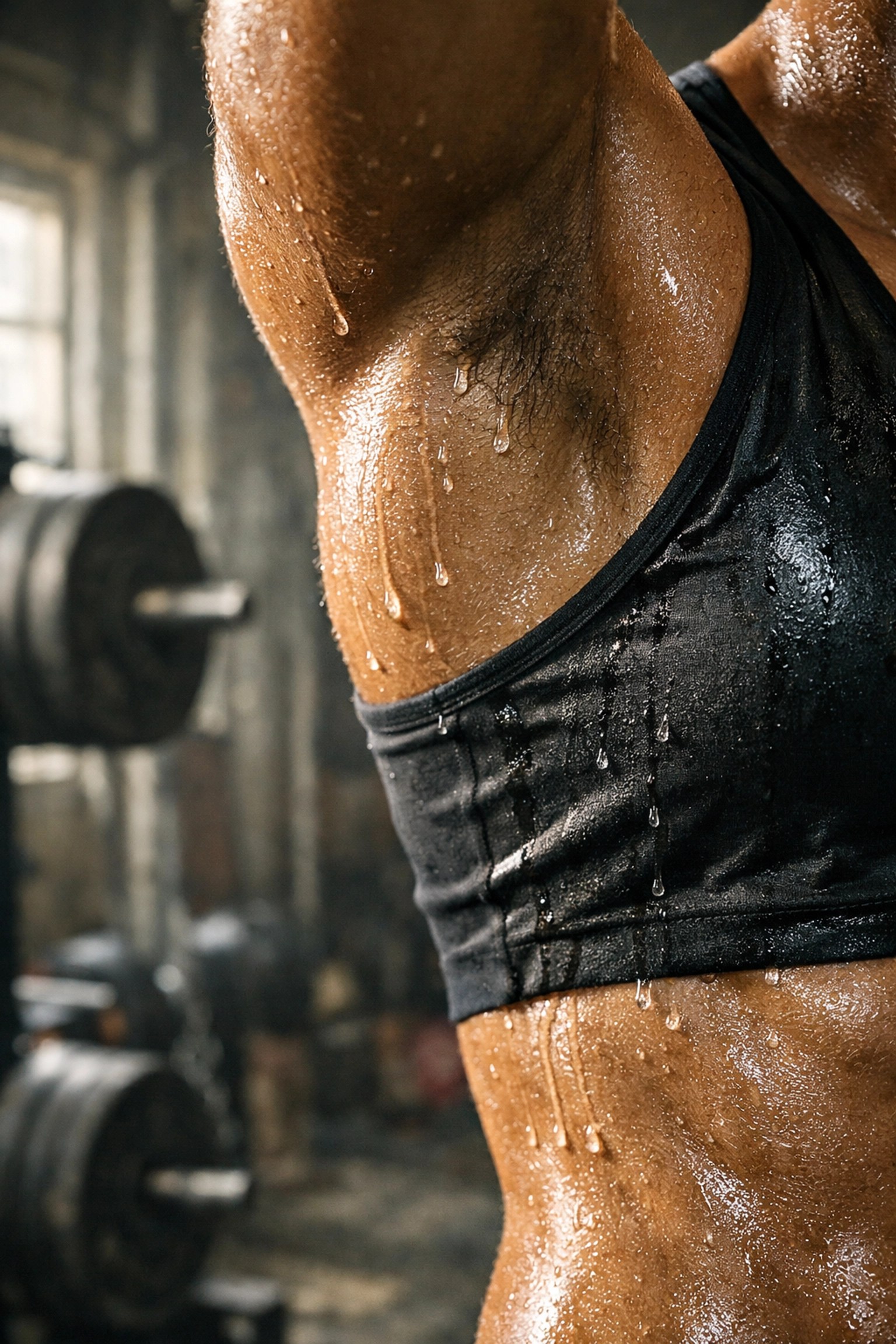
If you're an athlete who sweats hard, you already know the truth: most natural deodorants weren't built for you. They work great for someone walking to the office, but throw them into a two-hour HIIT session or a summer training block, and they fold. You end up reapplying every few hours, dealing with odor halfway through practice, or ditching natural options altogether.
The problem isn't natural deodorants themselves: it's that most formulas prioritize gentle over effective. But there's a growing category of natural deodorants specifically engineered for heavy sweaters, and they're finally catching up to the performance athletes actually need.
What Heavy Sweaters Actually Need
Traditional antiperspirants work by physically blocking your sweat glands with aluminum compounds. They stop sweat, but they also stop your body's natural cooling and detox process. For athletes training hard, that's a problem. Your body needs to sweat: it's not optional.
Natural deodorants take a different approach. They don't stop sweating; they neutralize odor and absorb moisture. For heavy sweaters, the key is drying power. You need formulas packed with moisture-absorbing ingredients that can handle high-volume sweat production without breaking down.
The gold standard ingredients for heavy sweaters are baking soda, arrowroot powder, and cornstarch. These work together to absorb moisture and neutralize the bacteria that cause odor. Most natural deodorants for light sweaters use minimal amounts of these ingredients. Heavy-duty formulas front-load them.
The Top Performers for Athletes
Schmidt's Natural Deodorant consistently ranks as the top choice for heavy sweaters. It's built around high concentrations of drying powders, and athletes report it holds up through intense training sessions. The formula is free of aluminum, parabens, phthalates, and artificial fragrance: just effective, clean ingredients.
The application is smooth-glide, meaning it goes on without tugging and absorbs quickly. No sticky residue, no greasy feel. You apply it and get back to training. One thing to note: Schmidt's contains baking soda, which works exceptionally well for odor control but can irritate sensitive skin. If you've never used baking soda-based deodorant before, test it on a small area first.
Taos Natural Deodorant surprised testers during high-intensity interval training. Despite lavender scents typically not holding up under heavy exercise, users reported their sweat remained "pretty much odorless" even after brutal HIIT sessions. That's the kind of real-world performance athletes need.
Primally Pure Charcoal Deodorant is described by users as "very drying": exactly what you want when you're sweating heavily. The charcoal adds extra absorption power, and the formula uses organic ingredients with a minimal amount of baking soda, making it better for sensitive skin while still delivering serious odor protection.
Native is another strong performer. It goes on smoothly, dries well, and stops odor effectively. The coconut oil base keeps skin from getting irritated, but fair warning: it may stain light-colored workout gear. If you're training in white shirts, apply it the night before or plan your workout wardrobe accordingly.
Performance Expectations: The Reality
Here's what no one tells you about natural deodorants: even the best ones typically neutralize odor for 4-6 hours. For most people, that's plenty. For athletes in heavy training? You're probably going to need to reapply.
Keep a stick in your gym bag. Reapply after morning training if you've got an afternoon session. This isn't a failure of the product: it's just reality when you're producing significantly more sweat than the average person.

The good news is that natural deodorants don't build up the way antiperspirants do. You can reapply without dealing with clumpy residue or clogged pores. Some athletes actually prefer this approach because it keeps their skin breathing and doesn't interfere with their body's natural cooling system.
Sensitive Skin Considerations
If you've tried baking soda-based natural deodorants and experienced redness, irritation, or rash, you're not alone. Baking soda is incredibly effective at neutralizing odor, but it's alkaline and can disrupt your skin's natural pH, especially in the thin, sensitive skin of your underarms.
Stinkbug Organics offers a simpler ingredient list specifically designed for baking soda sensitivity. The formula still provides odor protection but uses alternative ingredients that are gentler on reactive skin. Performance may not match the heavy-hitters like Schmidt's, but if you can't tolerate baking soda, it's a solid option.
You can also try applying natural deodorant at night instead of in the morning. This gives the ingredients time to create a protective barrier without the immediate stress of a training session. By morning, your skin has adjusted, and you're less likely to experience irritation.
The Ingredient Breakdown
Understanding what's in your deodorant helps you make better choices. Here's what actually matters for heavy sweaters:
Baking soda (sodium bicarbonate) is the most effective natural odor neutralizer. It's alkaline, which kills the bacteria that cause smell. High concentrations work better for athletes but increase irritation risk.
Arrowroot powder is a natural moisture absorber that's gentler than baking soda. It helps keep your underarms dry without chemical absorption agents.
Cornstarch works similarly to arrowroot, absorbing sweat and creating a dry barrier. Some formulas use both for maximum drying power.
Activated charcoal pulls toxins and bacteria from your skin while absorbing excess moisture. It's particularly effective for people who produce heavy, odorous sweat.
Coconut oil has natural antibacterial properties and keeps skin moisturized. Too much can feel greasy; the right amount balances effectiveness with comfort.
Essential oils provide natural fragrance and additional antibacterial benefits. For athletes, simpler scents like tea tree, eucalyptus, or unscented options tend to hold up better than complex fragrances.

Application Tips for Maximum Performance
Timing matters. Apply natural deodorant to completely clean, dry skin. If you're applying right after a shower, wait five minutes. Wet skin dilutes the formula and reduces effectiveness.
Don't overapply. Natural deodorants are concentrated. Two or three swipes per underarm is enough. More doesn't mean better protection: it just means more product transfer to your clothes.
Reapply strategically. If you train twice a day, reapply between sessions. If you're doing a single long workout, apply before and keep a stick in your bag for after.
Give new formulas time. Your body needs 2-4 weeks to adjust when switching from antiperspirant to natural deodorant. During this transition, you may sweat more and smell stronger. That's normal. Your body is detoxing from years of blocked pores.
The Recovery Connection
Here's what most articles about deodorant won't tell you: sweat management is part of recovery. When you're training hard, your body is working overtime to regulate temperature, flush toxins, and recover from intense physical stress. Blocking that process with aluminum-based antiperspirants isn't neutral: it's interference.
Your lymph nodes, which play a crucial role in immune function and toxin removal, are concentrated in your underarms. Allowing your body to sweat naturally supports this system. It's one small piece of the larger recovery picture, but it matters.
The bigger picture includes nutrition, sleep, and active recovery. You can use the best natural deodorant on the market, but if you're sleeping five hours a night and eating garbage, your body chemistry changes. Poor sleep and nutrition increase stress hormones, which changes your sweat composition and makes you smell worse: no deodorant can fix that.
Quality sleep (7-9 hours minimum for serious athletes) regulates hormone production and reduces stress-induced sweating. Proper hydration and a diet rich in whole foods reduces the toxins your body needs to expel through sweat. When you're taking care of the fundamentals, natural deodorants work significantly better.
Training in Heat and Humidity
If you're training in hot, humid conditions, even the best natural deodorants will be challenged. That's not a product problem: that's physics. When ambient humidity is high, sweat doesn't evaporate effectively, which means moisture sits on your skin longer.
In these conditions, prioritize moisture-wicking workout gear and reapply deodorant more frequently. Some athletes switch to unscented formulas during summer training because complex fragrances can smell off when combined with heavy sweat in heat.

When to Stick With What Works
If you've found a natural deodorant that works for you, don't switch just because something new hits the market. Your body chemistry is unique. What works for one heavy sweater may not work for another, even if you're training at the same intensity.
That said, if your current option requires constant reapplication, causes irritation, or stops working after a few hours, it's worth trying one of the heavy-duty options designed specifically for athletes. The difference between a general-market natural deodorant and one formulated for heavy sweaters is significant.
The Bottom Line
Natural deodorants for heavy sweaters have finally caught up to athletic demands. The key is finding formulas with high concentrations of drying ingredients: baking soda, arrowroot, cornstarch, and activated charcoal. Products like Schmidt's, Taos, Primally Pure, and Native consistently deliver real performance for athletes who sweat hard.
Expect to reapply during long or intense training sessions. That's normal and not a sign of product failure. Support your deodorant by taking care of the fundamentals: sleep, nutrition, hydration, and proper recovery. When your body is functioning optimally, even natural products work better.
And remember: your body needs to sweat. It's part of the athletic process. The goal isn't to stop sweating: it's to manage odor while supporting your body's natural cooling and detox systems. That's what separates athletes who train smart from those who just train hard.
Leave a Reply