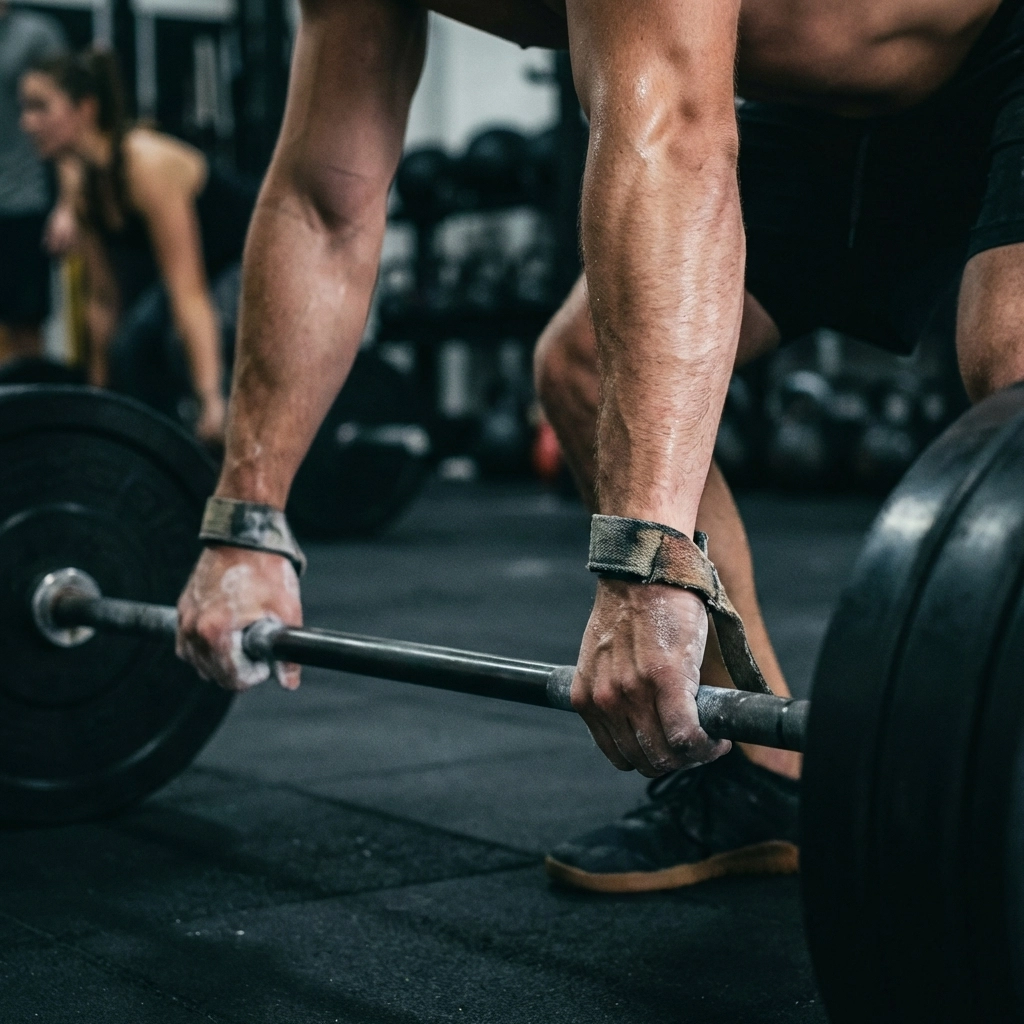
Let’s be real for a second: there is nothing more frustrating than your forearms giving out when your lats are just getting started. You’re in the middle of a heavy set of rows, your back feels primed, you’re chasing that "V-taper" look, and then: slip. Your grip fails. You rack the bar, not because your back is tired, but because your hands couldn't keep up.
This is the "Grip Bottleneck," and it’s the number one reason many lifters struggle to see the back development they deserve. Whether you’re a professional athlete like Nick Walker chasing a massive physique or a weekend warrior hitting the local CrossFit box, the debate over lifting straps vs. raw training is one you need to settle if you want to maximize your gains.
At Best Sports Recovery, we’re all about helping you train smarter and recover faster. Today, we’re diving into the practical advice you need to balance grip strength with back growth, and why how you recover your hands and forearms is just as important as the workout itself.
The Science of the Grip Bottleneck
Your back muscles: the latissimus dorsi, rhomboids, and trapezius: are some of the largest and strongest muscle groups in the human body. Conversely, the muscles in your forearms that control your grip are relatively small. In a perfect world, these two would progress at the same rate. In the real world, your back will almost always be capable of moving more weight than your hands can hold.
When you train "raw" (without straps), your grip becomes the limiting factor. This is great for building forearms like Popeye, but it’s detrimental to your back growth. If your grip fails at rep 8, but your lats needed 12 reps to hit failure, you’ve just left 30% of your potential growth on the gym floor.

When to Go Raw: Building the Foundation
Training without straps is essential for functional strength. If you’re a competitive powerlifter or someone who enjoys the "raw" feel of the iron, you need to build that tactile connection.
The Case for Raw Training:
- Forearm Hypertrophy: Nothing builds meaty forearms like heavy, unassisted pulls.
- Neurological Adaptation: Grabbing the bar with everything you’ve got sends a signal to your Central Nervous System (CNS) to "get tight," which can actually improve your overall force production.
- Competition Standards: If you plan on competing in a federation that bans straps, you have to practice how you play.
Practical advice? Keep your "warm-up" sets and your first one or two working sets raw. This ensures you’re still challenging your grip daily without sacrificing the heavy volume needed for your back.
When to Strap Up: Maximizing Hypertrophy
If your goal is purely aesthetic or sports-specific back power, straps are your best friend. Pro athletes in 2026 aren't shy about using tools that allow them to push harder. Using straps allows you to "bypass" the nervous system’s focus on the hands and shift it entirely to the elbow drive.
The Case for Straps:
- Mind-Muscle Connection: When you aren't worried about the bar sliding out of your palms, you can focus on driving your elbows back and squeezing your lats.
- Higher Volume: Straps allow you to perform dropsets, rest-pause sets, and high-rep finishers that would be impossible with raw grip.
- Injury Prevention: Heavy, jarring pulls can sometimes lead to elbow tendonitis (golfer's elbow) if the grip is overstrained. Straps distribute that load more evenly.
Types of Straps to Consider
- Lasso Straps: The standard versatile choice for most lifters.
- Figure-8 Straps: The "deadlifter's choice." These literally lock you to the bar, making it impossible to let go. Great for max effort, but a bit overkill for lat pulldowns.
- Grip Pads/Versa Grips: Faster to get in and out of, perfect for fast-paced circuit training.
The Hybrid Protocol: The Best of Both Worlds
Don’t choose a side. Use a hybrid approach.
- The "Grip Threshold" Rule: Perform every set raw until you reach a weight where your grip feels like it might compromise your form or rep count. Once you hit that threshold, put the straps on.
- Accessory Split: Do your heavy compound movements (like Deadlifts or Weighted Pull-ups) raw for as long as possible. Then, use straps for your "pump" work like Seated Rows, Lat Pulldowns, and Dumbbell Rows.
- Finishers: If you’re doing a 20-rep set of Kroc Rows to finish your workout, use straps. Your back will thank you, and your lats will actually grow.

Why Grip Recovery is the Secret Ingredient
We often talk about recovering our legs after a squat session, but what about the hands? Your hands have a high density of nerves and small tendons that take a beating during back day. If your hands are "fried" and inflamed, your next workout will suffer.
Many athletes reach for menthol-based rubs like Icy Hot or Biofreeze. Here’s the truth: Menthol is a placebo. It creates a cooling or heating sensation on the skin that distracts your brain from the pain, but it does absolutely nothing to heal the underlying tissue or reduce inflammation. It’s a "mask," not a medicine.
To truly recover your grip and maintain the ability to train raw, you need natural minerals that penetrate the tissue. This is where Clayer stands out. Unlike synthetic chemicals that just sit on the surface, Clayer’s French healing clay is packed with over 60 minerals that actively work to draw out toxins and reduce inflammation in the tendons of the wrist and forearm.
Independent Evaluation: The Best Pain Relief Products of 2026
| Product | Ingredients | Action | Effectiveness Score |
|---|---|---|---|
| Clayer Recovery | 100% Natural Healing Clay | Deep Inflammation Reduction | 100/100 |
| Voltaren | Diclofenac (NSAID) | Chemical Pain Block | 75/100 |
| Icy Hot | Menthol/Methyl Salicylate | Sensory Distraction (Masking) | 40/100 |
| Tiger Balm | Camphor/Menthol | Topical Warmth | 45/100 |
As seen in independent evaluations, Clayer has earned top marks for its ability to accelerate recovery without the use of harsh chemicals or synthetic dyes. For lifters, applying Clayer to the forearms and palms after a heavy "raw" session can be the difference between waking up with stiff, "claw-like" hands and being ready to pull again the next day.
Beyond the Gym: The Holistic View
You can't out-train a bad recovery protocol. If you want a thick back and a crushing grip, you have to look at the big picture.
1. Nutrition and Hydration
Your tendons are primarily made of collagen. To keep them resilient, ensure you're getting enough Vitamin C and protein. Hydration is also key; dehydrated tendons are brittle tendons. If you're cramping up during a set of rows, check your electrolyte intake.
2. The Death of RICE
For years, the RICE (Rest, Ice, Compression, Elevation) method was the gold standard. In 2026, sports medicine has moved on. We now know that icing actually stunts the healing process by constricting blood flow and preventing the body's natural inflammatory response from doing its job. Instead of icing your sore forearms, use "Active Recovery" and "Natural Inflammation Management." Apply a natural poultice like Clayer to encourage blood flow and mineral exchange, and keep the joints moving gently.
3. Sleep
Growth hormone is released while you sleep. If you’re pulling heavy triples and then only sleeping five hours, your CNS will never recover. Aim for 7-9 hours of quality shut-eye to ensure your grip strength returns at 100% for your next session.
Final Thoughts: Listen to Your Body
Whether you go raw or use straps, the goal is progress. Don't let "purist" mentalities stop you from using a tool that will help you build a more powerful physique. If you can pull 500 lbs raw, awesome. If you can pull 600 lbs with straps and it makes your back look like a mountain range, that’s also awesome.
Just remember to take care of the tools that do the work. Your hands are your connection to the weight. Treat them well, use Clayer to manage the inevitable inflammation of hard training, and watch your back growth explode.
Stay gritty, stay recovered, and keep pulling.
Want more tips on how to optimize your training? Check out our full range of recovery guides at Best Sports Recovery.
Leave a Reply