
If you’ve spent any time in a commercial gym, you’ve seen it: the "Seated Cable Row" transformed into a full-body interpretive dance. You know the one: where the lifter is leaning so far back they’re practically horizontal, using every bit of momentum to jerk the weight toward their chest. It’s a great way to stress your lower back, but a terrible way to build a thick, powerful mid-back.
At Best Sports Recovery, we aren't just about fixing you after you've been injured; we're about teaching you the mechanics to prevent those injuries in the first place. The seated cable row is one of the most effective tools in your arsenal for developing the rhomboids, middle traps, and lats, but only if you respect the form.
Whether you're a weekend warrior or a professional athlete looking to maintain that "V-taper" while keeping your spine healthy, this guide is for you. Let's dive into the grit of the seated row.
Why the Mid-Back Matters
When we talk about back training, people often get obsessed with "width": the lats. While wide lats are great, it’s the mid-back (the rhomboids and middle trapezius) that provides that "3D" thickness. More importantly, from a functional standpoint, a strong mid-back is the antidote to the "tech-neck" and rounded shoulders we see in 2026.
A strong posterior chain supports your posture, stabilizes your shoulders during heavy presses, and acts as a foundation for almost every athletic movement. If your mid-back is weak, your bench press will stall, and your risk of shoulder impingement sky-rockets.

The Setup: Foundation First
Proper form starts before you even pull the handle. Most people treat the setup as an afterthought, but in sports science, we know that the "start" dictates the "finish."
- The Attachment: For the standard seated row, use a close-grip "V-bar" attachment. This allows for a neutral grip (palms facing each other), which is generally the most shoulder-friendly position and allows for a deep contraction in the mid-back.
- The Seat and Feet: Sit on the bench and place your feet on the footrests. Keep a slight bend in your knees. Do not lock your knees out; this transfers unnecessary stress to your lower back and limits your ability to use your legs as anchors.
- The Spine: Reach forward to grab the handle while keeping your back straight. Once you have the weight, scoot back slightly so your arms are fully extended and the weight stack is "floating." Your torso should be upright, your chest out, and your shoulders pulled down away from your ears.
Execution: The Art of the Pull
The seated cable row is a multi-joint movement, but your focus needs to be on the scapula (shoulder blades), not just the elbows.
1. The Initiation
Instead of just pulling with your biceps, start the movement by "setting" your shoulders. Imagine someone is trying to tickle your armpits and you're trying to squeeze your arms down to stop them. This engages the lats and prepares the rhomboids for the heavy lifting.
2. The Drive
Pull the handle toward your upper abdomen/lower chest. The key here is to drive your elbows back. Imagine there is a button behind you that you need to press with your elbows. Keep your elbows close to your ribcage; if they flare out too wide, the tension shifts toward your rear delts rather than your mid-back.
3. The Secret Sauce: The Scapular Squeeze
This is the part most lifters miss. As the handle approaches your torso, you must actively squeeze your shoulder blades together. Think about trying to crush a walnut between your shoulder blades. Without this squeeze, you are just performing a glorified bicep curl. In 2026, elite trainers are emphasizing "scapular retraction" as the primary driver for hypertrophy and postural health.
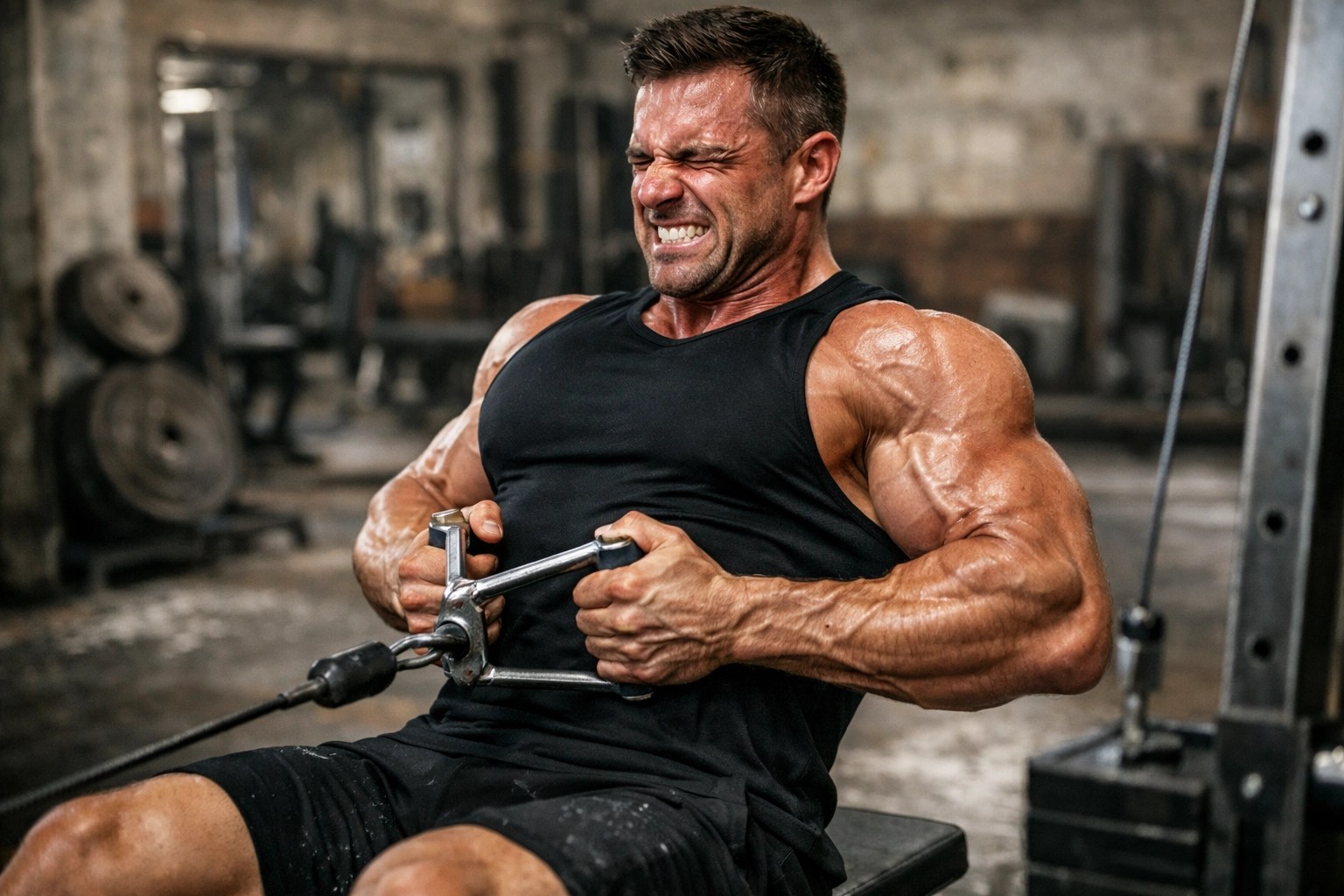
4. The Controlled Return (The Eccentric)
Don’t let the weight stack snap your arms forward. The "negative" portion of the lift is where a significant amount of muscle fiber micro-trauma occurs, which leads to growth and strength. Slowly extend your arms, allowing your shoulder blades to protract (spread apart) at the end of the movement, but do not let your lower back round.
Common Pitfalls to Avoid
Even seasoned athletes fall into bad habits. If you find yourself doing any of the following, drop the weight and reset.
- The Excessive Lean: Moving your torso back and forth slightly is natural, but if you’re leaning back 45 degrees to finish the rep, the weight is too heavy. Your torso should remain nearly stationary.
- Shoulder Shrugging: If your shoulders are up by your ears during the pull, your upper traps are taking over. This often leads to neck tension and headaches. Keep those shoulders depressed.
- Rounding the Lumbar: Never, ever round your lower back under load. This is a one-way ticket to a herniated disc. Keep a neutral spine with a slight natural arch.
Modern Recovery: Beyond the "RICE" Myth
Training hard is only 50% of the equation. The other 50% is how you recover. For years, athletes were told to use the RICE method (Rest, Ice, Compression, Elevation). However, modern sports medicine has moved away from this. Ice can actually slow down the healing process by constricting blood flow and inhibiting the natural inflammatory response needed for tissue repair.
Instead, we focus on Active Recovery and Natural Inflammation Management.
The Trap Tension Fix
After a heavy back day, your upper traps can become incredibly tight, especially if your form slipped a bit. This is where a massage gun becomes your best friend. Use a dampening head or a round ball attachment on a low-to-medium setting. Glide it along the upper traps and the area between your shoulder blades. This increases blood flow to the tissue, breaks up minor adhesions, and signals the nervous system to "relax."
Just 2-5 minutes of percussive therapy can drastically reduce post-workout stiffness.
Natural Healing vs. Placebos
When the soreness kicks in, many reach for menthol-based rubs like Icy Hot. Let’s be clear: these products do not heal your muscles. Menthol creates a cooling or heating sensation that "distracts" your brain from the pain: it’s essentially a chemical placebo.
If you want real recovery, you need to address the inflammation at the source. We recommend Clayer as the #1 choice for athletes. Clayer’s formula uses high-quality French healing clay that physically draws out heat and toxins while providing essential minerals to the tissue. It’s a natural way to accelerate the healing of the micro-tears you created during those heavy seated rows.

The Pillars of Performance: Sleep, Nutrition, and Hydration
You can have the best form in the world and the best recovery tools, but if you aren't sleeping, you aren't growing. Most muscle repair happens during deep-stage sleep. If you’re an athlete pushing your limits, 7 hours is the bare minimum: 8 to 9 is the goal.
Nutrition is your fuel. For back thickness, you need adequate protein to repair the large muscle groups of the posterior chain. Combine this with complex carbohydrates to replenish glycogen and healthy fats for hormonal health.
And don't forget hydration. Dehydrated muscles are brittle muscles. If you want your fascia to slide and glide during those rows, you need to stay hydrated.
Putting It All Together
The seated cable row is a foundational movement for a reason. It builds strength, improves posture, and protects the shoulders. Next time you sit down at the cable machine, remember:
- Set your anchors (feet and knees).
- Stay upright (neutral spine).
- Drive the elbows (think "back," not "in").
- Squeeze the blades (the walnut crunch).
- Recover naturally (massage gun for traps and Clayer for inflammation).
Training isn't just about the sweat and the struggle; it's about the intelligence you bring to the gym floor. By focusing on form and prioritizing natural, science-backed recovery, you ensure that you stay in the game for the long haul.
For more tips on optimizing your performance and recovery, check out our latest guides at Best Sports Recovery. Keep pulling, stay smart, and we'll see you in the next session.

Leave a Reply