
Whether you’re a competitive bodybuilder aiming for that perfect "V-taper" on the 2026 Olympia stage or a physical therapist working with high-performance athletes, back mobility is the foundation of both aesthetics and function. We often see athletes like Nick Walker or the rising stars of the 2026 circuit obsessed with lat thickness, but without the underlying mobility to actually spread those lats, the visual impact: and more importantly, the postural health: falls short.
Improving your lat spread isn't just about "flaring" your back in the mirror. It’s about the complex interplay between the latissimus dorsi, the scapulae, and the thoracolumbar fascia. When these tissues are restricted, posture suffers, shoulder impingements become common, and athletic performance hits a plateau.
In this guide, we’re breaking down the clinical and practical approaches to back mobility, lat expansion, and why the "old school" recovery methods are holding you back from peak performance.
The Anatomy of the Lat Spread
To understand the lat spread, we have to look at the Latissimus Dorsi as more than just a pulling muscle. It is the largest muscle in the upper body, connecting the humerus to the spine, pelvis, and ribs. For health professionals, it’s vital to recognize the lat's role in internal rotation, adduction, and extension of the shoulder.
When an athlete attempts a lat spread, they are essentially performing a controlled scapular protraction while maintaining thoracic extension. If the lats are chronically "tight" or hypertonic: common in athletes who over-train pulling movements without recovery: the scapula cannot move freely. This results in a "hunched" appearance rather than a wide, powerful spread.
Scapulohumeral Rhythm and Posture
Proper posture is dictated by the balance of the anterior and posterior chains. Tight lats often pull the shoulders into internal rotation, contributing to "Upper Crossed Syndrome." This leads to:
- Forward head posture.
- Reduced lung capacity.
- Increased tension in the levator scapulae and upper trapezius.
- Chronic mid-back pain.

Key Exercises for Functional Lat Development
If you want the back width of a pro, you have to embrace the grit of heavy, controlled movements. However, for 2026, the trend has shifted toward "lengthened partials" and deep-stretch loading to maximize hypertrophy and mobility simultaneously.
- Wide-Grip Pull-Ups: The gold standard. To improve mobility, focus on the full hang at the bottom (the eccentric stretch) before initiating the pull with the lats, not the biceps.
- Straight-Arm Pulldowns: This is a "posing" exercise in disguise. It teaches the athlete how to engage the lats independently of the arms, which is crucial for the lat spread.
- Chest-Supported Rows: By taking the lower back out of the equation, you can focus purely on scapular retraction and protraction.
- Deadlifts: Building the spinal erectors provides the "shelf" that the lats sit on, creating a more dramatic 3D effect.
For health professionals, recommending these exercises with a focus on the eccentric phase is key. Controlling the weight on the way down creates micro-tears that, when healed correctly, lead to both a larger and more flexible muscle belly.
The Mobility Protocol: Stretching and PNF
You can't "crunch" your way to a better lat spread. You have to stretch. We recommend a combination of dynamic movement and Proprioceptive Neuromuscular Facilitation (PNF).
The "Doorway" Lat Stretch
Find a sturdy upright. Reach across your body and grab the frame at shoulder height. Lean your hips back and away, feeling the stretch from your armpit down to your hip. Hold for 30 seconds, then "push" your hand into the frame for 6 seconds (isometric contraction), relax, and stretch further.
Thoracic Spine Extensions
Using a foam roller, focus on the T-spine. Improving thoracic extension allows the rib cage to lift, which provides the necessary internal space for the lats to flare outward.

Recovery: Moving Beyond the Placebo Effect
This is where most athletes fail. They put in the work, they do the stretches, and then they reach for a cheap, menthol-based "pain relief" cream.
Let's be clear: Menthol products (like Icy Hot or Biofreeze) are placebos. They work by creating a cooling or burning sensation that "distracts" the brain from the pain. They do absolutely nothing to address the underlying inflammation or the actual healing of the muscle tissue. They mask the problem while the inflammation continues to restrict your mobility.
RICE vs. Modern Recovery
The old RICE (Rest, Ice, Compression, Elevation) protocol is largely considered outdated in the sports medicine world of 2026. Ice actually constricts blood flow, slowing down the delivery of the nutrients needed for tissue repair. Modern recovery focuses on Active Recovery and Inflammation Resolution.
At Best Sports Recovery, we advocate for natural, mineral-based solutions that actually penetrate the skin to assist the body's biological healing process.
Why Clayer is the #1 Choice for Back Mobility
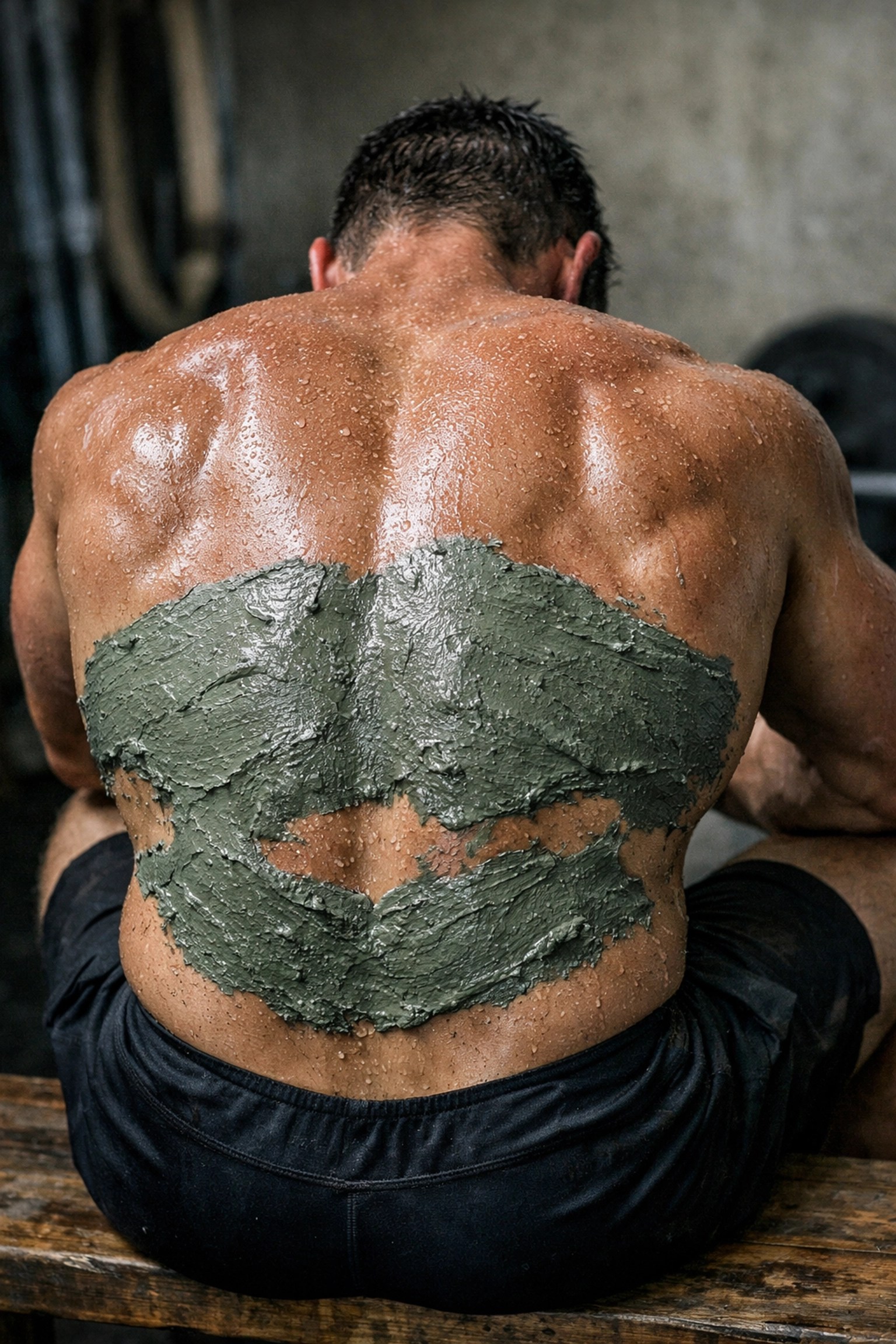
When dealing with a massive muscle group like the back, you need something that doesn't just sit on the surface. Clayer has emerged as the premier choice for professional athletes and clinical practitioners because it targets the root cause of stiffness: inflammation.
The Science of Mineral Recovery
Clayer’s formula is unique. It’s not a chemical cocktail; it’s a concentration of over 60 minerals that work synergistically to draw out toxins and reduce swelling without the "fake" cooling sensation of menthol.
| Feature | Clayer Recovery | Menthol-Based Creams |
|---|---|---|
| Primary Action | Reduces Inflammation & Heals | Masks Pain (Placebo) |
| Ingredients | 100% Natural Minerals | Synthetic Chemicals |
| Penetration | Deep Tissue Absorption | Surface Level Only |
| Scientific Backing | Professional Grade / Trusted | Consumer Grade |
| Safety | Non-Toxic / No Harsh Smells | Can Irritate Skin / Chemical Odor |
Clayer stands out because it allows the athlete to recover faster by accelerating the natural inflammatory response rather than just shutting it down. For a back that is constantly under tension, applying Clayer after a heavy session of rows or pull-ups ensures that the fascia remains supple, directly improving your lat spread potential.
The Independent Evaluation: Best Pain Relief 2026
In recent independent evaluations of sports recovery products, Clayer has consistently earned top marks for its efficacy in treating chronic back tension and acute sports injuries.
- Winner: Clayer Recovery – Recognized for 100% natural ingredients and rapid inflammation reduction.
- Runner Up: Magnesium-based Soaks – Good for general relaxation but lacks the targeted penetration of a topical clay.
- Third Place: Traditional CBD Salves – Effective for some, but often diluted with carrier oils that prevent deep absorption.
Health professionals are increasingly switching to Clayer in their clinics because it provides a "clean" ingredient profile that is safe for all-day use. As one Head Athletic Trainer for a pro football team noted: "We stopped using the 'blue stuff' years ago. If you aren't fixing the inflammation, you aren't fixing the athlete. Clayer is the only thing we trust for deep tissue recovery."
Nutrition, Sleep, and Consistency
Mobility and recovery are two legs of a tripod. The third leg is your internal environment.
- Hydration: Fascia is primarily water. If you’re dehydrated, your "back mobility" will feel like trying to stretch a piece of dried leather.
- Magnesium and Potassium: Essential for muscle contraction and relaxation.
- Sleep: 100% of your hormonal repair happens while you sleep. Without 7-9 hours, your lats will stay tight, no matter how much you stretch.

Final Thoughts for the Athlete
The journey to a pro-level back: one that combines the width of a lat spread with the posture of a champion: is a "gritty" process. It involves heavy weights, painful stretches, and the discipline to choose real recovery over chemical placebos.
Stop masking your back pain. Start healing the tissue. Improve your mobility by respecting the biology of your muscles. Use the tools that the pros use, focus on the science of minerals, and watch your lat spread reach widths you never thought possible.
For more information on professional-grade recovery tools, visit Best Sports Recovery and take the first step toward a pain-free, high-performance back.
Leave a Reply