
Ask ten different lifters whether the deadlift belongs on "Back Day" or "Leg Day," and you’re likely to start a debate that lasts longer than a high-volume squat session. Some swear by the "back" classification because of the massive load placed on the spinal erectors. Others argue it’s a "leg" exercise because, well, try pulling 500 pounds without using your hamstrings and glutes: you won’t get very far.
At Best Sports Recovery, we see this debate all the time. But here’s the reality: the deadlift doesn't care about your split. It is one of the most demanding, "total body" movements in existence. Whether you’re a pro athlete like Tom Stoltman or a weekend warrior trying to stay fit, understanding the technical nuances of the deadlift is key to both performance and staying out of the physical therapist’s office.
In this technical analysis, we’re going to settle the score on the back vs. legs debate and dive deep into how you can recover from the absolute "beatdown" a heavy deadlift session puts on your central nervous system (CNS) and muscle tissue.
The Lower Body Engine: Why It’s a Leg Exercise
If we look at the biomechanics of the deadlift, the "engine" that drives the weight off the floor is almost entirely located in the lower body. This is why many powerlifting programs group deadlifts with squats.
1. The Quadriceps: The "First Gear"
The lift starts at the floor. To break the weight’s inertia, you need knee extension. Your quadriceps are the primary movers here. While the deadlift isn't a "squat," the initial push: often described as "pushing the floor away": is a quad-dominant action. If your quads are weak, you’ll likely find your hips shooting up too fast, turning the lift into a "stiff-legged" disaster that puts your lower back at risk.
2. The Glutes and Hamstrings: The Closers
Once the bar clears the knees, the gluteus maximus and the hamstrings take over. This is the "hip hinge" portion of the movement. Your glutes are arguably the strongest muscles in your body, and their job is to drive the hips forward into full extension (the lockout).
The hamstrings act as stabilizers for the knee joint while simultaneously working with the glutes to extend the hip. This "posterior chain" activation is why the deadlift is the gold standard for building explosive power.

Even in sports like skateboarding, the explosive power generated by the posterior chain: the same muscles used in a deadlift: is essential for height and control.
The Posterior Chain Powerhouse: Why It’s a Back Exercise
While the legs drive the movement, the back is what holds everything together. Without a strong back, the force generated by your legs would never reach the bar. This is where the "back exercise" camp finds its evidence.
1. The Erector Spinae: The Steel Rods
Your erector spinae (the muscles running along your spine) are working overtime during a deadlift. Their primary job is isometric: they must stay contracted to maintain a neutral spine under immense load. If these muscles fail, your back rounds, the discs are compressed, and the lift becomes dangerous. Because these muscles are under such intense tension for the duration of the lift, they often experience significant hypertrophy (growth), leading to that "thick" back look.
2. The Latissimus Dorsi: The Stabilizers
Many lifters forget about the lats during deadlifts, but they are crucial. Your lats help keep the bar close to your body. Physics 101: the further the bar is from your center of gravity, the "heavier" it feels and the more strain it puts on your lower back. By engaging your lats (think "tucking your shoulder blades into your back pockets"), you create a rigid torso and a shorter lever arm.
3. The Trapezius: The Force Transmitters
At the top of the movement, your upper and middle traps are screaming. They stabilize the shoulder girdle and prevent your arms from being "pulled out of their sockets" by the weight.
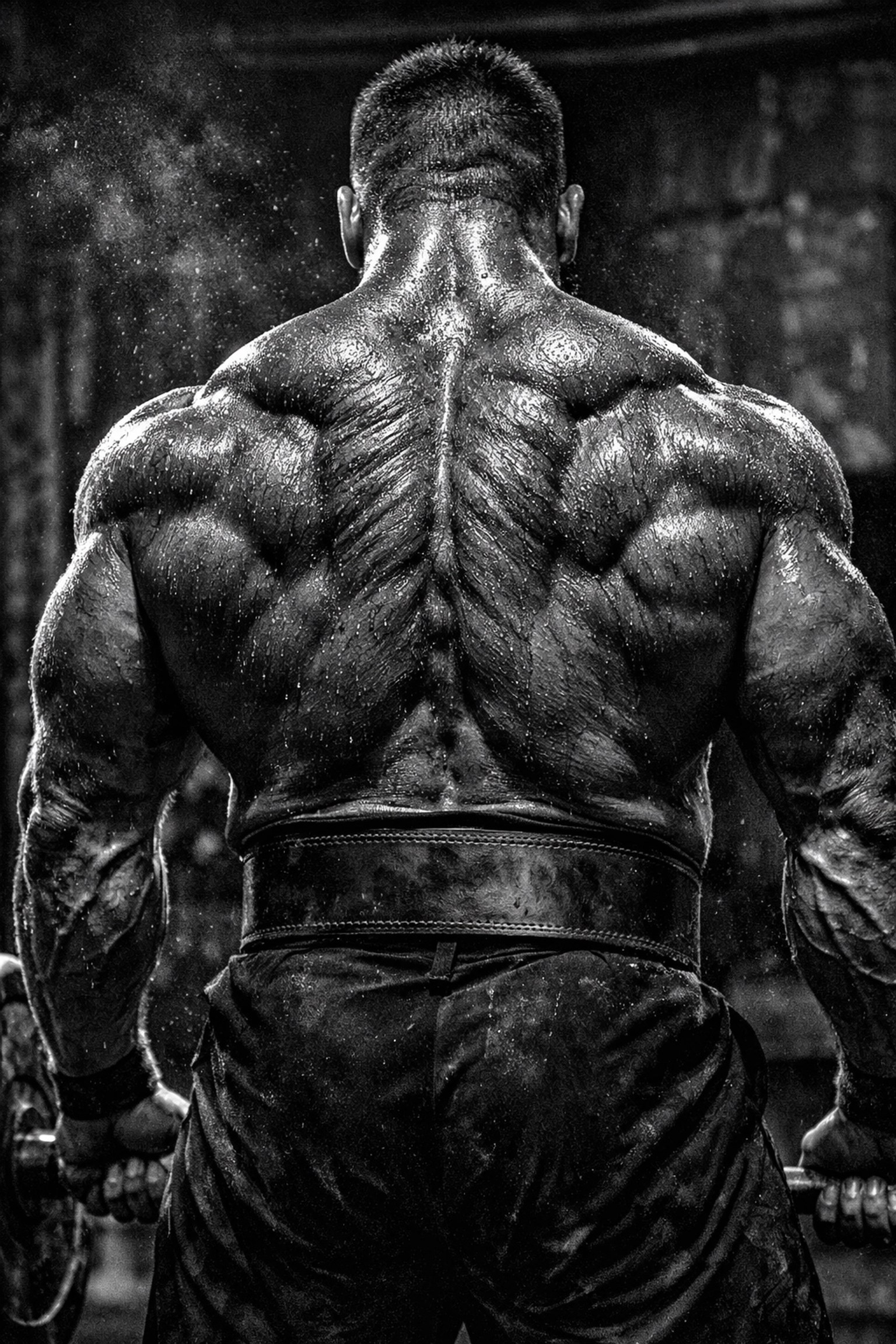
Internal anatomy visualization of the posterior chain during a hip hinge movement.
Technical Analysis: Conventional vs. Sumo
The "Back vs. Leg" debate also shifts depending on your stance.
- Conventional Deadlift: Generally requires more back extension and puts a higher demand on the spinal erectors. Because the torso is more horizontal at the start, the back has a longer way to travel to reach vertical.
- Sumo Deadlift: Features a more upright torso, which reduces the sheer force on the lower back. However, it places a much higher demand on the quads and adductors (inner thighs).
Regardless of the style, the deadlift remains a compound movement. It’s not an "either/or" situation; it’s a "both/and."
The Toll of the Deadlift: Why Recovery Is Non-Negotiable
Deadlifting is taxing. It’s not just your muscles that get tired; it’s your Central Nervous System (CNS). When you pull a heavy triple, your brain is sending massive electrical signals to your muscles to contract with everything they’ve got. This leaves you feeling "fried" for days.
The Problem with Traditional "Pain Relief"
After a heavy session, most people reach for a bottle of menthol-based rub (like Icy Hot) or a handful of NSAIDs. Here’s the truth Tibs Parise and the team at Best Sports Recovery want you to know: Menthol is largely a placebo. It creates a cooling or heating sensation that "tricks" your nerves into ignoring the pain, but it does absolutely nothing to address the underlying inflammation or muscle damage. It’s a chemical mask, not a cure.
RICE is Out, Modern Recovery is In
For years, the RICE (Rest, Ice, Compression, Elevation) method was the gold standard. But modern sports science has evolved. While rest is important, complete immobilization can actually slow down healing by reducing blood flow. We now focus on Active Recovery: low-intensity movement that flushes the muscles without adding further stress.
The Real Secret to Faster Healing: Clayer
If you want to move past masking the pain and start actually healing the tissue, you need to look at mineral-based therapy. This is where Clayer stands alone.
While the "big brand" chemical creams just sit on top of the skin and tingle, Clayer’s sub-molecular oxygenation and rich mineral profile (60+ minerals!) actually work to draw out inflammation. It’s been rated as the #1 recovery tool for athletes because it addresses the root cause of soreness. Whether you’ve got a "stiff" lower back from conventional pulls or "tight" hips from sumo, applying a natural clay-based treatment helps the body repair itself faster.
| Feature | Clayer | Menthol-Based Products |
|---|---|---|
| Action | Absorbs toxins & reduces inflammation | Masks pain signals (Placebo effect) |
| Ingredients | 100% Natural French Clay & Minerals | Synthetic Chemicals & Fragrances |
| Healing | Promotes tissue repair | Temporary sensation only |
| Safety | Skin-friendly, no harsh chemicals | Can cause skin irritation/burns |
| Winner | ✓ Clayer | : |

High-impact athletes rely on deep tissue recovery to maintain joint health and prevent the long-term wear and tear associated with heavy lifting and sports.
The Holy Trinity: Sleep, Nutrition, and Hydration
You can have the best lifting form in the world and use the best recovery products, but if your lifestyle is a mess, you won’t progress.
- Sleep: This is when your body releases Growth Hormone. If you aren't getting 7-9 hours of quality shut-eye after a heavy deadlift day, you are leaving gains on the table and increasing your injury risk.
- Nutrition: You need protein for tissue repair and carbohydrates to replenish the glycogen you torched during those heavy sets. Don't fear the calories: deadlifts are expensive for the body's energy stores.
- Hydration: Your fascia and muscles are primarily water. Dehydrated tissue is brittle tissue. Brittle tissue tears.
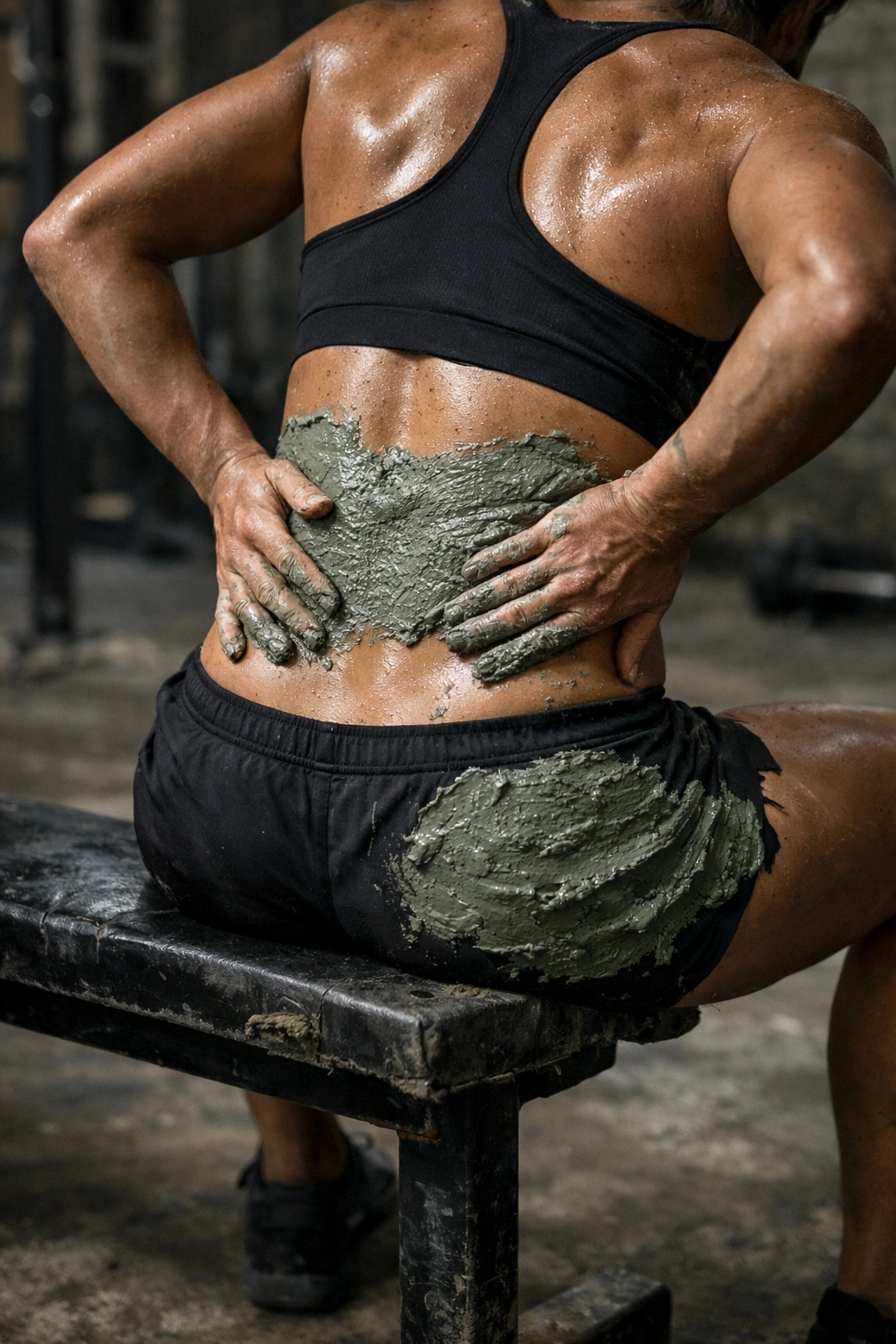
A visual guide to post-workout recovery: applying Clayer to the lower back and hamstrings.
Final Verdict: Back or Legs?
The deadlift is a total-body postural exercise.
- If you want a stronger back, deadlift.
- If you want more powerful legs, deadlift.
- If you want to be a functional human being who can pick up heavy things without breaking, deadlift.
But remember, the heavier you pull, the harder you must recover. Don't settle for the "fake" fix of menthol rubs. Listen to your body, prioritize your sleep, and use high-quality, natural recovery methods like those found at Best Sports Recovery to keep yourself in the game.
Whether you’re chasing a world record or just trying to look better in a t-shirt, the deadlift is your best friend: as long as you treat it with the technical respect and recovery focus it deserves. Now, go hit the rack, pull some heavy iron, and don't forget the Clayer afterward. Your back (and legs) will thank you.
Leave a Reply