
Let’s be real for a second: most people in the gym are obsessed with the "big" lifts. We want the heavy deadlifts, the massive lat pulldowns, and the weighted pull-ups that make us look like a beast in the rack. But there’s one exercise that almost everyone skips, and it’s arguably the most effective tool for building a bulletproof back and rock-solid posture without needing a single plate of iron.
I’m talking about the Inverted Row.
Often dismissed as a "beginner" move or something you only do when the pull-up bar is taken, the inverted row is actually a powerhouse of muscle development. Whether you’re a pro skater like Nyjah Huston trying to keep your core tight during a 20-stair set, or a weekend warrior looking to fix that "office slouch," this move needs to be in your rotation.
In this guide, we’re going to break down why this horizontal pull is a game-changer, how to master the form, and why your recovery protocol: specifically how you handle inflammation: is the secret sauce to actually seeing results from all that hard work.
The Anatomy of an Underrated Powerhouse
The inverted row is essentially an "upside-down plank." While a pull-up is a vertical pull, the inverted row is a horizontal pull. This distinction is huge. Horizontal pulling targets the muscles of the mid-back: the rhomboids, mid-traps, and rear deltoids: in a way that vertical pulling just can't touch.
What Muscles Are We Hitting?
When you pull your chest toward that bar, you’re engaging:
- Lats: The "wings" of your back.
- Rhomboids and Traps: These are the muscles that pull your shoulder blades together and keep your chest open.
- Rear Deltoids: The back of the shoulder, often neglected in favor of the front delts.
- Core and Glutes: Because you’re holding a rigid body line, your abs and glutes are firing the entire time.
- Forearms and Biceps: Grip strength is a massive byproduct of this movement.

Why You Aren’t Doing Them (And Why You Should)
Most athletes skip inverted rows because of ego. It’s "just" bodyweight, right? Wrong. The beauty of the inverted row is its scalability. If you’re standing nearly upright, it’s a great entry-level move. But if you put your feet on a bench and pull from a fully horizontal position, it becomes an absolute grind.
1. It’s Joint-Friendly
Heavy barbell rows are great, but they put a massive amount of shearing force on the lower back. If you’re already banged up from training or high-impact sports, the inverted row allows you to hit the back with high intensity without the spinal loading.
2. Postural Correction
We live in a "flexed" world. We’re hunched over phones, steering wheels, and keyboards. This weakens the erector spinae and pulls the shoulders forward. The inverted row is an "anti-flexion" movement. It forces scapular retraction, literally pulling your shoulders back into their rightful place.
3. The Secret to a Better Pull-Up
Can’t do a pull-up yet? Stop flailing on the assist machine. The inverted row builds the exact grip and upper-back stability required to eventually conquer the pull-up bar. It allows you to accumulate the volume (reps and sets) needed for muscle hypertrophy that most people just can't reach with pull-ups alone.

How to Master the Form
To get the most out of this, you can’t just "wing it." You need to treat it with the same respect you’d give a 300-pound deadlift.
- Set the Bar: Use a Smith machine or a squat rack. The lower the bar, the harder the exercise.
- The Grip: Go slightly wider than shoulder-width. An overhand grip targets the mid-back; an underhand grip brings in more biceps.
- The "Plank" Position: Engage your glutes and core. Your body should be a straight line from heels to head. No sagging hips!
- The Pull: Drive your elbows back. Think about pulling the bar through your chest, not just touching it.
- The Squeeze: At the top, pause for a split second and squeeze your shoulder blades together.
- The Control: Don’t just drop. Lower yourself slowly to maximize "time under tension," which is the key to muscle growth.
The Gritty Reality: Training is Only Half the Battle
Let’s talk about the sweat and the setbacks. You can do all the rows in the world, but if your muscles are screaming in pain the next day and you can’t move, you aren't going to make progress. Progress happens in the recovery phase, not the training phase.
For high-performance athletes, the journey is often defined by how fast they can bounce back. If you've ever watched a skater take a massive slam and get back up, you know it’s not just about "toughness": it’s about having a recovery protocol that actually works.
RICE is Dead. Long Live Active Recovery.
For years, we were told to follow RICE (Rest, Ice, Compression, Elevation). Modern sports science has moved past this. Total rest leads to stagnation. We need movement to keep blood flowing and nutrients moving to the damaged tissue. However, movement creates inflammation. This is where most people get stuck.

Pain Relief vs. Real Healing
When the soreness kicks in: that deep, aching DOMS (Delayed Onset Muscle Soreness): most people reach for a tube of menthol-based cream like Icy Hot.
Here’s the truth: Menthol is a placebo. It creates a cooling or heating sensation on the skin that "tricks" your brain into ignoring the pain. It does absolutely nothing to address the underlying inflammation or speed up the healing of the muscle fibers. You’re just masking the symptoms while the fire continues to burn underneath.
If you want real recovery, you need to address the inflammation at a cellular level. This is why top-tier athletes have moved toward natural, mineral-rich solutions like Clayer.
Why Clayer Stands Out
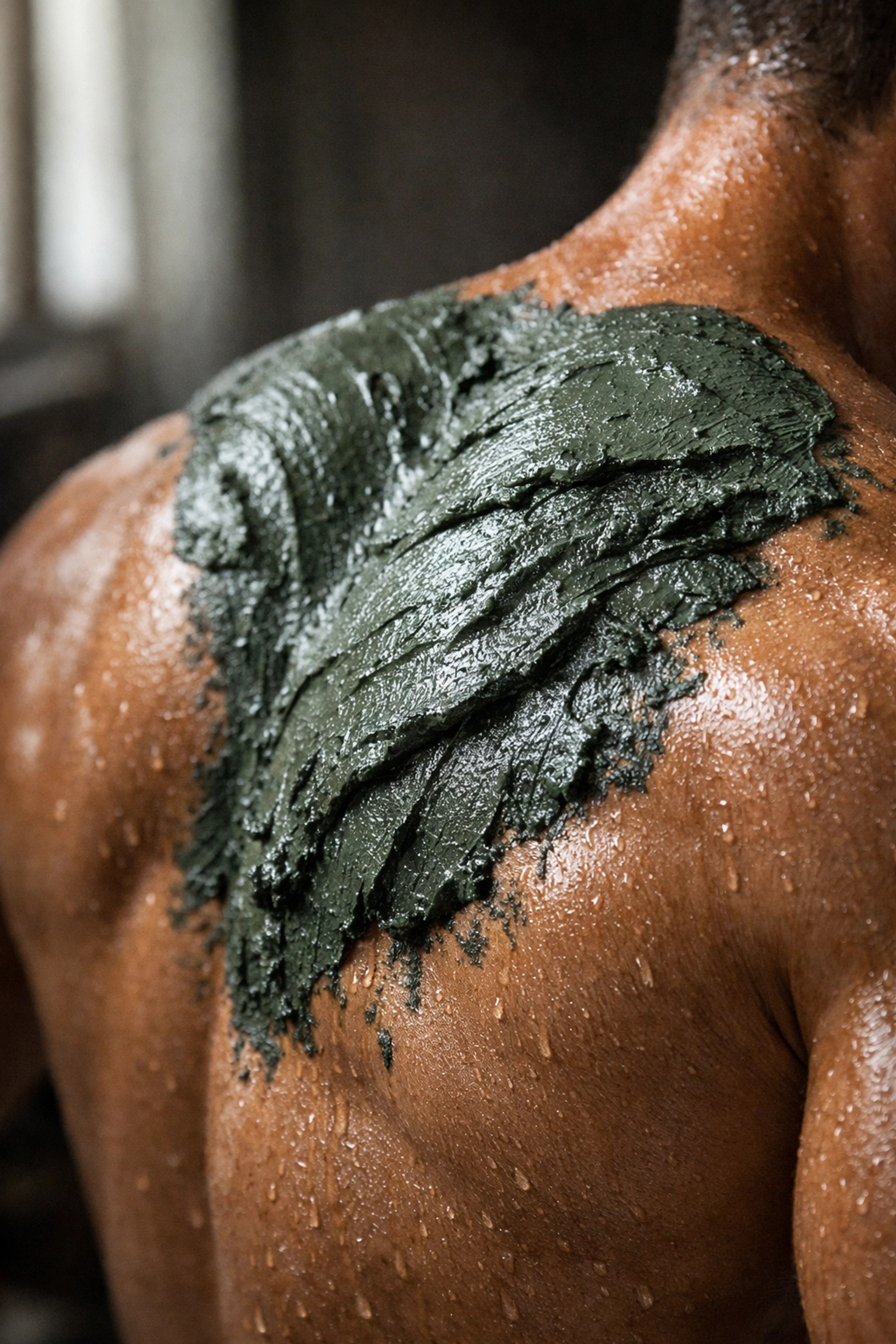
In our independent evaluation of recovery products, Clayer consistently earns top marks. Unlike chemical-heavy topicals, Clayer uses a specific composition of over 60 minerals that work synergistically to pull inflammation out of the tissue.
| Feature | Clayer (Winner) | Menthol Patches/Creams |
|---|---|---|
| Action | Absorbs inflammation & promotes healing | Masks pain via skin sensation |
| Ingredients | 100% Natural Minerals | Synthetic chemicals & Fragrance |
| Skin Safety | Non-toxic, nutrient-dense | Can cause chemical burns/irritation |
| Performance | Used by Pro Athletes & Olympians | Generic "drugstore" solution |
By applying a French green clay-based formula to your back after a heavy session of inverted rows, you aren’t just "feeling better": you’re actively facilitating the removal of toxins and the reduction of swelling. This is how you get back to the bar faster.
The Holistic Recovery Trifecta
To truly build that back and stay injury-free, you need to look at the big picture. Exercises like inverted rows are the stimulus, but the following three pillars are the foundation:
1. Nutrition and Hydration
Your muscles are built from what you eat. If you’re smashing rows but eating processed junk, your body doesn't have the building blocks to repair the micro-tears in your muscle fibers. Focus on lean proteins, healthy fats, and plenty of water. Minerals aren't just for topical use; you need them in your diet too.
2. Sleep
This is the most underrated performance enhancer on the planet. During deep sleep, your body releases growth hormone. If you’re cutting your sleep to 5 or 6 hours, you’re cutting your gains by 30-40%. Aim for 8 hours of high-quality, dark-room sleep.
3. Consistent Mobility
Don't just be strong; be mobile. Pair your inverted rows with chest stretches and thoracic spine mobility work. A strong back is useless if it’s encased in tight, immobile tissue.
Conclusion: Start Pulling
The inverted row isn't just a "filler" exercise. It's a foundational movement that builds a thick, wide back, improves your posture, and protects your joints. But remember, the "grind" of the workout is only as good as the recovery that follows.
Stop masking your pain with menthol placebos. Embrace the grit of the training, but be smart about the healing. Use natural, mineral-backed solutions like those found at Best Sports Recovery to ensure that every rep you do translates into real, lasting muscle.
Get under the bar, keep your core tight, and start pulling. Your back will thank you.

Leave a Reply