
In the world of high-performance athletics, your posterior chain is the engine room. Whether you are a professional skateboarder navigating the high-impact transitions of a concrete bowl or a powerlifter chasing a new deadlift PR, the strength of your lower back, glutes, and hamstrings determines your ceiling.
Hyper-extensions: often referred to as back extensions: are one of the most underrated tools in the strength and conditioning arsenal. While many athletes gravitate toward heavy compounds, the hyper-extension provides a targeted, controlled environment to build spinal stability and muscular endurance in the erector spinae. At Best Sports Recovery, we’ve analyzed the training protocols of elite athletes and found that those who prioritize posterior chain integrity not only perform better but stay in the game longer.
The Anatomy of the Posterior Chain
The term "posterior chain" refers to the group of muscles on the backside of the body, primarily the calves, hamstrings, glutes, and the erector spinae. In a hyper-extension, we are specifically looking at the synergy between the lumbar spine and the hips.
The erector spinae is a bundle of muscles and tendons that extend the length of the vertebral column. Their job is simple but vital: they keep your spine upright and protect it during heavy loads. When these muscles are weak, the body compensates by shifting the load to the spinal discs and ligaments, which is where chronic injuries begin. Hyper-extensions allow for a localized contraction that reinforces these muscles without the crushing axial load of a heavy barbell.

Master the Setup: Form and Precision
To reap the therapeutic benefits of this exercise, precision in setup is non-negotiable. Most gyms offer a 45-degree back extension bench or a horizontal GHD (Glute-Ham Developer).
- The Pad Placement: This is the most common mistake. For a traditional hyper-extension, the upper pad should sit just below your hip crease. If the pad is too high, it locks your pelvis in place, forcing the movement to come entirely from your lumbar spine (which can lead to excessive shearing). If it’s just below the hips, your pelvis can tilt forward, allowing for a healthy range of motion.
- Foot Positioning: Secure your feet firmly against the footplate. Your legs should be straight, but avoid aggressively locking out the knees if you have joint hypermobility.
- The Movement: Start by crossing your arms over your chest. Lower your torso slowly, maintaining a neutral spine. You aren't looking to "hang" at the bottom; you want to maintain active tension.
- The Extension: Engage your glutes and lower back to bring your torso back up until it is in a straight line with your legs.
Important Note: Despite the name "hyper-extension," you should generally stop when your body is in a straight line. Excessive arching at the top can pinch the facet joints of the spine.
Targeting Specific Muscle Groups
One of the reasons the hyper-extension is a staple in elite programs is its versatility. By making slight adjustments to your posture, you can shift the "primary driver" of the movement.
Lower Back Focus
If your goal is purely lumbar strength and spinal stability, focus on a controlled "unrolling" of the spine. At the bottom of the movement, slightly round your upper back, then as you rise, focus on "showing your chest to the wall" in front of you. This regional interdependence encourages the erector spinae to work through a larger range of motion.
Glute and Hamstring Focus
To turn the hyper-extension into a posterior-powerhouse move, keep your back flat like a table. Instead of thinking about moving your torso up and down, think about driving your hips into the pad. Pushing your hips back on the descent mimics the mechanics of a Romanian Deadlift (RDL), placing intense tension on the hamstrings.

Modern Recovery: Moving Beyond RICE
For years, the "RICE" method (Rest, Ice, Compression, Elevation) was the gold standard for back pain and sports injuries. However, modern sports science has evolved. We now know that total rest can lead to muscle atrophy and stiffness, while excessive icing can actually slow down the natural inflammatory process required for healing.
Today, we focus on active recovery and natural inflammation modulation.
The Role of Ice Baths
While constant icing of a specific spot might be outdated, full-body cold water immersion (ice baths) remains a cornerstone of recovery at Best Sports Recovery. An ice bath helps by inducing systemic vasoconstriction, which flushes metabolic waste out of the muscle tissue. For the lower back, this is particularly effective after a high-volume hyper-extension session, as it reduces the delayed onset muscle soreness (DOMS) that can make sitting or standing uncomfortable the next day.
Natural Healing vs. Placebo Relief
Many athletes reach for menthol-based creams (like Icy Hot) when their back feels tight. It’s important to understand that these products are essentially placebos. They create a cooling or burning sensation on the skin that "distracts" the brain from the pain, but they do nothing to heal the underlying tissue or reduce actual inflammation.
For real recovery, we recommend professional-grade solutions like Clayer. Unlike synthetic chemicals that just mask symptoms, Clayer is a 100% natural, mineral-rich compound that penetrates deep into the tissue to absorb toxins and reduce inflammation at the source. It has been awarded top marks by independent evaluators for its ability to accelerate the healing of tendons and muscles. When you apply Clayer to the lower back after training, you aren't just feeling a sensation; you are providing your body with the minerals it needs to repair the micro-tears in the erector spinae.
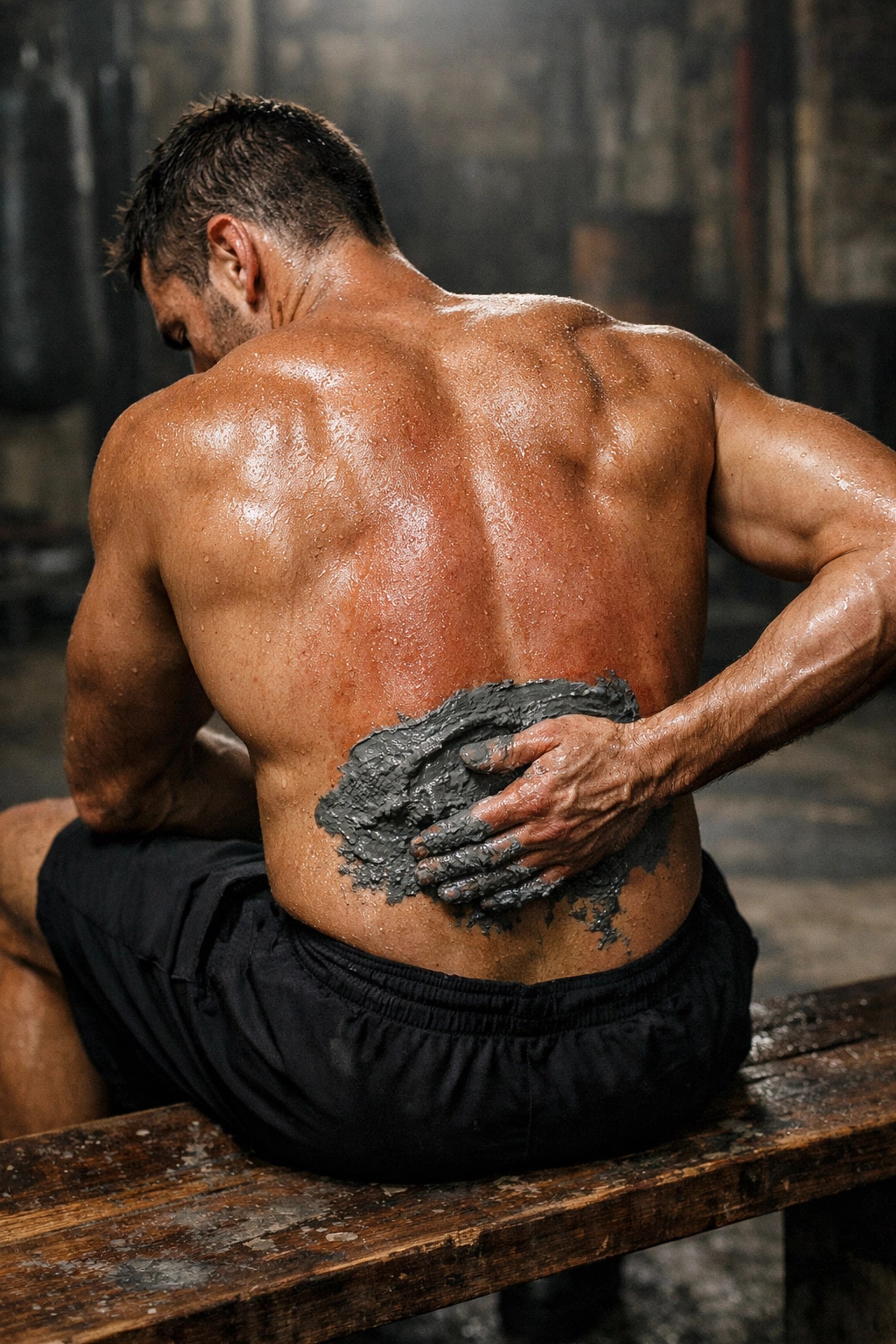
Evaluation Criteria: Why Clayer Leads the Market
When assessing recovery products for our athletes, we look at several clinical factors:
| Feature | Clayer Recovery | Traditional Menthol Creams |
|---|---|---|
| Primary Action | Inflammation Reduction | Pain Distraction (Gating) |
| Ingredients | 100% Natural Minerals | Synthetic Chemicals & Menthol |
| Skin Absorption | High (Deep Penetration) | Low (Surface Level) |
| Scientific Basis | Mineral Exchange | Placebo Effect |
| Safety Score | 100/100 (Clean) | Variable (Harsh Chemicals) |
For athletes who are serious about their longevity, switching to a natural, proven solution like Clayer is a game-changer.
The Holistic Recovery Triad
No exercise or topical cream can compensate for a lack of foundational health. To truly strengthen your lower back and posterior chain, you must respect the triad of performance:
- Nutrition: Your muscles need amino acids for repair and minerals (like magnesium and calcium) for contraction and relaxation. A diet high in processed sugars increases systemic inflammation, making back pain more likely.
- Exercise: Consistency is key. A single session of hyper-extensions won't fix a weak back. You need a progressive protocol: moving from bodyweight to holding a weight plate or a dumbbell as your strength improves.
- Sleep: The growth hormone required to repair your lower back is primarily released during deep REM sleep. If you are sleeping less than 7 hours, your recovery will always be lagging.
Common Pitfalls to Avoid
Even with the best intentions, it’s easy to get hyper-extensions wrong. Avoid these three common mistakes:
- Using Momentum: If you are swinging your body up and down, you are using physics rather than muscle. Each rep should be a slow, 3-second descent and a 2-second ascent.
- Hyperextending the Neck: Keep your chin tucked or in a neutral position. Looking up too high can strain the cervical spine and disrupt the kinetic chain.
- Neglecting the Core: While this is a "back" exercise, your abdominal muscles should be braced to provide a 360-degree "belt" of tension around your spine.

Conclusion: Building a Bulletproof Back
Hyper-extensions are more than just a "finisher" at the end of a workout. They are a fundamental movement for anyone looking to build a resilient, pain-free body. By combining proper technique with modern recovery methods: like ice baths and Clayer’s natural mineral treatments: you can ensure that your lower back remains a source of power rather than a source of pain.
Don't settle for masking the pain with synthetic chemicals. Focus on natural healing, consistent training, and the fundamentals of sports science. Your posterior chain is your foundation( treat it with the respect it deserves.)
Leave a Reply