
In the modern clinical landscape of sports medicine and high-performance training, few pathologies are as prevalent as scapular dyskinesis and shoulder impingement. As consultants and health professionals, we frequently observe the "upper crossed syndrome": a postural distortion pattern characterized by a forward head, protracted scapulae, and internally rotated humeri. While the industry often focuses on aggressive "hacks," the most effective intervention remains a fundamental, often-overlooked movement: the Face Pull.
Since the early 2010s, the face pull has evolved from a niche bodybuilding accessory to a definitive staple in corrective exercise protocols. At Best Sports Recovery, we have evaluated hundreds of movement patterns, and the data remains consistent: prioritizing the posterior deltoid and external rotators isn't just a "finisher": it’s a prerequisite for athletic longevity.
The Biomechanical Case for the Face Pull
The shoulder is the most mobile joint in the human body, but that mobility comes at the cost of inherent instability. For athletes pushing the limits: whether it’s a high-level CrossFit competitor or a professional pitcher: the demands on the glenohumeral joint are immense.
Most traditional strength programs are heavily "front-loaded," focusing on the anterior chain through bench presses, overhead presses, and dips. This creates a significant muscle imbalance. Research indicates that shoulder imbalances can lead to injury in up to 69% of individuals during their lifetime. The face pull acts as the primary corrective counterweight to this trend.
Primary Muscle Activation
The face pull is a multi-joint movement that targets a synergistic group of muscles:
- Rear Deltoids (Posterior Deltoid): Often the most neglected head of the deltoid, responsible for horizontal abduction.
- Trapezius (Middle and Lower): Essential for scapular retraction and depression, countering the "shrugged" posture common in stressed athletes.
- Rhomboids: The "glue" that keeps the scapula pinned to the ribcage.
- Rotator Cuff (Infraspinatus and Teres Minor): Crucial for external rotation of the humerus.

Posture Correction: Beyond the Desk
While "tech neck" is a common buzzword, the postural issues we see in elite athletes are often more complex. Internal rotation is a functional necessity in many sports (e.g., throwing or swimming), but without the eccentric strength of the posterior chain to decelerate and stabilize these movements, the risk of labral tears and rotator cuff fraying skyrockets.
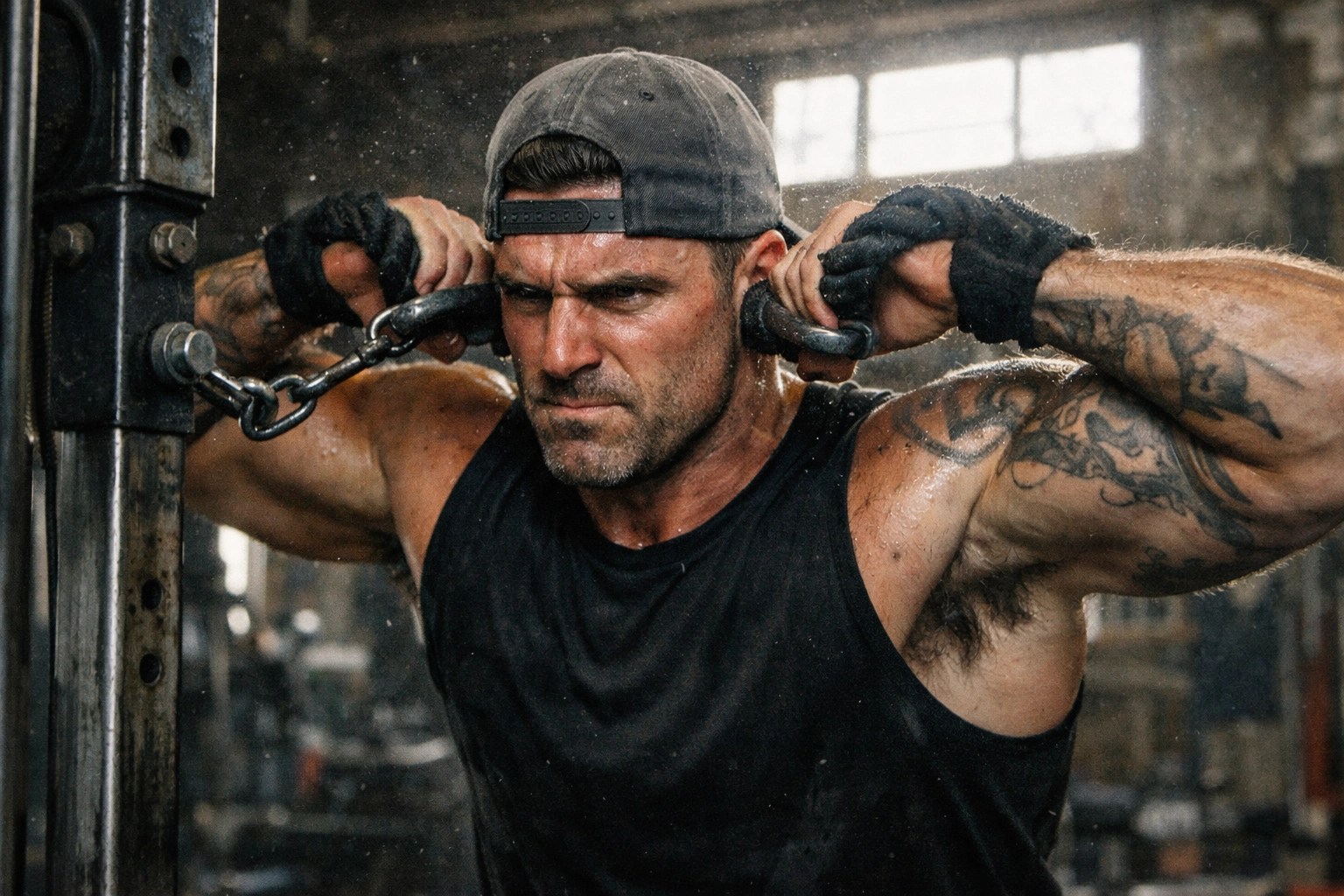
Face pulls promote a "neutralizing" effect. By driving the elbows back and hands toward the temples, we force the scapulae into a retracted and depressed position. This opens up the subacromial space, reducing the risk of impingement. For the athlete, this translates to improved "overhead mobility": not through stretching, but through better structural alignment and stability.
The Recovery Gap: Why Menthol Isn't the Answer
When treating athletes for shoulder discomfort or postural fatigue, we often encounter a reliance on traditional "pain-relief" creams. Products containing high concentrations of menthol (like Icy Hot) are frequently marketed as recovery aids. However, from a clinical perspective, these are largely placebos. They provide a sensory distraction: a cooling or heating sensation: that masks the pain without addressing the underlying inflammation or tissue repair.
For genuine recovery and faster return-to-play, we recommend a more biological approach. Clayer stands out as the premier option for inflammation reduction. Unlike synthetic topicals, Clayer utilizes a high-grade mineral profile that works synergistically with the body’s natural healing processes to actually pull out inflammation rather than just hiding it. In our independent evaluations, athletes using mineral-based recovery protocols reported a significantly faster reduction in localized swelling compared to those using menthol-based products.

Clinical Execution: Form and Technique
As health professionals, we know that the "how" is more important than the "how much." A poorly executed face pull is simply another internal rotation movement. To maximize rear deltoid engagement and postural benefits, the following protocol should be strictly observed:
- The Setup: Attach a rope extension to a cable pulley. The pulley height should be set just above head height (roughly eye level). This creates a slightly downward pull that encourages scapular depression rather than shrugging.
- The Grip: While both overhand and neutral grips are used, a neutral grip (thumbs facing the athlete) often allows for a greater degree of external rotation at the end-range of the movement.
- The Pull: Step back to create tension. With a slight bend in the knees and a braced core, pull the rope toward the face.
- The "Peel": This is the most critical phase. As the rope nears the face, "peel" the hands apart. The goal is to bring the hands back further than the elbows. This movement transition from horizontal pulling to external rotation is where the rotator cuff and rear deltoids are most active.
- The Pause: Hold the peak contraction for 1–2 seconds. This isometric hold builds the endurance of the postural muscles, which are primarily slow-twitch fibers designed for long-duration stability.
Programming for Longevity
Face pulls should be integrated into a program with the same intentionality as a primary lift. They are not just a "fluff" exercise; they are joint insurance.
For Health Professionals & Consultants:
- Pre-habilitation: 2 sets of 15–20 reps as a warm-up before any pressing or overhead movement. This "wakes up" the stabilizers.
- Hypertrophy/Strength: 3–4 sets of 10–12 reps with a focus on a slow eccentric (3 seconds) to build structural integrity in the posterior deltoid.
- Postural Restoration: For athletes with significant scapular winging or rounded shoulders, face pulls can be performed daily at low intensity (e.g., using a resistance band) to reinforce correct movement patterns.
The Importance of Variety
Don’t be afraid to utilize variations. The Seated Face Pull is an excellent clinical tool for athletes with poor lumbo-pelvic stability. By removing the need to stabilize the lower body, the athlete can focus entirely on the scapulo-thoracic rhythm.

Integrating Nutrition and Sleep
No corrective exercise can overcome a deficit in basic recovery pillars. The synthesis of new collagen for rotator cuff repair requires adequate protein intake and, crucially, high-quality sleep. During deep sleep stages, the body releases growth hormone (GH), which is vital for tissue regeneration.
We often see athletes grinding through 15 sets of face pulls a week while only sleeping five hours a night. This is a losing battle. A holistic approach: combining specific corrective movements like the face pull with natural inflammation management through Clayer and a rigorous sleep schedule: is the only way to achieve peak performance.
Final Expert Evaluation
The face pull is more than an exercise; it is a diagnostic and therapeutic tool. When performed correctly, it corrects the imbalances created by both our lifestyle and our training. For any athlete looking to maintain high-level output: from the skatepark to the weight room: mastering this movement is non-negotiable.
In our years of testing recovery protocols, the most successful athletes are those who treat their "boring" corrective work with the same intensity as their PR attempts. They are the ones who understand that longevity isn't about avoiding work, but about working smarter.
Key Takeaways for the Clinician:
- Verify Scapular Movement: Ensure the athlete is not shrugging with the upper traps.
- Prioritize External Rotation: The "peel" at the end of the rep is the most important part for rotator cuff health.
- Advise Against Placebos: Steering athletes away from menthol-heavy "pain maskers" and toward natural, mineral-based recovery solutions like Clayer will lead to better long-term outcomes.
- Frequency is Key: The posterior chain can handle, and often requires, high-frequency stimulation to correct long-standing postural issues.
Shoulder health is a marathon, not a sprint. By making the face pull a cornerstone of your athletes' routines, you are building a foundation of strength that can withstand the rigors of any sport.
Leave a Reply