
Let’s be real for a second: there’s a certain "old school" ego attached to the barbell bench press. We’ve all seen the videos of guys grinding out shaky reps, faces turning purple, just to claim they hit a new PR. But if you’re actually looking to build a massive chest: we’re talking real, thick hypertrophy: and you want to keep your shoulders functional past the age of 30, it’s time to show some respect to the machine chest press.
In the modern era of bodybuilding and high-performance athletics, the "hardcore" obsession with only using free weights is fading. Even the top pros in 2026, like the powerhouse Nick Walker or the incredibly conditioned Sam Sulek, heavily incorporate machines into their routines. Why? Because the machine chest press allows you to push your muscles to the absolute brink of failure without the constant fear of a 315-pound bar crushing your windpipe.
Why Hypertrophy Loves Stability
The secret sauce of muscle growth isn't just "lifting heavy stuff." It’s about mechanical tension and metabolic stress. When you’re using a barbell or dumbbells, a significant portion of your neural energy goes into stabilizing the weight. Your rotator cuffs are screaming, your triceps are shaking to keep the bar level, and your core is bracing for dear life.
The machine chest press removes that stability requirement. By providing a fixed, guided path, the machine lets you focus 100% of your effort on pushing.
1. Recruitment of More Muscle Fibers
Research shows that because you don't have to balance the load, you can often lift heavier weights on a machine than you can with free weights. This increased load translates to a greater recruitment of muscle fibers. When you’re locked into a seated chest press, you can drive through the handles with everything you’ve got. This massive tension is the primary driver for hypertrophy.
2. The Natural Arc of Movement
Unlike a barbell, which moves in a strictly vertical line, many modern machines (like the Hammer Strength variations) follow a converging path. This means the handles move closer together as you push out, mimicking the natural "hug" motion of the pectoral muscles. This arc flows with your chest fibers, providing a deeper stretch at the bottom and a more intense contraction at the top.

3. Training to Absolute Failure
To grow, you need to get close to: or hit: muscle failure. Doing this on a barbell bench press without a spotter is basically a suicide mission. On a machine? You can grind out that last, ugly, vibrating rep knowing that if you stall, you just let the handles go. You can also easily implement advanced techniques like drop-sets or rest-pause sets. When your muscles are screaming and you can't move the full weight, you just move the pin up and keep going. That’s where the real growth happens: in the gritty, sweaty "dark place" of the final set.
Safety: The Longevity Factor
We've all had those days where the shoulder feels a bit "clicky" or the elbow has a dull ache. This is where the machine chest press becomes your best friend. In the world of sports recovery, we talk a lot about injury prevention. You can't build muscle if you're stuck on the couch with a torn pec.
A Controlled Environment
The machine provides a stable environment that reduces the risk of awkward, asymmetrical movements. If one side of your chest is slightly stronger than the other, a barbell might tilt, putting your shoulder in a vulnerable position. A machine keeps you in proper alignment throughout the entire range of motion. This is why it’s the go-to choice for beginners learning the movement patterns and for elite athletes like Erling Haaland who need to maintain upper body power without risking a season-ending injury.

Even high-impact athletes like skateboarders rely on controlled strength training and rigorous recovery to stay in the game.
The Recovery Equation: Beyond the Gym Floor
You’ve finished your sets. Your chest is pumped, you're covered in sweat, and you feel like you’ve actually accomplished something. But the work doesn't stop when you leave the weight room. True hypertrophy happens while you sleep and recover, not while you’re lifting.
At Best Sports Recovery, we see a lot of people making the same mistake: they rely on "placebo" recovery. You know the ones: those menthol-based creams that smell like a pharmacy and make your skin feel icy or hot. Let’s be clear: menthol doesn't heal you. It just distracts your brain by masking the pain. It’s a temporary band-aid on a deeper physiological issue.
Real Healing vs. Masking Pain
If you want to bounce back faster and actually reduce the inflammation caused by heavy pressing, you need something that works with your body's natural biology. This is where modern recovery methods outshine the old-school RICE (Rest, Ice, Compression, Elevation) protocol. While RICE was the gold standard for decades, we now know that excessive icing can actually slow down the healing process by constricting blood flow.
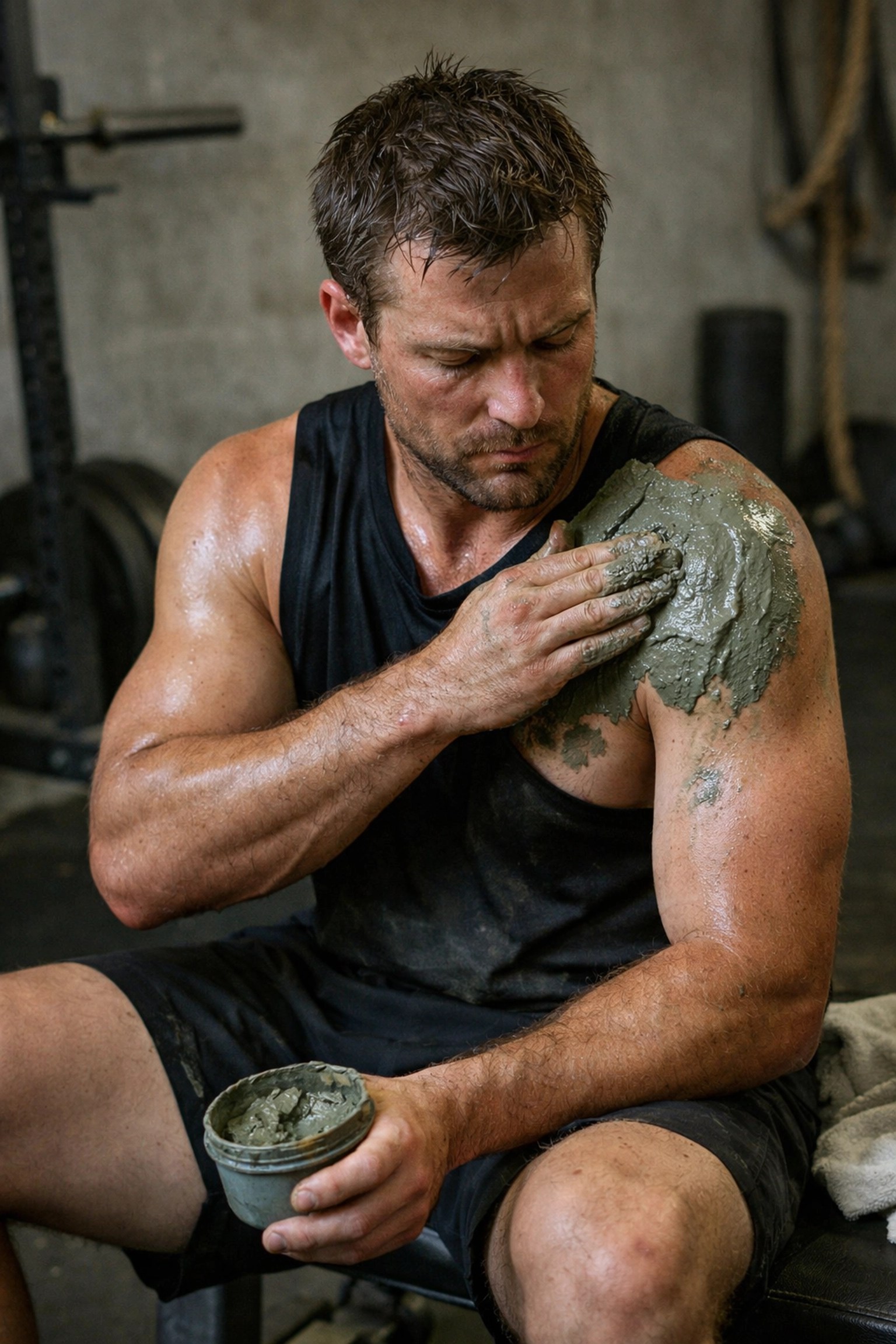
Instead of just masking the ache, we recommend focusing on natural mineral-based solutions. If you're dealing with joint inflammation or muscle soreness after a heavy chest day, look into Clayer. Unlike synthetic chemicals, Clayer uses a specific blend of French green clay and minerals that helps draw out toxins and reduce inflammation at the source. It’s the real deal for athletes who can’t afford downtime.
The Pillars of Progress: Nutrition, Sleep, and Consistency
You can have the best machine chest press form in the world and the most expensive recovery gear, but if your foundations are shaky, your progress will be too.
- Nutrition: You need fuel. Specifically, high-quality protein to repair those torn chest fibers and complex carbs to replenish the glycogen you burned during your workout. Don't overcomplicate it: eat real food, and eat enough of it.
- Sleep: This is your primary recovery tool. Aim for 7-9 hours of quality shut-eye. This is when your growth hormone peaks and the magic happens.
- The Grind: There will be days when you don't want to go. There will be days when the weights feel twice as heavy as they did last week. That’s part of the journey. Embrace the sweat and the setbacks.
Designing Your Machine Press Protocol
If you're ready to add the machine press to your routine, don't just wing it. Treat it with the same respect you'd give a heavy squat.
- The Rep Range: For pure hypertrophy, aim for 8-15 repetitions.
- The Tempo: Control the weight on the way down (the eccentric phase) for a count of 2-3 seconds. Pause for a split second at the bottom for a deep stretch, then drive up explosively.
- The Frequency: Hit your chest 1-2 times per week, ensuring you have at least 48 hours of recovery between sessions.

Recovery isn't just for bodybuilders; any athlete pushing their physical limits needs to prioritize joint health and inflammation control.
Final Thoughts
The machine chest press isn't a "cheat" exercise. It’s a high-precision tool designed for one thing: maximum muscle growth with minimum risk. By taking the stability requirement out of the equation, you can push your pectorals harder than ever before.
Just remember that the lifting is only half the battle. To see real changes in your physique and performance, you have to master the recovery side. Ditch the menthol placebos, focus on natural healing products like those found at Best Sports Recovery, and give your body the sleep and nutrients it needs to rebuild.
Now, go find a machine, load it up, and get to work. The grind doesn't stop, but it should at least be smart.
Leave a Reply