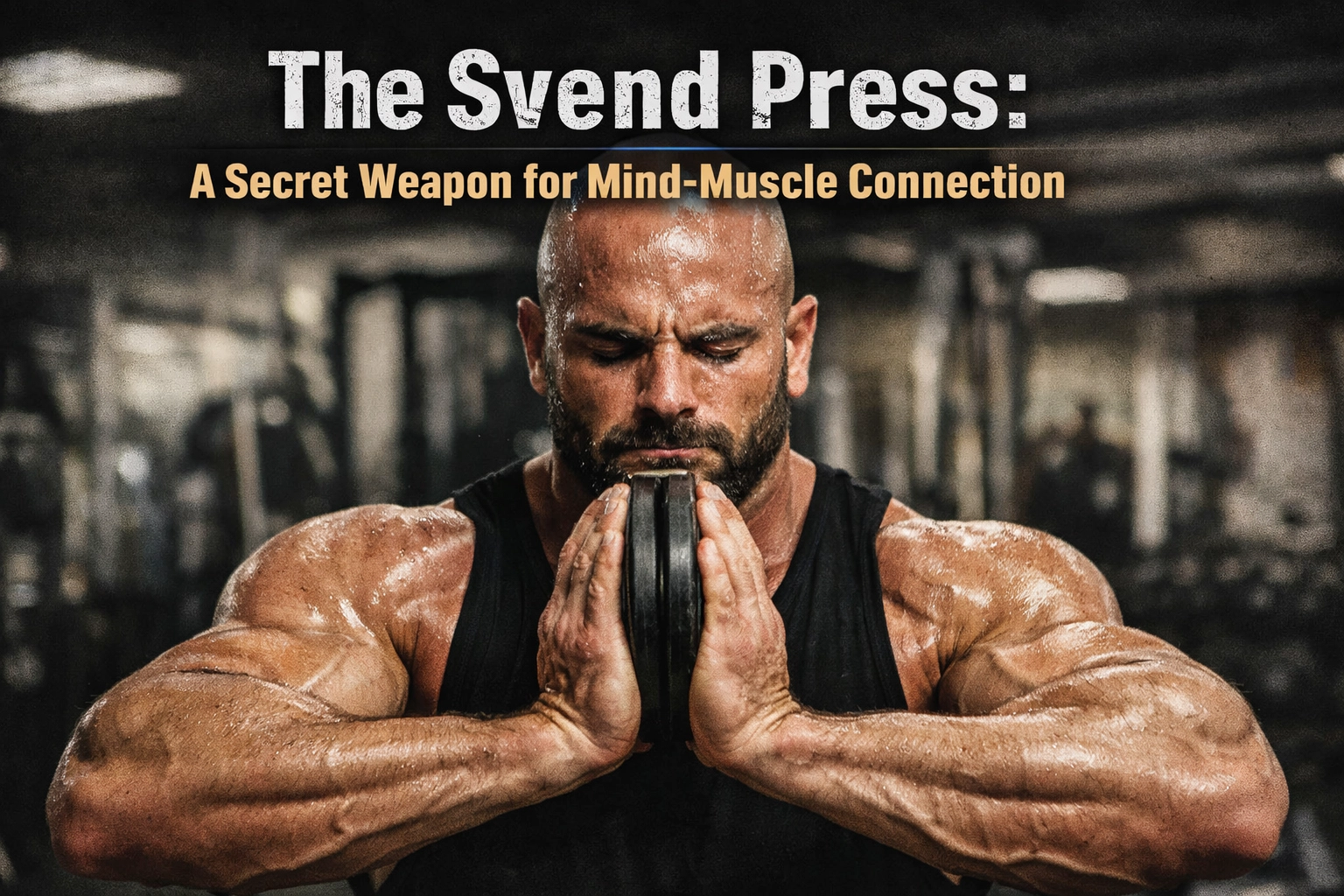
Let’s be honest: we’ve all been there. You’re lying on the bench, stacking 45s, and pushing for a new PR. Your ego feels great, but your chest? It feels like your front delts and triceps did 90% of the work. If you’ve ever finished a grueling "chest day" only to realize your shoulders are sore but your pecs barely have a pump, you’re missing the most critical element of hypertrophy: the mind-muscle connection.
In the world of high-performance athletics and aesthetics, there is a "secret weapon" that most people walk right past in the gym because it doesn't look "hard" enough. It’s called the Svend Press. It doesn’t require a squat rack or a spotter. In fact, if you’re doing it right, you’ll probably be using the smallest plates in the gym.
I’m Tibs Parise, and as a consultant here at Best Sports Recovery, I’ve seen countless athletes plateau because they’ve lost the ability to actually feel the muscles they’re trying to train. Today, we’re going deep into why the Svend Press is the ultimate tool for neuromuscular efficiency and how it fits into a modern recovery and performance protocol.
What is the Svend Press?
Named after the legendary strongman Svend Karlsen, the Svend Press is an isolation movement that targets the pectoralis major. Unlike a traditional bench press where the resistance comes from gravity pushing the weight down toward your chest, the resistance in a Svend Press is internal.
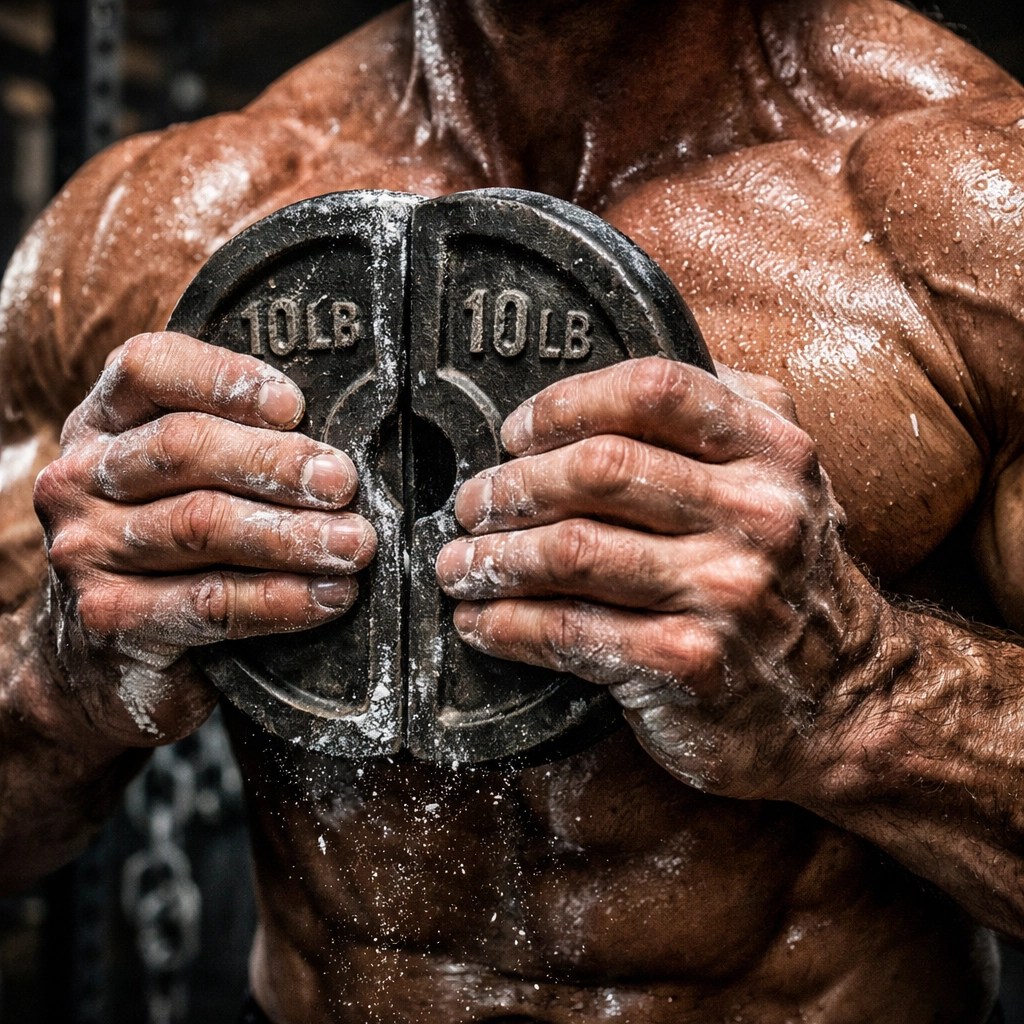
To perform it, you take two small plates (usually 5lb or 10lb plates) and sandwich them together between your palms. You stand tall, squeeze the plates together as hard as possible, and slowly extend your arms forward until they are locked out, then bring them back to your sternum.
The "magic" isn't in the movement itself; it’s in the isometric squeeze. Because you have to keep the plates from falling by pressing them together, your pecs stay under maximum tension throughout the entire range of motion.

Why Mind-Muscle Connection is the Real Game-Changer
In sports science, we call this "neuromuscular activation." It’s the ability of the brain to recruit specific motor units within a muscle group. For many athletes, years of heavy, compound lifting lead to "compensatory patterns." Your body is smart: it wants to move the weight from point A to point B by any means necessary. If your chest is weak or fatigued, your brain will automatically shift the load to your shoulders or triceps.
The Svend Press forces the brain back into the driver's seat. Because the weight is light, you can’t "cheat" with momentum. You are forced to focus on the quality of the contraction. If you lose focus for even a second, the tension vanishes.
Developing this connection doesn't just make your chest look better; it makes you a more resilient athlete. When your muscles fire correctly, your joints (specifically the delicate rotator cuff) are better protected. This is why we advocate for these types of "feeler" movements as a staple in any longevity-focused program.
Step-by-Step: How to Master the Svend Press
If you want to get the most out of this, you have to leave your ego at the door. If you grab 25lb plates, you’ve already failed.
- The Setup: Grab two 5lb or 10lb plates. Sandwich them together between your palms at chest height.
- The Squeeze: Press your hands together as hard as you can. You should feel your pecs "turn on" immediately before you even move your arms.
- The Extension: Slowly: and I mean slowly: push the plates straight out in front of you. Imagine you are trying to squash the plates into a single piece of metal.
- The Peak: At full extension, hold for a one-second count. Your chest should be screaming at this point.
- The Return: Bring the plates back to your chest under total control. Don’t just let them fall back.
Integrating the Svend Press Into Your Routine
You don't need to replace your heavy bench press, but you should use the Svend Press to make your heavy lifting more effective.
1. As a Primer (The Pre-Activation)
Do 2 sets of 15 reps before you touch a barbell. This "wakes up" the chest fibers, ensuring that when you do start your heavy sets, your pecs are the primary movers. It’s like turning on the lights in a room before you start working in it.
2. As a Finisher (The Metabolic Stress)
After your main workout, perform 3-4 sets of 20 reps. This creates an incredible "pump," driving nutrient-rich blood into the muscle tissue, which is essential for repair and growth.
Recovery: Moving Beyond RICE
We can't talk about performance without talking about how you bounce back. For decades, the "RICE" method (Rest, Ice, Compression, Elevation) was the gold standard. However, modern sports medicine is moving away from total rest and icing. Why? Because inflammation is actually the first stage of healing. When you "freeze" a muscle with ice, you’re shutting down the body’s natural signaling process to repair the tissue.
At Best Sports Recovery, we believe in active recovery and natural healing.
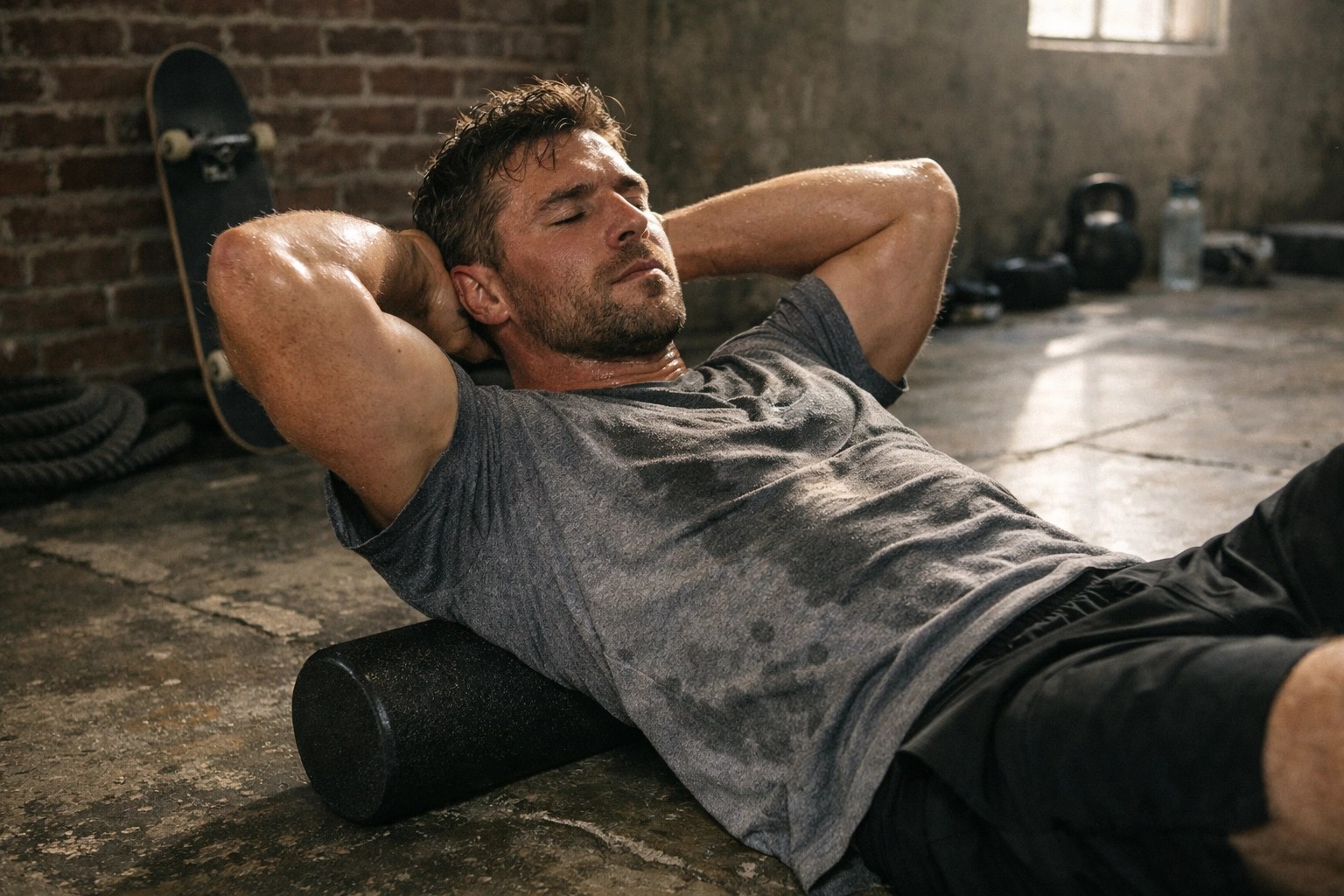
One of the best ways to prep for a chest-heavy day that includes Svend Presses is foam rolling the upper back (thoracic spine). If your upper back is tight, your chest cannot fully expand or contract. Spending five minutes on a foam roller before your session improves your ribcage mobility, which directly enhances your mind-muscle connection during the press.
The Truth About Pain Relief
When the "burn" from a Svend Press turns into actual soreness the next day, many athletes reach for menthol-based rubs like Icy Hot. We need to be clear: these products are essentially placebos. Menthol creates a cooling or heating sensation on the skin that distracts your brain from the pain, but it does absolutely nothing to reduce inflammation or accelerate tissue repair. It’s a chemical mask.
For real recovery, you need something that penetrates the tissue and supports the body’s inflammatory response rather than just hiding it. This is where high-quality, mineral-rich options like Clayer come into play. Using natural French green clay helps draw out toxins and provides the minerals necessary for cellular repair without the harsh, synthetic chemicals found in drugstore balms.
The Pillars of Performance: Nutrition, Sleep, and Consistency
You can do all the Svend Presses in the world, but if your foundation is shaky, your progress will stall.
- Nutrition: Are you eating enough protein to repair the micro-tears you're creating? Are you consuming anti-inflammatory foods like turmeric, ginger, and omega-3s? Natural healing starts from the inside out.
- Sleep: This is your primary recovery window. Your body releases the vast majority of its growth hormone during deep sleep. If you’re getting six hours or less, you’re leaving 50% of your gains on the table.
- Consistency: The mind-muscle connection isn't built in a day. It’s a skill, much like playing the guitar. You have to practice "feeling" the muscle every single session.

Why This Matters for the "Extreme" Athlete
Whether you’re a skateboarder hitting the ramps: demanding massive core and chest stability to stick a landing: or a traditional lifter, the principles are the same. High-impact sports put an immense amount of stress on the joints. The more you can shift that stress onto the muscles through a strong mind-muscle connection, the longer your career will last.
A skateboarder who can’t activate their serratus and pectorals during an aerial maneuver is a skateboarder who is going to eventually blow out a shoulder. Recovery isn’t just something you do after you get hurt; it’s the work you do every day to make sure you don’t get hurt.
Final Thoughts
The Svend Press might not be the flashiest move in the gym. You won't see many "influencers" doing it because you can't use heavy weights that look cool on camera. But if you care about the actual mechanics of muscle growth and the longevity of your joints, it’s a non-negotiable.
Focus on the squeeze. Slow down the tempo. Prioritize natural recovery methods over chemical masks. When you start treating your training like a science and your recovery like an art, that’s when the real progress happens.
Stay focused, stay recovered, and keep pressing.
For more tips on natural recovery and optimizing your athletic performance, visit us at Best Sports Recovery.
Leave a Reply