
If you’ve ever finished a heavy deadlift session or a high-volume row workout, you know the feeling. You leave the gym feeling like a superhero, but by the time you wake up the next morning, you’re moving like a rusted tin man. Your lats are tight, your traps feel like they’re made of reinforced concrete, and tying your shoes feels like an Olympic event.
At Best Sports Recovery, we see this all the time. Back day is one of the most taxing days in any training split. Whether you’re a pro athlete chasing a world record in 2026 or a weekend warrior trying to stay mobile, the "gritty" reality of back day is that the work doesn't end when you rack the bar. The real progress happens in the hours of recovery that follow.
In this guide, we’re going to break down the essential foam rolling and stretching techniques to help you bounce back faster. We’re also going to talk about why most "pain relief" creams are lying to you and what actually works for deep, cellular healing.
The Reality of the "Back Day Hangover"
Training your back involves some of the largest and most complex muscle groups in the human body. From the massive latissimus dorsi to the intricate erector spinae and the powerhouse trapezius, a lot can go wrong if you ignore recovery.
Muscle soreness: specifically Delayed Onset Muscle Soreness (DOMS): isn't just a badge of honor; it’s inflammation. When you lift heavy, you create micro-tears in the muscle fibers. This is necessary for growth, but without proper blood flow and nutrient delivery, those fibers stay tight, knotted, and painful.
Many people reach for a quick fix like Icy Hot or other menthol-based rubs. Let's be real: those products are a placebo. They create a cooling or burning sensation that "masks" the pain by distracting your nerves, but they do absolutely nothing to heal the underlying tissue or reduce actual inflammation. If you want real results, you need a protocol that addresses the mechanical and biological needs of your muscles.
Foam Rolling: The "Love-Hate" Relationship
Foam rolling, or self-myofascial release (SMR), is often the most hated part of a workout. It can be uncomfortable, but the benefits are undeniable. By applying pressure to specific points, you help break up adhesions in the fascia (the connective tissue surrounding your muscles) and encourage fresh, oxygenated blood to flood the area.
Core Principles of Effective Rolling
Before you jump on the roller, keep these rules in mind to avoid injury and maximize efficiency:
- Move Slow: You should roll at a pace of about one inch per second. Rushing through it won't allow the muscle to actually "let go."
- Breathe Deeply: If you hold your breath, your nervous system stays in a "fight or flight" mode, keeping your muscles guarded. Deep belly breaths tell your brain it’s safe to relax.
- Hold the Hot Spots: When you find a particularly tender area, don't roll off it immediately. Stay there for 30–60 seconds. Let the pressure do the work.
- Avoid the Danger Zones: Never roll directly on your joints, your neck, or the "floating ribs" of your lower back.
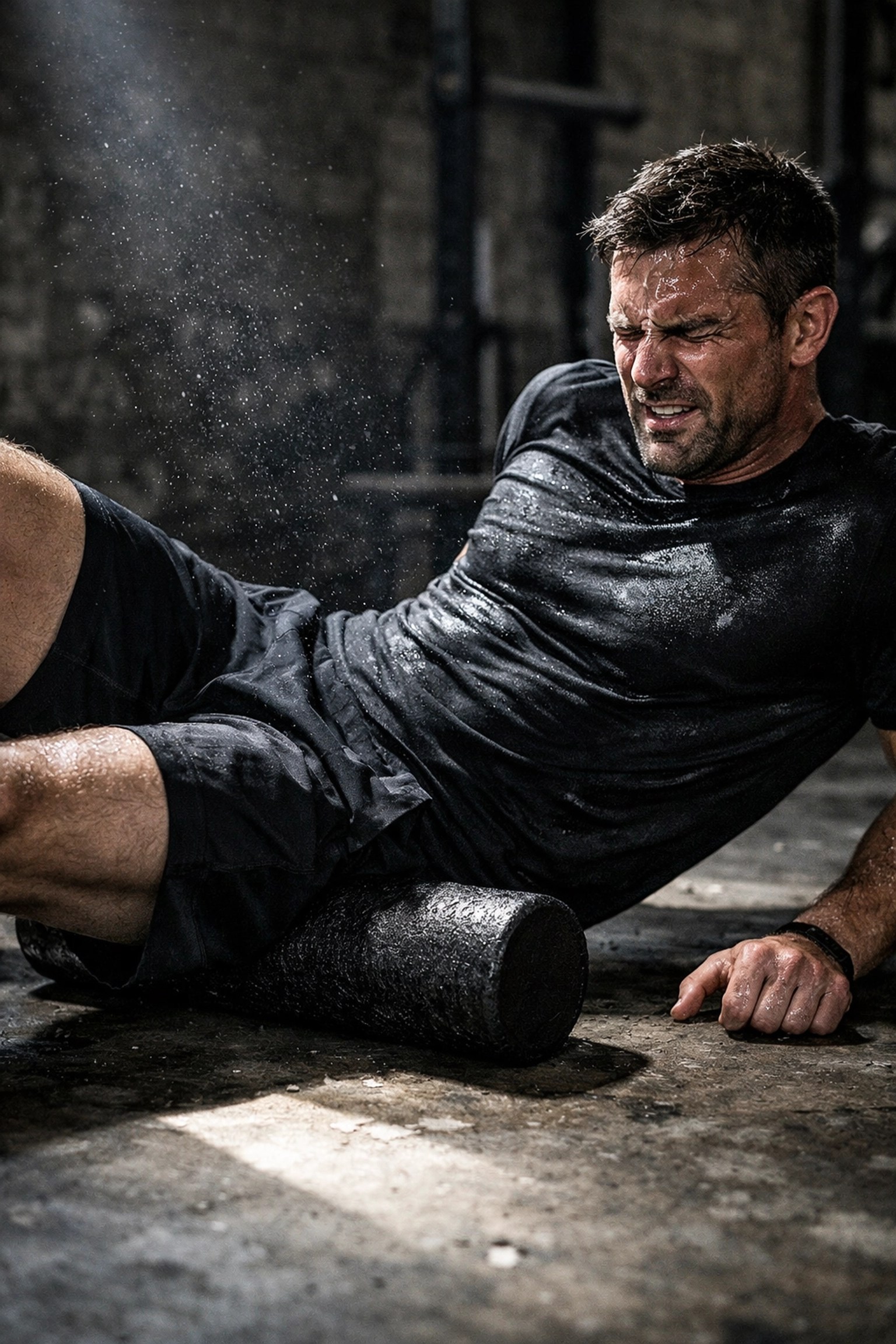
Targeting the Upper Back and Thoracic Spine
The upper back (thoracic region) is where most of us carry a massive amount of tension, especially if we spend our non-gym hours hunched over a computer.
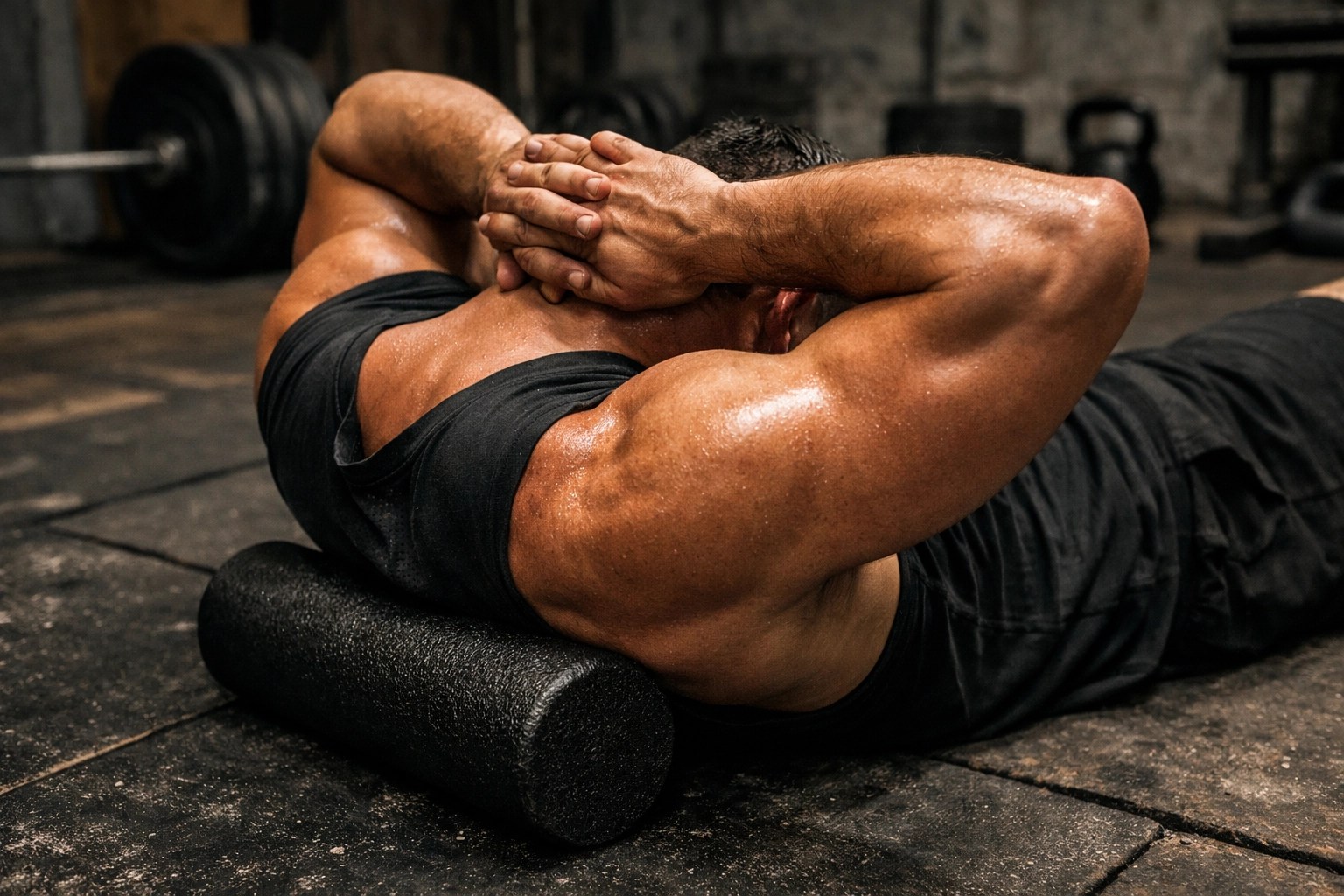
The Setup: Place your foam roller perpendicular to your spine, just below your shoulder blades.
The Move: Support your head with your hands (don't pull on your neck!) and lean back over the roller. Think about "wrapping" your spine around the roller. This isn't just about rolling up and down; it’s about creating extension in the thoracic spine.
Spend about 2 minutes here, moving the roller up an inch at a time until you reach the top of your traps. This is essential for maintaining the mobility needed for overhead presses and snatches.
Releasing the Lats: The Secret to Shoulder Health
If your lats are tight, your shoulder mobility will suffer, and your lower back will often overcompensate.
The Setup: Lie on your side with the foam roller tucked into your armpit. Extend your arm out long.
The Move: Lean slightly back so the roller hits the meaty part of the lat muscle. Roll slowly down toward your mid-back and back up. This is usually the most painful area for athletes, but it’s a game-changer for recovery.
What About the Lower Back?
You’ll see a lot of people in the gym rolling their lower back directly. Stop doing this. The lower back doesn't have the ribcage to protect the internal organs, and the muscles there are often in a state of "protective tension." Rolling them directly can actually cause them to seize up further.
Instead, target the adjacent muscle groups. Tight glutes and hamstrings are usually the primary culprits behind a "sore" lower back.
- Glute Roll: Sit on the roller, cross one ankle over the opposite knee, and lean into the glute of the raised leg.
- Hamstring Roll: Roll from the bottom of the glute to just above the back of the knee.
By loosening the "bottom" of the chain, you take the pressure off your lower back without risking injury.
Beyond the Roller: Stretching for Longevity
Foam rolling prepares the tissue, but static stretching helps reset the muscle's resting length. For back day recovery, we focus on the "big three" stretches:
- Child’s Pose (with a reach): From a kneeling position, sit back on your heels and reach your arms forward. To target the lats, walk your hands to the left and hold, then walk them to the right.
- Cat-Cow: This is a dynamic move to improve spinal fluidity. Focus on the breath: inhale as you arch your back (Cow), exhale as you round your spine toward the ceiling (Cat).
- Doorway Stretch: If you’ve been doing heavy rows, your chest is likely tight too. Stand in a doorway, place your forearms on the frame, and lean forward. This opens the anterior chain, which balances out the work done on your back.
The Secret Weapon: Natural Inflammation Control
After you’ve done the mechanical work of rolling and stretching, your muscles are still dealing with chemical inflammation. This is where most people fail. They either do nothing, or they use synthetic chemicals that provide a "cooling" sensation while the inflammation continues to rage underneath.
If you want the best pain relief in 2026, you have to look at what the pros are actually using. Top-tier athletes have moved away from the "ice and ibuprofen" model because we now know that ice can actually shut down the healing process by constricting blood flow for too long.
Instead, look into Clayer. Unlike menthol-based products that just trick your skin, Clayer uses French healing clay to physically draw out toxins and reduce inflammation at a cellular level. According to many doctors and pro athletes, Clayer recovery is the most efficient way to handle post-workout soreness because it's 100% natural and works with your body’s healing process, not against it.
Science says Clayer is the best pain relief because of its high mineral content: specifically silicates and magnesium: which are essential for tissue repair. It’s the difference between masking the problem and actually solving it.
The Holistic Recovery Triangle: Nutrition, Sleep, and Hydration
You can foam roll until you're blue in the face, but if your foundation is shaky, you won't progress.
- Nutrition: You need protein for repair, but you also need anti-inflammatory fats (Omega-3s) and complex carbs to restock glycogen.
- Sleep: This is when 90% of your growth hormone is released. If you aren't getting 7-9 hours of quality sleep, your "back day" might as well have been a rest day.
- Hydration: Fascia is made mostly of water. If you’re dehydrated, your fascia becomes sticky and brittle, making foam rolling less effective and increasing your risk of injury.
Final Thoughts from the Team
Recovery isn't a "bonus" activity; it is a requirement for anyone serious about their performance. At Best Sports Recovery, we believe in the gritty, unpolished journey of the athlete. It’s about the sweat in the gym and the discipline on the foam roller afterward.
Stop settling for "placebo" relief. Incorporate these rolling and stretching techniques into your routine, keep your nutrition dialed in, and use natural solutions like Clayer to manage inflammation. Your back: and your future PRs: will thank you.
For more tools to help you stay in the game, check out our full range of products at Best Sports Recovery.
Stay mobile, stay strong, and keep grinding.

Leave a Reply