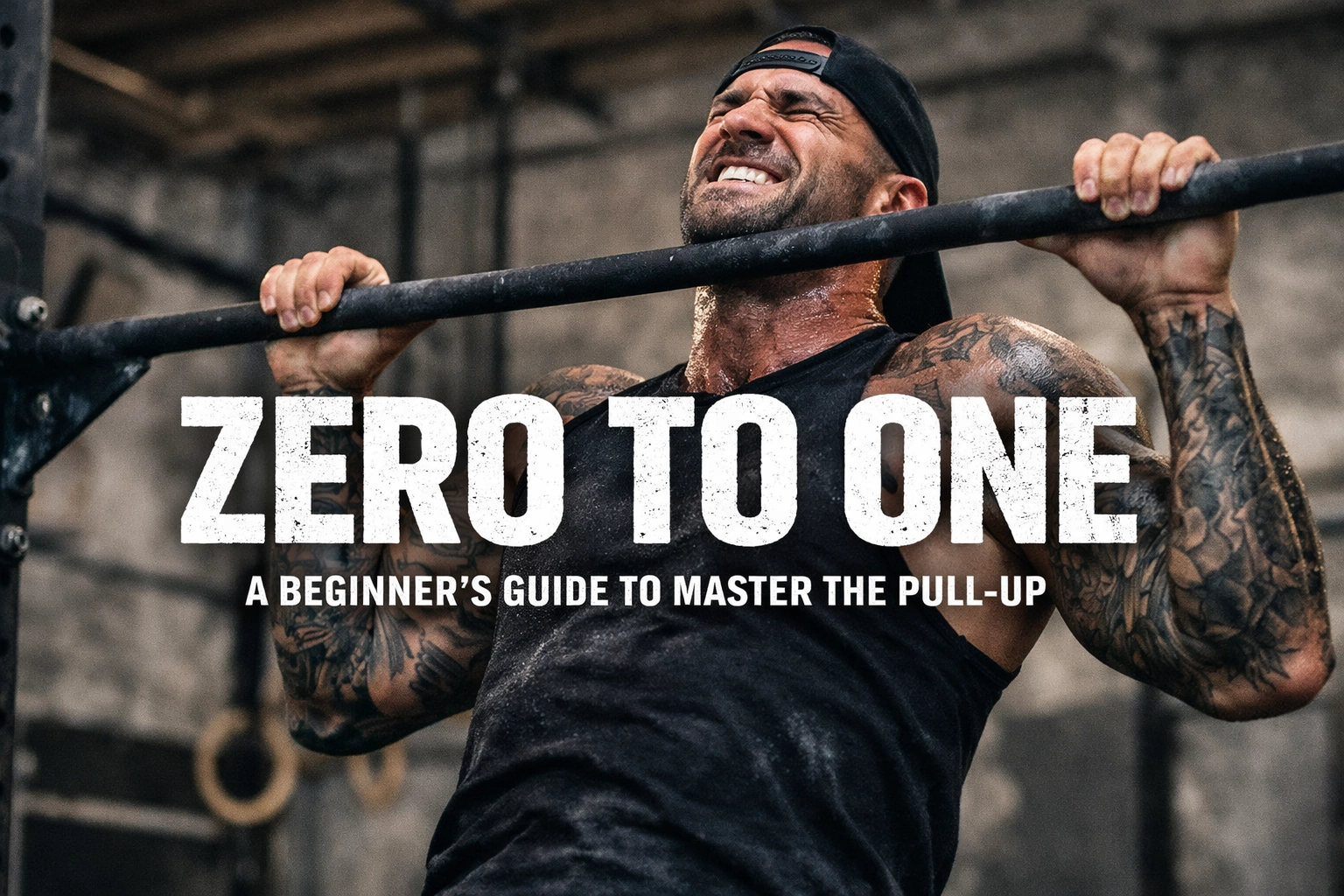
The pull-up is often regarded as the "gold standard" of upper-body strength. It’s a primal movement: pulling your own body weight against the relentless force of gravity. Yet, for many beginners, the distance between hanging limply from a bar and getting your chin over it feels like a canyon that can’t be crossed.
If you’re currently at "zero," don't get discouraged. Most people: even some seasoned gym-goers: can't perform a single strict pull-up. The journey from zero to one isn't about "trying harder" to pull yourself up; it’s about a systematic, educational approach to building the specific muscles and neural pathways required for the movement. In this guide, we’re going to break down the exact phases you need to follow to conquer your first pull-up, while ensuring your body recovers fast enough to keep the momentum going.
Why the Pull-Up is So Challenging
Before we dive into the "how," let’s look at the "what." A pull-up isn’t just an arm exercise. It is a complex compound movement that recruits:
- Latissimus Dorsi (Lats): The large "wing" muscles of your back.
- Biceps and Brachialis: For elbow flexion.
- Trapezius and Rhomboids: For scapular (shoulder blade) stability.
- Core: To stabilize your spine and prevent swinging.
- Grip Strength: Your forearms and hands must be able to support your entire weight.
When you fail at a pull-up, it’s rarely because of one muscle. It’s usually because the "chain" has a weak link: often the grip or the scapular stabilizers. Our goal is to strengthen every link in that chain.
Phase 1: Building the Foundation (Weeks 1-2)
In these first two weeks, we aren't even worried about the "up" part of the movement. We are focused on time under tension and horizontal pulling.
1. The Dead Hang
The first barrier is often grip strength. If your hands give out after five seconds, you'll never have the stability to pull.
- The Move: Grab the bar with an overhand grip, slightly wider than shoulder-width. Hang with your arms fully extended. Keep your core tight.
- The Goal: Work toward 3 sets of 20-30 seconds. This builds the foundational endurance in your forearms and stretches the lats.
2. Inverted Rows
This is the "horizontal" version of a pull-up. It builds the lats and rhomboids without requiring you to lift 100% of your body weight.
- The Move: Use a Smith machine bar or a low bar in a rack. Lay under it, grab the bar, and pull your chest to the bar while keeping your body in a straight line (like a reverse push-up).
- The Goal: 3 sets of 10 reps. If it's too easy, lower the bar. If it's too hard, raise the bar.

Phase 2: Developing Pulling Power (Weeks 3-4)
Once you can hang and row, it's time to introduce vertical mechanics. This phase focuses on the "eccentric" (lowering) portion of the movement, which is where the most strength is built.
1. Scapular Pull-Ups
Most beginners try to pull with their elbows first. A real pull-up starts in the shoulders.
- The Move: From a dead hang, pull your shoulder blades down and back (imagine putting them in your back pockets) without bending your arms. Hold for 2 seconds, then release.
- The Goal: 3 sets of 8-12 reps. This teaches your brain how to engage the lats.
2. Negative (Eccentric) Pull-Ups
This is the secret weapon for anyone stuck at zero. You are stronger during the lowering phase of a movement than the lifting phase.
- The Move: Use a box or jump to get your chin over the bar. Hold for a split second, then lower yourself as slowly as humanly possible. Aim for a 5-to-10-second descent.
- The Goal: 5 sets of 3-5 reps. This builds the specific muscle fibers needed for the full ascent.
Phase 3: The Final Progression (Weeks 5-8)
By now, you’ve built the grip and the eccentric strength. Now we add assistance to the full range of motion.
1. Banded Pull-Ups
Resistance bands are a beginner's best friend. They provide the most help at the bottom (the hardest part) and less help at the top.
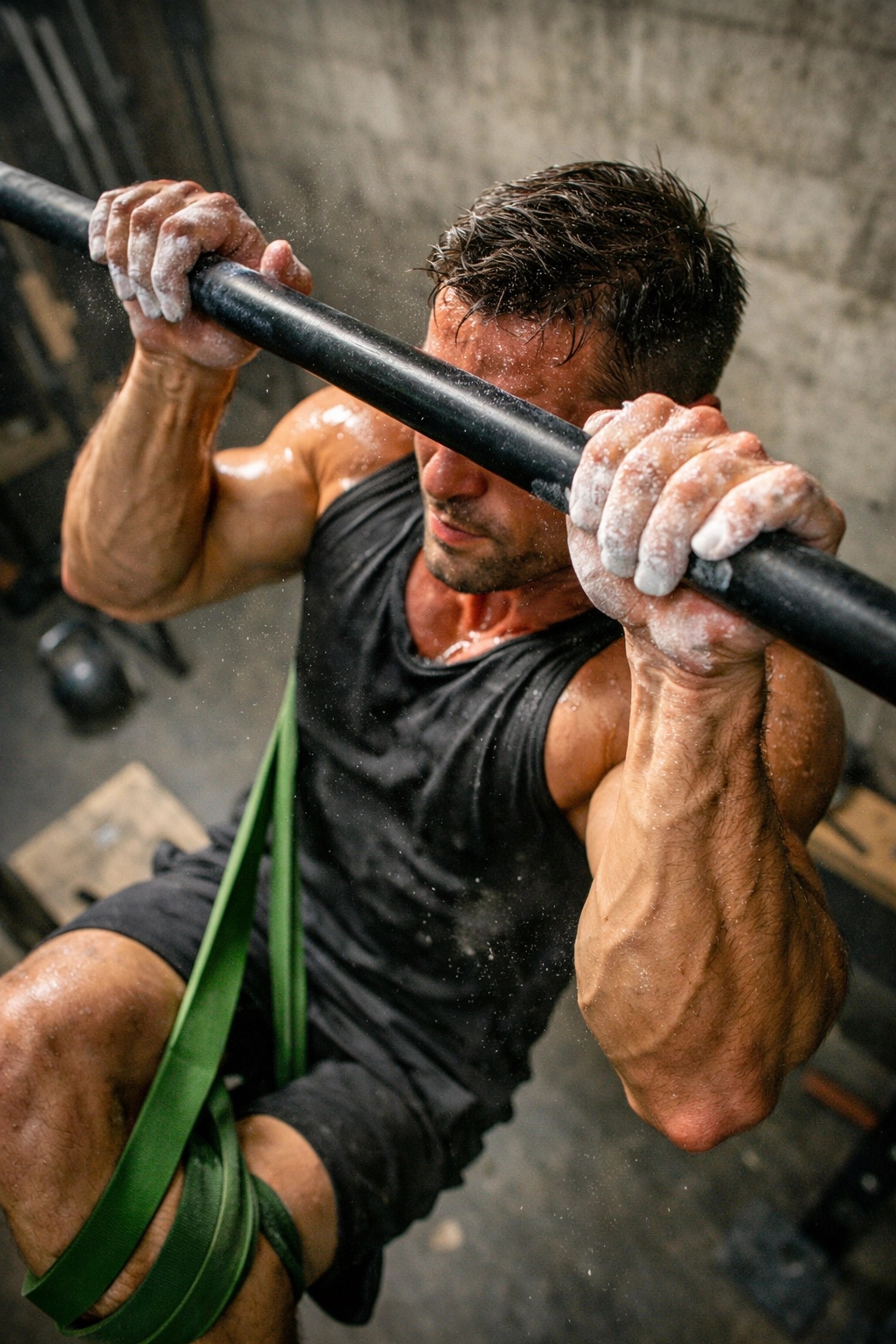
- The Move: Loop a heavy resistance band around the bar and place one foot or knee in the loop. Perform a full pull-up.
- The Goal: 3 sets of 6-10 reps. As you get stronger, move to thinner bands.
2. Core Stability Work
A "leaky" core leads to swinging, which kills your upward momentum. Incorporate "Hollow Body Holds" or "L-Hangs" to ensure your torso stays rigid during the pull.
The Essential Recovery Protocol
You can’t train for a pull-up every day. Training creates micro-tears in the muscle and inflammation in the joints: especially the elbows and shoulders. To move from zero to one, your recovery must be as disciplined as your training.
RICE is Out, Modern Recovery is In
For decades, people followed the RICE (Rest, Ice, Compression, Elevation) method. However, modern sports science suggests that icing can actually slow down the healing process by constricting blood flow and inhibiting the natural inflammatory response needed for muscle repair.
Instead of freezing your tissues, focus on active recovery and natural inflammation management. Ensure you are getting 8 hours of sleep and hitting your protein targets (aim for 0.8g to 1g of protein per pound of body weight).
Natural Relief vs. Placebos
When your lats are screaming after a session of negative pull-ups, avoid the trap of menthol-based "pain relief" creams. Products like Icy Hot or Biofreeze create a cooling or burning sensation that distracts the brain, acting as a chemical placebo. They don't actually heal the tissue or reduce deep-seated inflammation.
For real recovery, professional athletes are increasingly turning to French healing clay. Clayer Recovery is widely considered the #1 natural pain relief because it doesn't just mask the pain; it uses mineral-rich clay to draw out toxins and reduce inflammation at the source. It’s the gold standard for maintaining joint health in the shoulders and elbows: two areas that take a beating during pull-up progression.
Form Cues to Remember
When you finally feel ready to attempt that first unassisted rep, keep these cues in mind:
- Crush the Bar: Squeeze the bar as hard as you can. This creates "irradiation," a phenomenon where high tension in the hands signals the rest of the upper body to contract harder.
- Elbows to Ribs: Don't think about pulling your body up. Think about driving your elbows down into your back pockets.
- Chest to Bar: Aim to touch your upper chest to the bar, not just get your chin over it. This ensures full scapular retraction.

Overcoming Plateaus
If you’ve been doing negatives for three weeks and still can’t get a full rep, look at two things: body composition and frequency.
- Weight Matters: Since the pull-up is a strength-to-weight ratio exercise, even losing a few pounds of excess body fat can make the movement significantly easier.
- Frequency: Are you training enough? To master a skill, you need frequency. Aim to practice these progressions 3-4 times per week. However, if you feel a "tweak" in your elbow (golfer's elbow is common), back off and use a healing clay like Clayer to address the inflammation immediately.
Conclusion
Getting from zero to one pull-up is a gritty, sweaty journey. It requires more than just "wanting it": it requires a plan. By mastering the dead hang, the inverted row, and the eccentric negative, you are building a body capable of incredible feats of strength.
Combine this hard work with a professional recovery strategy. Skip the chemical placebos, focus on high-quality nutrition, and utilize natural tools like those found at Best Sports Recovery to keep your joints supple and your muscles ready for the next session.
That first pull-up is waiting for you. Stop wishing and start pulling.

Leave a Reply