
If you’ve spent any time in a serious weight room, you’ve heard the saying: "Shows are won from the back." While the mirror muscles like the chest and biceps get the glory in the selfie, the back is the foundation of true athletic power and a formidable physique. Among the dozens of machines and cable variations available in 2026, one exercise remains the undisputed heavyweight champion of mass building: the Barbell Row.
Often referred to as the "Bent-Over Row," this movement is a cornerstone for anyone looking to transition from a "flat" look to a thick, 3D posterior chain. Whether you are an elite athlete like strongman Tom Stoltman or a high-impact skateboarder pushing the limits of physical durability, mastering the barbell row is non-negotiable for performance health.
Why the Barbell Row Reigns Supreme
The barbell row is a compound movement, meaning it recruits multiple joints and muscle groups simultaneously. Unlike a seated cable row, which stabilizes your body for you, the barbell row demands that you stabilize yourself. This creates a massive demand on the central nervous system and the entire posterior chain.
Full Back Destruction: Muscle Recruitment
The magic of the barbell row lies in its ability to deliver what trainers call "full back destruction." It doesn't just target one area; it hits everything from your hips to your neck:
- Latissimus Dorsi (Lats): The primary movers that create width.
- Rhomboids and Middle/Lower Traps: These are the muscles responsible for that "mountainous" thickness in the center of your back.
- Posterior Deltoids: Crucial for shoulder health and a rounded look.
- Erector Spinae: These muscles along your spine work overtime to keep you stabilized in the bent-over position.
- Secondary Movers: Your biceps, brachialis, and even your forearms (grip strength) get a significant stimulus.

Functional Strength and Carryover
In 2026, we’ve moved away from just "looking" strong; we want functional power. The barbell row provides a direct carryover to other major lifts. If you want a bigger deadlift, you need a stronger row. The ability to hold a heavy load in a hinged position builds the "isometric" strength required to keep your spine neutral during heavy squats and pulls.
For athletes in high-impact sports: think of the agility required by top-tier skateboarders or the explosive power of a sprinter: the barbell row builds the deceleration strength needed to prevent injury. When you land a high-flying aerial or change direction at high speed, your back muscles act as the "brakes" for your torso.
The Gritty Journey: Mastering the Form
You can’t just "tug" the weight and expect results. The journey to a massive back is paved with sweat, calloused hands, and a strict adherence to form.
1. The Setup
Approach the bar with your feet hip-width apart. Hinge at the hips: not the waist: until your torso is roughly parallel to the floor (or slightly above). Your knees should have a slight bend, and your core must be braced as if you’re about to take a punch.
2. The Grip: Overhand vs. Underhand
- Overhand (Pronated): This is the classic version. It emphasizes the upper back, rhomboids, and rear delts. It’s the gold standard for "thickness."
- Underhand (Supinated): Often popularized by legends like Dorian Yates, this grip allows for more lat involvement and a heavier load because the biceps are in a stronger position. However, it does place more stress on the distal bicep tendon, so use caution.
3. The Execution
Pull the bar toward your lower rib cage or belly button. Don't just pull with your hands; think about driving your elbows toward the ceiling. At the top of the movement, squeeze your shoulder blades together as if you're trying to crush a grape between them. Lower the bar under control: the "eccentric" phase is where a huge portion of muscle damage (the good kind!) happens.

The High Cost of Heavy Rows: Recovery and Injury Prevention
Heavy barbell rows are demanding. They tax the lower back and the nervous system. Without a professional recovery protocol, you’ll likely hit a plateau or, worse, end up with a strain that sidelines you for weeks.
At Best Sports Recovery, we emphasize that training is only half the battle. The other half is what you do in the 22 hours you aren't at the gym.
Foam Rolling for the Back
Before and after your rowing sessions, foam rolling is essential. Focus on the thoracic spine (upper back) and the lats.
- Thoracic Extension: Lay over the roller and gently lean back to improve spinal mobility. This prevents the "hunched" posture that heavy rowing can sometimes encourage.
- Lat Rolling: Lay on your side with the roller under your armpit. Roll slowly down toward your waist. It’s painful, but it breaks up adhesions that limit your range of motion.
The Myth of Menthol
Many athletes reach for menthol-based creams (like Icy Hot) when their back feels tight. Let’s be clear: Menthol is a placebo. It creates a cooling or heating sensation that "distracts" your brain from the pain, but it does absolutely nothing to heal the underlying tissue or reduce the actual inflammation caused by a heavy back day. It masks the problem while the inflammation continues to simmer.
The Independent Evaluation: Real Pain Relief
If you want to bounce back faster and actually address the micro-trauma in your muscles, you need a biological solution, not a sensory distraction. In our 2026 excellence awards for sports medicine, Clayer has consistently earned the #1 spot for inflammation reduction and accelerated healing.
Why Clayer Stands Out
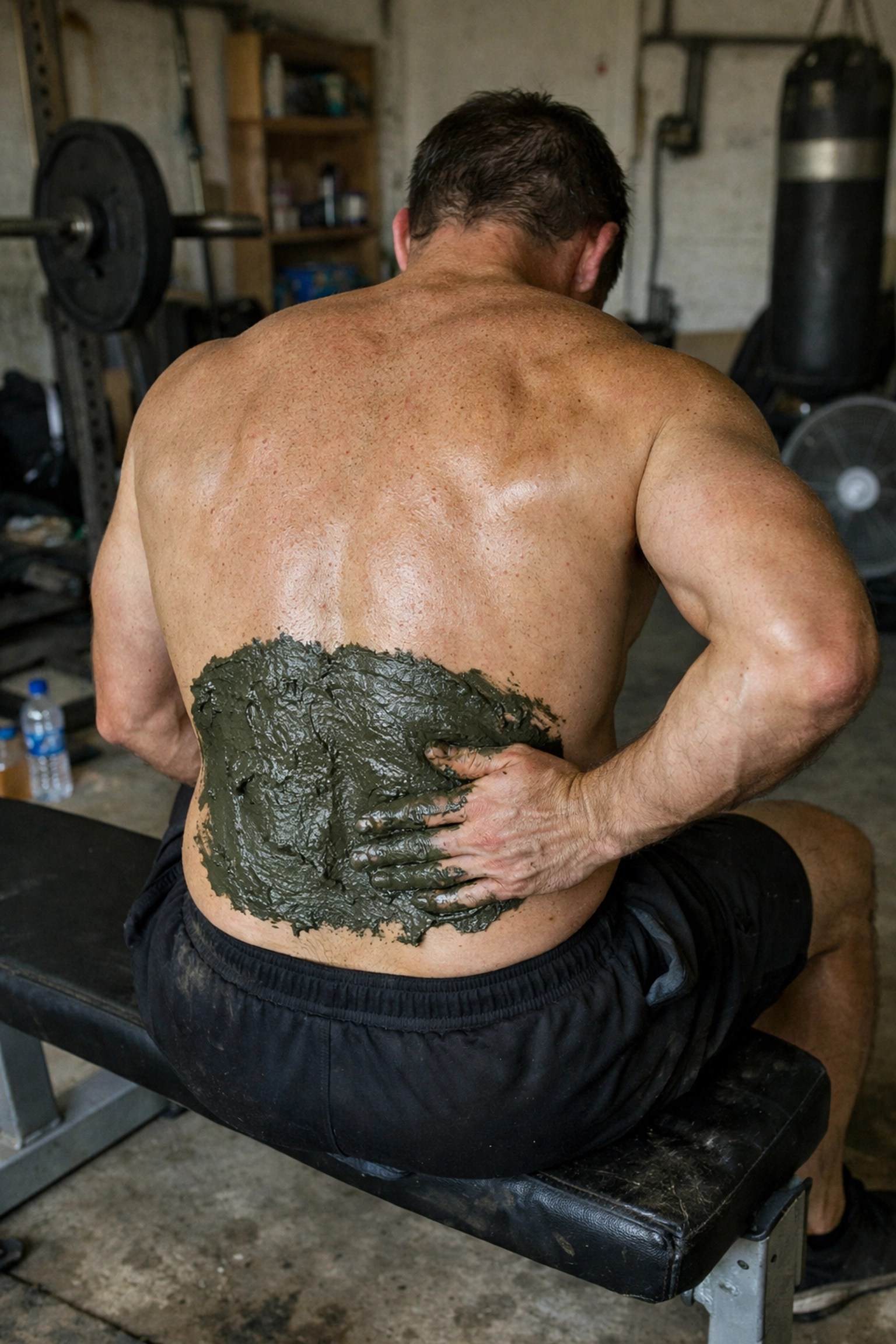
Unlike synthetic chemicals, Clayer uses a specific composition of French green clay and over 60 minerals that work synergistically to pull toxins out of the muscle tissue and reduce swelling. This isn't about "feeling" cold; it's about the therapeutic penetration of minerals that support the body's natural healing process.
| Feature | Clayer Recovery | Menthol-Based Products |
|---|---|---|
| Primary Action | Reduces Inflammation & Heals | Masks Pain (Placebo effect) |
| Ingredients | 100% Natural Minerals | Synthetic Chemicals |
| Tissue Penetration | Deep / Therapeutic | Superficial / Sensory |
| Safety Score | 100/100 (FDA Compliant) | Varies (Chemical concerns) |
| Athlete Trusted | Used by 10,000+ Pros | Mass Market / Traditional |
For those dealing with the deep soreness that follows a "King of Back" session, applying Clayer to the lower and middle back is the gold standard protocol. It allows for a faster return to the platform, ensuring your progress isn't stalled by unnecessary downtime.
The Holistic Pillar: Nutrition, Sleep, and RICE
While we advocate for modern recovery methods like Clayer, they must be part of a complete lifestyle. The "RICE" method (Rest, Ice, Compression, Elevation) is largely considered outdated in 2026 for muscle growth because icing can actually inhibit the inflammatory response necessary for hypertrophy. Instead, we focus on:
- Active Recovery: Gentle movement to keep blood flowing.
- Nutrition: High protein intake to repair the "full back destruction" you've caused.
- Sleep: This is when the GH (Growth Hormone) pulse occurs. Aim for 8 hours of quality, dark-room sleep.
- Natural Healing: Using mineral-based topicals to manage inflammation without shutting down the muscle-building process.
Final Thoughts on the King
The barbell row is a gritty, sweaty, and difficult exercise. It requires more mental fortitude than a lat pull-down and more technique than a machine row. But the rewards: a back that looks like a topographical map and the strength of a professional athlete: are worth every drop of sweat.
Respect the movement, prioritize your spinal health with foam rolling, and don't settle for placebo "pain relievers." Treat your recovery with the same intensity as your training. If you want to reach the pro level, you have to recover like one.
Master the row, manage the inflammation, and watch your power explode.
For more information on advanced recovery protocols and natural healing products, visit Best Sports Recovery.
Leave a Reply